
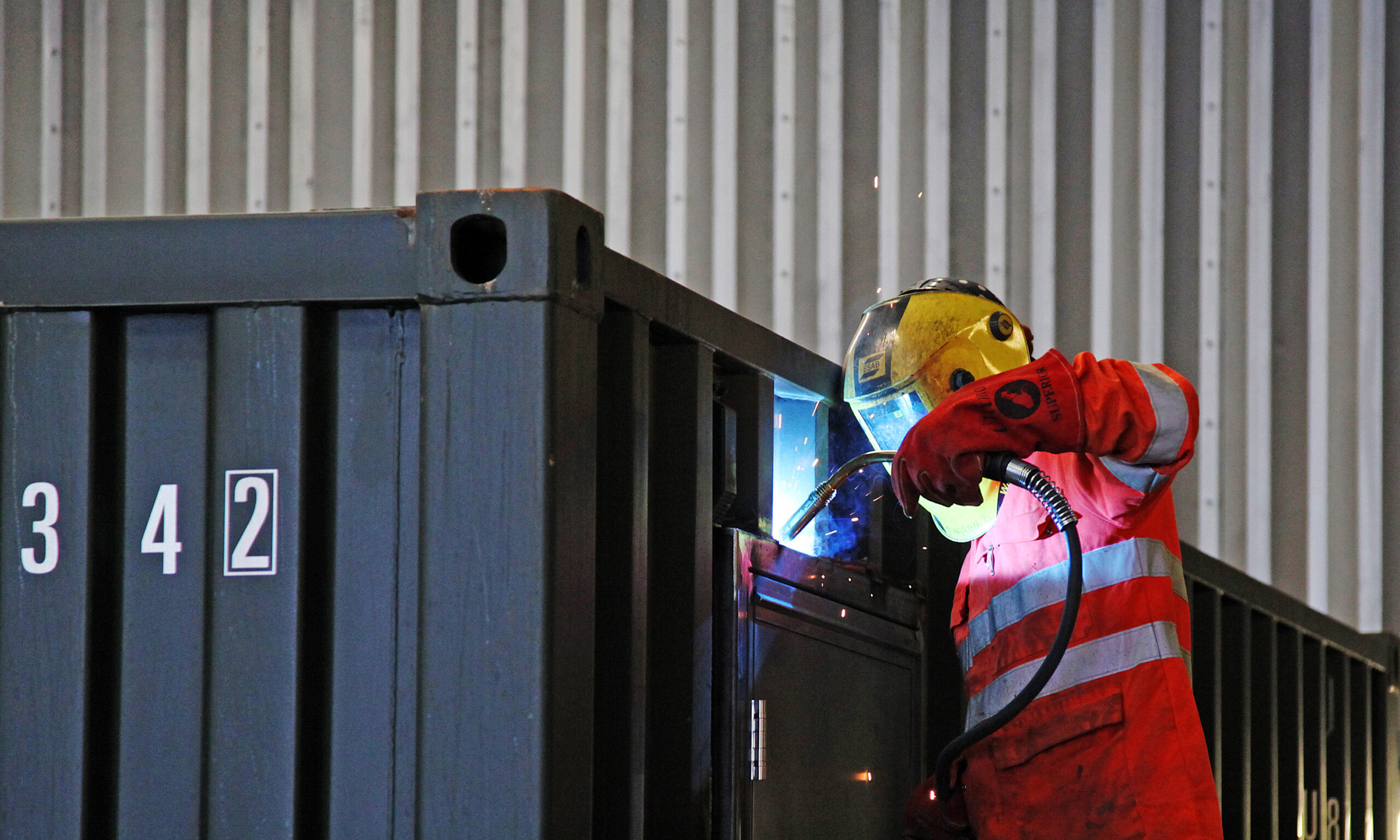
Quick Answer: A 20ft shipping container hot tub conversion in Canada lands at a different price depending on variant: hot tub, cold plunge, small dipping pool, or sauna and plunge combo. Smaller water volume than a 40ft pool means cheaper year-round heating and narrower-lot fit. Pricing depends on your site, your grade choice, and your freight zone, so call for a real quote.
In This Guide
- Why is a 20ft container the right size for a backyard hot tub?
- What are the four container hot tub conversion variants?
- How much does it cost to heat a container hot tub in Ontario?
- Can a container hot tub run year-round in Ontario?
- What electrical and plumbing does a container hot tub need?
- Why are backyard cold plunges so popular right now?
- Will a container hot tub fit a narrow Toronto side yard?
- How do you prep a site and get a container delivered from Brantford?
- How do you avoid container hot tub scams on Facebook?
- FAQs
Reading Time: 13 minutes
The 40ft container pool became the suburban backyard moment of the early 2020s. A long run of steel, the swim-spa current, the Instagram drone shot. It worked for some buyers and was never going to work for the rest. The lot was too narrow. The heating bill hurt even in summer. The pad cost more than the bin. Three of four buyers walked away because the 40ft pool was the wrong scale for what they actually wanted, which was a hot soak after work and a cold dunk in the morning.
The 20ft container hot tub conversion is the answer to that scale problem. Same Corten steel shell, half the footprint, a quarter of the water volume, and a build cost that opens at its lowest for a cold plunge and tops out for a sauna and plunge combo. The full-circuit version of that combo is mapped in our backyard contrast setup walkthrough. Christian LeBlanc, second-generation operator at Van Blanc and the LeBlanc family member who handles most of the Toronto-area calls, says he gets the same question every spring now. “They want a backyard hot tub but cooler-looking,” he says. “Something the neighbours notice. The 20ft backyard build off a steel shell is that, and the heating cost is almost a footnote.” The cold half of the same room, a Canadian-made plunge with a plug-in chiller, is reviewed in our Coldture write-up.
This guide is the operational truth on container hot tub conversion in Canada from a yard that has delivered shipping containers across Ontario since 1995. The four variants, what each costs, how each performs through an Ontario winter, what the heating bill actually looks like, where the freeze risks hide, and which buyer ends up with which version. No factory marketing, no rendered Instagram footage, just the steel, the math, and the family-business voice that has watched this trend move from California yards to Niagara backyards over the past five years.
Why is a 20ft container the right size for a backyard hot tub?
A 20ft container is the right size for a backyard hot tub because it sits on roughly 160 square feet of pad, half a 40ft pool’s footprint, and holds a quarter of the water. That narrow footprint fits a side yard, cuts the heating bill sharply, and reads as cozy rather than cavernous when clad in cedar.
A 20ft shipping container has external dimensions of 6.06m by 2.44m by 2.59m (19’10” by 8’0″ by 8’6″) with an interior volume of 33.2 cubic metres. That spec is the standard-dry footprint Van Blanc moves out of the Brantford yards every week to farms, contractors, and an increasing number of wellness-trend backyard buyers. The full 20ft shipping container dimensions and spec guide covers the structural side. The relevance here is what the footprint enables.
A 40ft container pool sits on roughly 320 square feet of pad. A 20ft container hot tub sits on roughly 160. That difference is decisive in three ways. First, it fits the narrow side yard that a 40ft pool can never reach, which means urban Toronto, dense Mississauga subdivisions, and the back-lot Hamilton homes that previously had no container-pool option. Second, the water volume drops from roughly 6,000 gallons in a 40ft pool to between 800 gallons in a cold plunge and 2,000 gallons in a hot tub variant, which collapses the heating bill from the monthly range of a 40ft pool to a fraction of that for the 20ft hot tub. Third, the cedar-clad interior at 20ft length reads as cozy and sauna-adjacent rather than cavernous, which is the aesthetic most buyers actually want.
The structural footprint also matters at the delivery stage. A 20ft container weighs roughly 2,300 kg empty and arrives on the same tilt-deck trailer that Van Blanc uses for farm and construction deliveries. No crane required for ground-level placement on a prepared pad. A 40ft pool typically needs gooseneck or crane placement, which adds to the install cost depending on the trailer route. The 20ft tilt-deck delivery from our four Brantford yards arrives in 1-3 days across most of Ontario. That delivery simplicity is part of why the 20ft hot tub variant has overtaken the 40ft pool in buyer interest over the past two years.
The four ISO grades and which fits a hot tub conversion
Hot tub conversions almost always start with a One-Trip 20ft container. The water-holding interior modification, the cedar cladding, and the long-term aesthetic exposure all reward a clean shell. Cargo Worthy works for industrial or wellness-centre installations where appearance is secondary. Wind & Watertight is rarely the right pick for a hot tub conversion because the surface rust and dents undermine the premium-aesthetic outcome the buyer is paying for. As-Is is wrong for this application. Per the IICL inspection criteria, a One-Trip 20ft is the grade most hot tub conversions start from, priced as a clean shell before the conversion build itself. We carry these factory-clean one-trip bins at the Brantford yards, the shell every wellness build deserves to start from.
What are the four container hot tub conversion variants?
There are four meaningful 20ft container conversion variants in the hot-tub-adjacent category. Each has a different buyer, a different price point, and a different operational profile.
Variant 1: Hot tub conversion
This is the most-requested variant. A 20ft container fitted with an insulated 6-8 foot heated tub section at one end, full-bench cedar interior cladding, jets, and a deck or lounge area at the dry end of the container. Capacity is 4-6 adults at typical hot tub temperature of 38-40°C. The tub itself is fibreglass or stainless steel, dropped into a frame that bears load through to the container’s corner posts. Heating is either electric (240V/40-50A) or natural gas if a line is available. The dry end of the container houses the pump, heater, filtration system, and an enclosed cedar bench area for towel storage and pre-soak undressing. The cabana that goes beside a hot tub or a pool, with the equipment locked in one end, is covered in our pool house guide.
The entry-level build runs a stock fibreglass tub, single-zone heating, and an electric heater. The top of the range adds dual-zone temperature control, a premium stainless tub, a chiller for cold-plunge crossover, full cedar-tongue-and-groove walls and ceiling, and exterior staining or branded paint. Christian’s read on the buyer mix here: roughly 60% want the basic build because the appeal is the look and the soak, not the spa-grade features.
Variant 2: Cold plunge tub
The cold plunge variant is the wellness-trend driver. A 20ft container with a smaller insulated tub holding 200-400 gallons, a chiller system that maintains water at 2-10°C, and minimal interior finishing because the cold plunge buyer is in and out in three minutes. Capacity is 1-2 adults. The chiller is a heat-pump style 240V unit drawing roughly 1.5-2 kW during active cooling and dramatically less during maintenance cycles. Total monthly running cost in an Ontario backyard stays low because cold plunge maintenance energy is much lower than hot tub heating energy. The container’s insulated shell holds cold as effectively as it holds heat, which is the engineering reason this variant works.
The entry-level build is barebones: a stock plastic plunge tub, basic chiller, and exposed steel interior. The top of the range adds a stainless plunge basin, dual-stage filtration, ozone or UV sanitation, cedar interior cladding for the change-area, and an integrated cover system. The cold plunge variant has the fastest year-on-year demand growth Van Blanc sees in this category, driven by athletic recovery culture and the Andrew Huberman ice-bath protocol that has spread from California gyms into Ontario backyards over the past three years.
Variant 3: Small dipping pool
The dipping pool variant uses a 20ft container as a 3-4 foot deep pool. Not a hot tub, not a cold plunge, not a swim spa. Just water, ambient or lightly heated, for dipping and cooling off on a hot afternoon. Capacity is 4-6 adults seated or standing, the same as a small backyard plunge pool. Heating is optional and lightweight because the intent is ambient summer use, not year-round operation. A natural-water dipping pool with a sand or cartridge filter and no heater is the most affordable starting point. Adding a small heat pump for shoulder-season use raises the build. A full salt-water sanitation system and tile finish pushes it to the top of the range.
The dipping pool variant is the closest to what most Ontario buyers actually use a backyard pool for, which is 60 days of summer dipping and 305 days of looking at it. Some buyers winterise the dipping pool and drain it from October to May, which is a legitimate operational pattern and reduces the year-round cost to negligible.
Variant 4: Sauna and plunge combo
The combo variant splits a 20ft container down the middle. One half is a cedar-lined sauna with electric or wood-fired heater, capacity 4 adults seated. The other half is a cold plunge tub with chiller. The two halves share a wet-room change area with a duckboard floor and a small bench. This is the Scandinavian wellness format the SaunaPlunge product line has popularised, and it is the dominant request from cottage-country buyers who want a year-round wellness installation that uses the container’s insulated shell as both a sauna envelope and a plunge envelope.
The combo variant is the most expensive of the four because it has two complete systems sharing one shell: a 6-8 kW sauna heater with stove-top stones, a plunge chiller, dual electrical service, cedar throughout both compartments, and a divided cover system. The entry-level version is a builder-grade combo. The top of the range adds a wood-fired sauna stove with chimney through-roof penetration, premium cedar grades, integrated audio for the sauna side, and exterior staining. Combo buyers are typically cottage owners in Muskoka, Haliburton, and the Bruce Peninsula who want the year-round wellness setup without the cottage-cabin construction cost of building a stick-frame sauna structure separately. Our dedicated container sauna conversion guide covers the sauna-only build path for buyers who want the sauna without the plunge.
| Variant | Capacity | Water Volume | Relative Build Cost | Connected Load / Energy Profile |
|---|---|---|---|---|
| Hot tub conversion | 4-6 adults | 1,500-2,000 gal | Mid-range | 11-15 kW heater and pump, year-round heating |
| Cold plunge tub | 1-2 adults | 200-400 gal | Lowest entry point | 1.5-2 kW chiller cooling, much lower in maintenance |
| Small dipping pool | 4-6 adults | 2,500-3,500 gal | Low to mid-range | Optional light heat pump, mainly summer use |
| Sauna + plunge combo | 4 sauna / 2 plunge | 200-400 gal plunge | Highest of the four | 13-18 kW dual system, sauna heater plus chiller |
How much does it cost to heat a container hot tub in Ontario?
Heating a 20ft container hot tub in Ontario costs far less per month than running a 40ft container pool, and a cold plunge costs less still. The single biggest reason the 20ft container hot tub variant has overtaken the 40ft pool in buyer interest is that heating cost. A 40ft container pool with 6,000 gallons of water holds heat through volume but loses it through surface area, and the Ontario hydro bill in January reflects that. A typical 40ft pool carries the heaviest monthly heating draw even with quality insulation. A 20ft hot tub with 1,800 gallons costs far less monthly even at the same temperature setpoint, and a cold plunge at the opposite end of the temperature spectrum costs less still because cold plunge maintenance draws far less energy than hot tub heating.
The math runs through three variables: water volume, surface area, and insulation R-value. A well-insulated 20ft container conversion uses closed-cell spray foam to R-12 minimum on walls, ceiling, and floor. That R-12 envelope is the same insulation level a stick-frame hot tub manufacturer like Hydropool builds into their highest-tier units, which is part of why the container conversion can compete on energy efficiency with high-end factory hot tubs at full retail. The container’s steel shell adds a marginal thermal mass benefit and a major air-seal benefit because the shell is welded continuous, not assembled from panels with seam tape.
Cover quality is half the battle
A well-fitting insulated hot tub cover prevents up to 70% of heat loss. Most container hot tub builds default to a stock 4-inch fibreglass-core cover, which is fine for shoulder-season operation but loses heat through the seam where the cover meets the cedar coaming. Spec the 6-inch cover with a foam-foot perimeter seal for Ontario winter operation. The cover upgrade is a modest addition to the build and reduces January heating cost by 25-30%, paying back inside the first winter.
The heater sizing follows the variant. A 20ft hot tub conversion uses a 30,000-60,000 BTU heater (electric or gas), compared to the 100,000-140,000 BTU heaters typical for a 40ft pool. Electric heaters at the 11-15 kW range fit a single 240V/40-50A circuit, which most Ontario homes can accommodate without a service upgrade. Natural gas heaters at the 50,000-75,000 BTU range need a dedicated gas line run, which adds to the install but reduces ongoing operating cost by roughly 40% if natural gas is available at the property. Propane is a workable third option for rural and cottage installations without natural gas service.
The cold plunge variant uses an entirely different system: a heat-pump chiller drawing 1.5-2 kW during active cooling and roughly 0.3-0.6 kW during maintenance. Annual operating cost for a cold plunge in Ontario is the lowest of the three, well below a 20ft hot tub and far below a 40ft pool. That cold plunge economics is why the recovery-and-wellness buyer often picks the cold plunge variant first and adds a sauna or hot tub later as budget allows.
Can a container hot tub run year-round in Ontario?
Year-round Ontario operation of a container hot tub or cold plunge depends on three engineering decisions that get made at the build stage and cannot be retrofitted cheaply: insulation R-value, cover spec, and freeze-protection plumbing. Get all three right and the unit runs through January at -20°C without measurable performance loss. Get any one wrong and the unit becomes a summer-only installation by November.
The insulation spec is closed-cell spray foam to R-12 minimum on all six interior surfaces of the container shell, applied to a depth of 50-75mm depending on cavity space. Closed-cell is non-negotiable for hot tub and plunge applications because open-cell absorbs moisture, loses R-value when wet, and grows mould within 18 months in a high-humidity hot tub environment. Closed-cell is also vapour-impermeable, which is the engineering property that lets it bond directly to the steel shell without an intervening vapour barrier. Builders who use open-cell foam or batt insulation on container hot tub conversions are saving on the build and creating a moisture failure that surfaces within two years.
Cover spec for year-round Ontario operation is a 6-inch closed-cell foam core in a vinyl shell with a foam-foot perimeter seal and tie-down straps rated for 35 mph winds. Stock 4-inch covers shed heat too fast in January and lift in winter wind storms. The 6-inch cover costs more than the stock cover and lasts 6-8 years in Ontario conditions before the foam core saturates and needs replacement. The cold plunge variant uses an insulated cover for the opposite reason: keeping ambient warmth out of the cold water.
The Ontario freeze-thaw cycle is the real test
An Ontario hot tub or plunge does not fail at -20°C. It fails at the +2°C / -3°C oscillation that runs through November, March, and April. Each freeze-thaw cycle expands water in any plumbing dead-leg by 9% and contracts the surrounding fitting on the thaw. Three or four cycles per shoulder season and the weakest fitting in the system splits. The fix is freeze-protection design at the plumbing stage, not freeze-tracing tape afterward. Run a continuous recirculation pump on the lowest setting during shoulder-season cold snaps, slope all plumbing back to the equipment bay with no traps, and put a freeze-stat sensor on the lowest dead-leg with an alarm tied to the home’s smart-home system.
What electrical and plumbing does a container hot tub need?
The electrical service for a 20ft container hot tub conversion is usually a single 240V/40A circuit for the heater and pump, plus a 120V/15A circuit for lighting, control panel, and accessory power. Total connected load runs 11-15 kW for a hot tub variant, 5-8 kW for a cold plunge, and 13-18 kW for a combo. All electrical work on a container hot tub must be permitted through the Electrical Safety Authority (ESA) and inspected, which is the only regulatory hurdle that consistently applies to this conversion type. The ESA inspection and the permit is in the buyer’s name.
The wiring run from the home’s service panel to the container is typically 6/3 AWG copper for the 240V circuit and 14/2 AWG for the 120V, both in PVC conduit if buried. Burial depth in Ontario is 600mm minimum for direct-buried conduit. The container itself is bonded to the home’s grounding electrode system at the container’s corner posts. Our mini-split installation guide covers similar electrical patterns for container conversions where HVAC is added.
Plumbing is where the year-round operation case is won or lost. The drain valve location is the single most important detail. A drain valve placed at the lowest external point of the container, accessible from outside without entering the cabin, with a freeze-rated ball valve and a slope-back to the tub, allows the unit to be quick-drained in 20 minutes if a multi-day cold snap is forecast and the buyer wants to winterise temporarily. A drain valve placed inside the equipment bay or routed through a U-trap is the opposite: an inaccessible failure point that freezes in January and floods the cedar interior in March. Christian has had two buyers in three years call back about flood damage from poorly-located drain valves, and both were factory units the buyer had bought from out-of-province turnkey suppliers, not Van Blanc-supplied bins.
The plumbing material is PEX or CPVC for hot water lines, schedule 40 PVC for cold and circulation lines. Copper is not used in container hot tub builds because the dissimilar-metal contact with the steel shell creates galvanic corrosion at any contact point. Fittings are all push-fit or compression with stainless internals, never threaded brass into steel.
Why are backyard cold plunges so popular right now?
The cold plunge variant is the fastest-growing wellness-trend driver in this product category. Five years ago, the cold plunge category was a niche product for elite athletes and cryotherapy clinics. Today, the Andrew Huberman protocol of three to five minutes of 10°C water exposure two to three times weekly has moved cold plunge into the consumer wellness mainstream. Backyard cold plunge installations have increased roughly 8x year-on-year in southern Ontario over the past three years based on Van Blanc’s One-Trip 20ft container sales for plunge conversion applications.

The peer-reviewed evidence on cold water immersion is mixed but growing. A 2022 meta-analysis in the European Journal of Applied Physiology covering 52 studies on post-exercise cold water immersion found small-to-moderate reductions in delayed-onset muscle soreness at 24 and 48 hours post-exercise. A 2023 Frontiers in Physiology review of mood and cognitive effects found short-term mood elevation and dopamine release after 1-3 minute immersions at temperatures of 10-15°C. The evidence on cardiovascular adaptation and inflammation reduction is less robust but ongoing. Health Canada does not currently issue specific guidance on residential cold water immersion, but does flag rapid temperature change as a cardiovascular event risk for buyers with hypertension or heart conditions and recommends physician consultation before starting a cold plunge practice.
From a hardware perspective, the cold plunge variant of the 20ft container conversion has fewer failure modes than the hot tub variant. There is no high-temperature differential to manage. The chiller is a sealed system that requires almost no maintenance beyond filter changes. The sanitation load is lower because cold water inhibits bacterial growth, so a basic ozone or UV system replaces the chlorinated chemistry of a hot tub. Buyers in Halton, Niagara, and the Toronto core who want a fitness-recovery installation with minimal upkeep tend to default to the cold plunge variant.
Will a container hot tub fit a narrow Toronto side yard?
A 20ft container hot tub fits most Toronto side yards because the container is only 8 feet wide, so a side yard running 8 to 12 feet wide swallows it with inches to spare on each side, where a 40ft pool never could. Christian handles most of the Toronto-area calls and the pattern over the past two years has shifted. Three years ago the request was “do you sell shipping container pools?” and the answer was generally yes but the lot was too narrow. Today the request is “I want a backyard hot tub but cooler-looking” and the 20ft container conversion is the right scale. The buyer is typically 35-55 years old, in a Toronto, Mississauga, or Oakville detached home, with a side yard that runs 8-12 feet wide and 25-50 feet deep. A 20ft container at 8 feet wide drops into that side yard with 6-12 inches of clearance on each side. A 40ft container pool would not have fit on the property at all.
The urban Toronto buyer also wants the unit to look like a wellness installation rather than industrial steel sitting on the lawn. The cedar exterior cladding, the recessed lighting, the integrated cover system, the optional green-roof planting tray on top of the dry end, all turn a 20ft Corten shell into a Scandinavian-aesthetic backyard feature. That aesthetic outcome is the second reason the 20ft conversion has overtaken the 40ft pool in this buyer segment. The 40ft was always a “look at the engineering” install. The 20ft hot tub conversion is a “look at the design” install. Different conversation, different buyer.
Christian LeBlanc, second-generation operator: “We get the same Toronto call almost every spring now. They want a backyard hot tub but cooler-looking. Something the neighbours notice. The 20ft container conversion is that. The heating cost is almost a footnote, and the bin lands on a tilt-deck trailer in their side yard in a 1-3 day delivery from our Brantford yards. It is the right scale for what they are actually trying to do.”
Ready to price your container?
Tell us the size and your postal code and we’ll send back an all-in number, container, delivery, and placement, usually within 1-3 days. No pressure, no mystery fees.
Family-run in Brantford since 1995 · 200+ containers in stock · 4.9★ across 140+ Google reviews · every box graded by a person, walk it before it lands.
How do you prep a site and get a container delivered from Brantford?
Site preparation for a 20ft container hot tub conversion is more involved than a dry-storage container drop because the container will hold 1,500-2,000 gallons of water at roughly 8 pounds per gallon, which means 12,000-16,000 pounds of additional point load beyond the container’s tare weight. The total live-load weight is in the 30,000-40,000 pound range, distributed across four corner posts. The pad has to bear that load without differential settlement, which would crack the cedar interior and split plumbing fittings within the first year.
Three pad options work. The simplest is a compacted gravel pad over a 200mm crushed limestone base, edge-restrained with timber or concrete curb. That works for most Ontario soils, with the final cost depending on size and access. The mid-tier option is six to ten sonotube concrete piers dug to below frost depth (1.2m in southern Ontario), poured to grade, with a steel plate atop each pier as the bearing surface. Sonotube piers cost more than gravel and provide better long-term level stability. The premium option is a 6-inch reinforced concrete slab. The slab is over-spec for the load but is the right pick if the buyer plans to add a wet-room deck around the container.
Delivery is a tilt-deck trailer from the four Brantford yards. The 20ft container arrives empty (not pre-converted) on the trailer, is positioned on the prepared pad, and the tilt-deck slides out from under. The container conversion build is then completed on-site by the buyer’s chosen fabricator over 4-8 weeks. Some Ontario fabricators offer a turnkey delivered-and-converted option where Van Blanc supplies the 20ft One-Trip bin and the fabricator handles the build on their lot before re-delivering the completed unit, but that approach adds delivery cost twice and is generally only worth it if the buyer cannot accommodate on-site construction noise.
Standard lead time on a 20ft One-Trip container from Van Blanc is 1-3 days delivery across most of Ontario from our four Brantford yards, with longer freight times for Northern Ontario routes (5-10 days for Sudbury, North Bay, Thunder Bay). Every quote comes with a real lead time, not a hopeful one. Buyers across Ontario regularly drive to the Brantford yard at 90 Morton Avenue East to inspect the One-Trip stock before committing, which is worth the drive for unbeatable quality, family customer service with 30 years of experience.
How do you avoid container hot tub scams on Facebook?
Every wellness trend attracts grift, and the container hot tub conversion category has its own version of the Facebook Marketplace scam that Van Blanc has watched run for years on regular shipping container sales. The pattern is familiar. A Facebook listing offers a “turnkey container hot tub” below the legitimate market price for a basic build. The listing photos are stolen from California suppliers or AI-generated. The deposit is requested via e-transfer. The buyer wires the deposit. The bin never arrives.
Many people call Van Blanc saying they can get a container hot tub far cheaper on Facebook than our One-Trip 20ft pricing. Two weeks later they call back saying they got scammed. The cheaper bin on Facebook is the one that never arrives. Van Blanc has watched this pattern repeat for 30 years on dry-storage containers and now sees it spreading to the hot tub conversion category as the trend grows. The same red flags that catch fake bin sellers apply to a wellness build sold sight-unseen. The signal that matters: a legitimate container hot tub conversion sits in a real range that climbs from a cold plunge build up to a full sauna and plunge combo. Anything priced far below the market is either a scam or a build with structural shortcuts that will fail within 18 months.
The buyer protection signals worth checking on any container hot tub purchase are the same as on any container purchase. Real yard with a verifiable physical address. Real Google reviews accumulated over years, not a thin string of five-star reviews posted within the same month. Payment terms that include in-person inspection before the deposit is released, which Van Blanc supports through cash-on-delivery and in-person yard visits. A real phone line that answers. A real owner or operator that walks the yard with you before you pay.
Frequently Asked Questions
How much does a 20ft container hot tub conversion cost in Canada?
A 20ft container hot tub conversion is priced as a range, not a single number. The variant matters: a cold plunge tub is the lowest entry point, a small dipping pool sits in the low-to-mid range, and a sauna and plunge combo is the highest of the four. The One-Trip 20ft container itself is the base shell you buy from Van Blanc’s Brantford yards. The remainder is the conversion build (tub, heater, electrical, plumbing, cedar interior) handled by a fabricator. Call for a real quote on the variant and grade you want.
Can a container hot tub be used year-round in Ontario?
Yes, with the right build spec. Year-round Ontario operation requires closed-cell spray foam insulation to R-12 minimum, a 6-inch insulated cover, and freeze-protection plumbing with an accessible drain valve. With those three engineering details in place, a 20ft container hot tub runs through January at -20°C with modest monthly heating costs on electric, and lower still on natural gas. Cold plunge variants cost even less to run monthly year-round.
What is the heating cost for a 20ft container hot tub in Ontario?
Monthly heating cost for a 20ft container hot tub conversion in Ontario is modest on electric service at average Ontario hydro rates, and lower still on natural gas if available at the property. That compares to a noticeably higher monthly bill for a 40ft container pool. The smaller water volume (1,500-2,000 gallons versus 6,000 gallons) is the main driver of the lower bill, with insulation R-value and cover spec accounting for the rest of the difference.
Will a 20ft container hot tub fit in a narrow side yard?
A 20ft container is 8 feet wide externally and 19 feet 10 inches long. A side yard of at least 9 feet wide and 22 feet deep can accommodate the container with workable clearance for delivery and operation. Tilt-deck trailer delivery requires a clear approach path through the side yard or backyard, which typically means gate removal during delivery if the access is fenced. Side-yard installs are the dominant pattern for urban Toronto, Mississauga, and Oakville buyers.
What is the difference between a container hot tub and a container pool?
A 20ft container hot tub holds 1,500-2,000 gallons of water heated to 38-40°C and is sized for 4-6 adults soaking. A 40ft container pool holds 6,000+ gallons of water at swim temperature of 27-30°C, is sized for swimming with an optional current system, and costs considerably more turnkey. The hot tub fits narrower lots and has roughly half the monthly operating cost of the pool. The pool offers swimming exercise the hot tub cannot.
Does a container cold plunge work in Ontario winter?
Yes, and the cold plunge variant is actually easier to operate in Ontario winter than the hot tub variant. The chiller maintains 2-10°C water year-round without fighting ambient temperature loss the way a hot tub heater does. Insulated walls and a closed cover keep the water from freezing solid in January. Monthly operating cost in winter is very low because the chiller runs less when ambient air is already cold. Recovery and wellness buyers often run the cold plunge year-round and add a sauna conversion separately for the heat side of the contrast practice.
What electrical service does a container hot tub need?
A standard 20ft container hot tub conversion needs a single 240V/40A circuit for the heater and pump, plus a 120V/15A circuit for lighting and controls. Total connected load is 11-15 kW. Most Ontario homes accommodate this without a service upgrade. All work must be permitted through the Electrical Safety Authority (ESA) and inspected for each installation. The wiring run from house panel to container is typically 6/3 AWG copper in conduit, with burial depth of 600mm if direct-buried.
How long does a container hot tub conversion take to build?
From Van Blanc yard delivery to operational hot tub is typically 4-8 weeks of on-site construction by the buyer’s chosen fabricator. Site prep (gravel pad or sonotube piers) takes 1-2 weeks before container delivery. Container arrival from the Brantford yard is 1-3 days. The fabrication itself (tub installation, electrical, plumbing, cedar interior, exterior staining, cover) runs 3-6 weeks depending on the fabricator’s schedule and the complexity of the variant. Turnkey factory-built units from out-of-province suppliers run 8-12 weeks from order plus shipping.
Sources
- International Organization for Standardization. (2022). ISO 6346:2022, Freight containers, Coding, identification and marking. iso.org/standard/82754.html
- Electrical Safety Authority. (2025). Ontario Electrical Safety Code, Section 68: Pools, Tubs, and Spas. esasafe.com
- Versey, N. G., Halson, S. L., & Dawson, B. T. (2022). Water immersion recovery for athletes: effect on exercise performance and practical recommendations. European Journal of Applied Physiology, meta-analysis of cold water immersion studies. Springer EJAP
- Esperland, D., de Weerd, L., & Mercer, J. B. (2023). Health effects of voluntary exposure to cold water, a continuing subject of debate. Frontiers in Physiology, review of cold water immersion mood and recovery effects.
- Government of Ontario. (2024). Building Code (O. Reg. 332/12). ontario.ca/laws/regulation/120332
Reach Van Blanc in Brantford
Van Blanc Ent. Inc. has supplied shipping containers across Ontario since 1995. Our warehouse is at 90 Morton Avenue East in Brantford and we deliver across the province on a cash-on-delivery basis with no surprise fees. We sell the One-Trip 20ft container that becomes a hot tub, cold plunge, dipping pool, or sauna and plunge combo. The fabrication is handled by your chosen builder. We deliver the bin in 1-3 days from our four Brantford yards.
Van Blanc Ent. Inc., 90 Morton Ave E Unit 1B, Brantford, ON N3R 7J7. Call Paul or Christian direct at 519-754-6844 or toll-free 1-888-509-6658.
Worth the drive to walk a One-Trip 20ft in person before you commit. Christian or Paul will pull a bin off the row and let you check the seams, corner posts, and floor before you sign anything.