
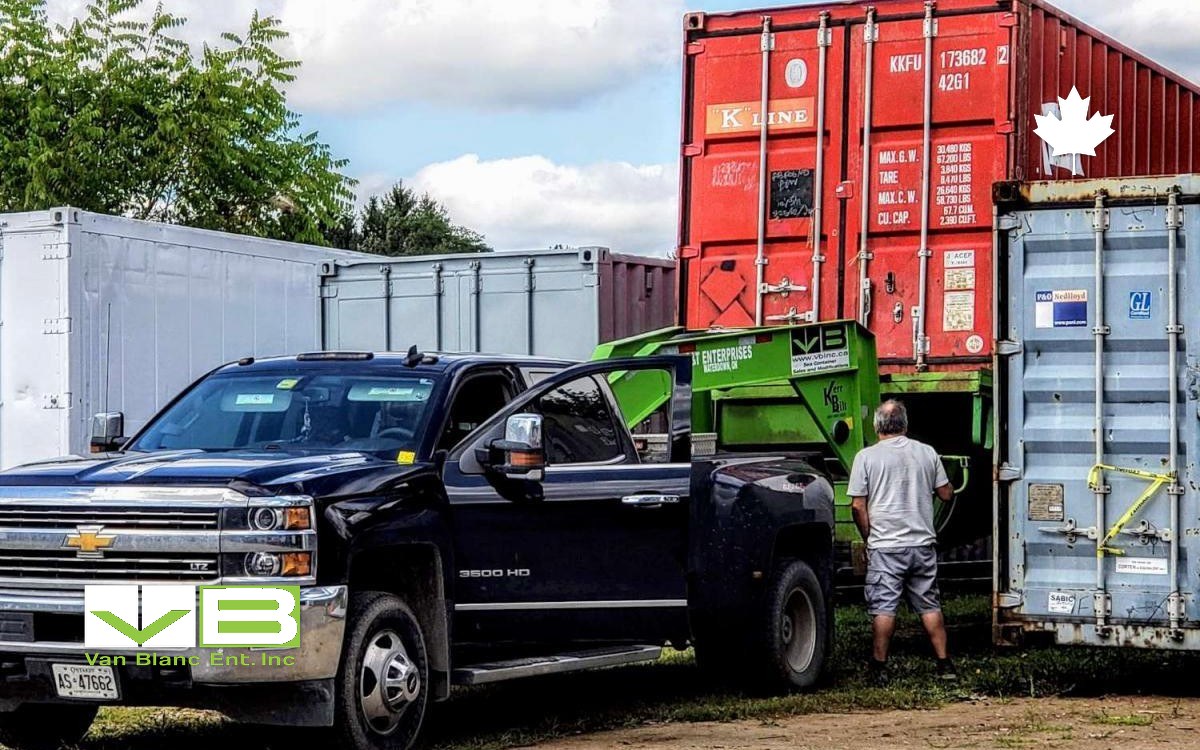
Quick Answer: A container trade setup is a shipping container fitted out to do one industry’s job: racking, security, power rough-in, and layout matched to the trade. Van Blanc builds the fit-out at our Brantford yard before delivery, so the box arrives working. This hub covers the setups Ontario trades order most.
In This Guide
- What is a container trade setup?
- Which trades buy container setups in Ontario?
- What about trades without a dedicated guide yet?
- What does the fit-out actually involve?
- Which parts do we build, and which need your licensed trades?
- How do you spec a setup without over-building it?
- Why do trades buy in multiples?
- FAQs
Reading time: 9 minutes
What is a container trade setup?
A trade setup is a shipping container that has stopped being a storage box and started being a piece of equipment. The steel is the same; what changes is everything bolted, welded, and wired into it so that one specific job gets easier.
The distinction matters because most container content treats the box as an endpoint. For a working trade it is infrastructure. A landscaper’s container is a season vault and a daily-access wall at the same time. An auto shop’s container is a tire hotel that turns swap season from chaos into a routine. A records manager’s container ends a per-box storage meter that never stops running. Same 20 or 40 feet of corten steel, four completely different machines.
The three things every trade setup gets right
- Vertical space used. An empty container wastes most of its cube. Racking, shelving, and wall systems are what turn floor area into capacity.
- Access matched to frequency. What you touch daily goes at the door end. What you touch twice a year goes deep. Getting this backwards is the most common setup mistake we see.
- Security proportional to contents. A lockbox and good door discipline handle most trades. Tools and copper need more.
Which trades buy container setups in Ontario?
These are the setups we build most often, each with the detail that trade actually cares about.
| Trade | What the container becomes | The detail that matters |
|---|---|---|
| Auto and tire shops | Seasonal tire hotel | Rack height and swap-season throughput |
| Landscaping | Season vault and daily-access wall | Mower clearance and a door end you can reach fast |
| Horse farms and stables | Tack room and feed store | Rodent exclusion and dry hay separation |
| Professional offices | Document archive | Ending the per-box monthly meter |
| Working farms | Equipment and implement shelter | Field access for the tilt-deck and a drained pad |
| Breweries | Keg cold store and taproom | Glycol lines and the power the chiller needs |
| Wineries | Cellar buffer during crush | Reefer temperature stability at peak season |
| Hospitality | Bar and service build | Customer-facing finish, so grade matters |
| Construction | Site office and secure store | ESA-certified final connection on site |
| Indoor growers | Insulated vertical-farm shell | Insulation value and ventilation planning |
| Fitness operators | Training space | Floor loading under a rig and rubber over ply |
| Welding and fabrication | Fab bay and vented cylinder store | Steel over the plywood floor and where the exhaust wall goes |
If your trade is not on that list, the conversation is still short. Describe what goes inside, how often you need to reach it, and where the box will sit. That is enough for us to tell you the size, the grade, and whether the fit-out is worth doing at our yard or better done on your site.
What about trades without a dedicated guide yet?
Plenty of setups we build regularly do not have a page of their own. The operational detail still matters, so here is the short version for the trades that ask most often.
Welding and fabrication
The container works as a shop annex and a cylinder store. Gas cylinders need upright restraint and dedicated ventilation, which is a build decision rather than an afterthought: a sealed box holding cylinders is the one setup where venting is not optional. Consumables and rod stock want dry storage away from the door end, because condensation collects nearest the opening. The full setup, from the steel floor to the 6.1-metre cylinder rule, is in the welding shop setup guide.
Electrical contractors
Wire spools are heavy, awkward, and ruined by damp. The setup that works is a spool rack along one wall with fittings and small goods shelved opposite, so a van gets loaded in one pass. Copper is also the single most stolen item on a job site, which puts this trade at the high end of the security spec. The rack, the van-loading layout and the copper security spec are laid out in full in the electrical contractor setup guide.
HVAC and plumbing
Both trades run the same problem: bulky fixtures plus thousands of small fittings. Pallet racking handles the units, bin shelving handles the fittings, and the ratio between them is what makes or breaks the layout. Plumbers doing service work often want the box configured as a mobile workshop, which brings a bench and lighting into the spec. The full version, with the ratio by trade and the mobile workshop layout, is in the HVAC and plumbing contractor setup guide.
Roofing and mobile detailing
Roofers are storing bundled material that arrives on a skid and leaves by hand, so the door end has to stay clear and the floor has to take point loads. Detailers need water and power more than they need shelving, which moves the conversation toward rough-in and tank space rather than racking.
None of these are exotic. They are the same components combined for a different daily routine, which is exactly what a trade setup is.
What does the fit-out actually involve?
Most trade setups are built from a small number of components, combined differently. Knowing the vocabulary makes the quote conversation faster.
Racking and shelving is the single biggest capacity multiplier. Shelving systems suit hand-carried stock and tooling; heavy-duty pallet racking suits anything arriving on a skid. The choice is driven by how the stock enters the box, not by how much of it there is.
Security hardware starts with a welded lockbox over the padlock, which defeats the bolt cutter that defeats everything else. For sites that empty out on Friday, the weekend jobsite checklist covers the habits that matter more than the hardware.
Power and climate is where the honest split lives. We rough in conduit, mount panels, and prepare the openings; your licensed electrician makes the final connection under Electrical Safety Authority rules. Insulation, venting, and any refrigeration spec get decided before the build starts, because retrofitting them is always dearer than building them in.
Which parts do we build, and which need your licensed trades?
We are deliberate about this line, because plenty of suppliers blur it and the buyer finds out at inspection.
| Work | Who does it |
|---|---|
| Racking, shelving, wall systems, lockboxes, security bars | Built at our Brantford yard |
| Man doors, windows, roll-up doors, venting, insulation, interior finish | Built at our Brantford yard |
| Electrical rough-in, conduit, panel provisions | Prepared by us, certified on site by your electrician |
| Plumbing, gas, exhaust hoods, tap lines | Roughed in by us, completed and certified by your licensed trades |
| Final connection and inspection sign-off | Your trades, on your site, always |
“A contractor asked me once whether we could just certify the electrical ourselves and save him a step. We cannot, and any yard that says it can is telling you something that will not survive an inspection. We build it so the finishing work is straightforward and documented. The signature has to come from the person who is licensed to give it.”
Paul LeBlanc, owner. Thirty years in the container industry, operating Van Blanc since 1995.
How do you spec a trade setup without over-building it?
The quote conversation goes fastest when it runs in this order, and running it in this order also stops people buying fit-out they will never use.
Four questions, in sequence
- What goes inside, by shape rather than by volume? Long items, palletised stock, and small parts each demand a different interior. Volume alone tells us the size; shape tells us the layout.
- How often do you reach for it? Daily access changes everything about the door end and often decides 20ft against 40ft more than total quantity does.
- Does it need power, heat, or cooling? Answer this before the build, not after. Every retrofit costs more than the same work done in the shop.
- Where does it sit, and who can see it? A hidden yard placement can run a used grade happily. A customer-facing position changes the grade recommendation and sometimes the paint.
Notice that price is not on that list. It is the output, not an input. Once those four answers exist, the number follows from them, and it tends to be lower than buyers expect because half the fit-out they imagined turns out to be unnecessary.
“The most useful thing I do on a trade call is talk somebody down. They ring up wanting a forty with racking on both walls, and three questions later it turns out they touch eighty percent of it once a season. That is a twenty with a deep shelf and a clear aisle, and it costs them less and works better. Selling the bigger box would have been the easy thing and the wrong thing.”
Christian LeBlanc, second-generation operator. Raised around the Brantford yard and works it alongside Paul.
Why do trades buy in multiples?
Business buyers behave differently from homeowners, and the pattern is consistent enough that we plan inventory around it. A homeowner buys one container and we may never hear from them again, which is a good outcome. A trade buys one, runs it for a season, and then buys the second because the first one solved a problem they had stopped noticing.
The landscaper who vaults equipment over winter wants a second box for daily-access tooling by spring. The auto shop that survives one swap season with a tire hotel adds capacity before the next. The contractor whose site office worked on one build takes it to the next build and buys a storage unit to sit beside it. Multi-unit orders get planned as a group, because the delivery economics and the fit-out both improve when we know the whole picture up front.
Tell us the trade, we will spec the box
Describe what goes inside, how often you reach for it, and where it lands. We will tell you the size, the grade, and what the fit-out should include, with one honest all-in number.
Family-run in Brantford since 1995 · 200+ containers in stock · 4.9★ across 140+ Google reviews · every box graded by a person, walk it before it lands.
Frequently Asked Questions
What is a shipping container trade setup?
It is a container fitted out for one industry’s working needs: racking or shelving sized to the stock, security hardware matched to the contents, electrical rough-in where power is needed, and a layout that puts frequently used items at the door end. The fit-out happens at our Brantford yard before delivery.
Can you build the setup before delivery?
Yes, and that is how most trade orders run. Racking, shelving, lockboxes, doors, windows, venting, and insulation all go in at our yard, so the container arrives ready to work. Building it in the shop is faster and cheaper than retrofitting it on your site.
Which container size suits a trade setup?
The 20ft handles most single-trade setups: tooling, seasonal stock, a tire hotel, a tack room. The 40ft earns its length when racking runs both walls or when the box doubles as storage and workspace. Describe the stock and we will tell you which one actually fits.
Do you certify the electrical in a container setup?
No, and no yard legitimately can. We install conduit, mount panel provisions, and prepare the openings so the finishing work is straightforward. Your licensed electrician makes the final connection and certifies it under Electrical Safety Authority rules, on your site.
What grade should a trade container be?
Cargo Worthy suits most working setups: sound structure, certified, and cosmetic wear that does not matter in a yard. Step up to one-trip when customers see the box, as with a bar build or a branded site office. Our grade guide walks the full ladder.
Can a trade container be moved between job sites?
Yes. A container is designed to be lifted and hauled, and contractors routinely move a site setup from one project to the next. Van Blanc delivers the container you buy; relocating it afterwards is arranged through a hauler, which many of our contractor customers keep on call.
How fast can a fitted-out container be delivered in Ontario?
Stock containers deliver in 1 to 3 days across most of Ontario. A fit-out adds build time at the yard, quoted up front based on what the setup includes. You get one date and one number, and the date is a real one rather than a hopeful one.
Do you offer discounts on multiple containers?
Multi-unit orders are quoted as a group, and both the delivery economics and the fit-out improve when we know the full scope up front. Tell us how many and over what timeframe, and the number reflects it.
Sources
- Electrical Safety Authority. Ontario Electrical Safety Code requirements. esasafe.com
- International Organization for Standardization. (2022). ISO 6346:2022, Freight containers, Coding, identification and marking. iso.org
- International Maritime Organization. (1972, amended). International Convention for Safe Containers (CSC). imo.org
Reach Van Blanc in Brantford
We have been supplying and converting shipping containers for Ontario trades since 1995. The yard and the modification shop are both at 90 Morton Avenue East in Brantford, which means you can walk a fit-out while it is being built rather than approving it from a drawing.
Van Blanc Ent. Inc., 90 Morton Ave E Unit 1B, Brantford, ON N3R 7J7, 519-754-6844
Trade buyers planning a multi-unit rollout are welcome to come and scope it with us in person. It is a faster conversation standing next to the steel.