
Quick Answer
An insulated shipping container is a steel box with insulation built into its walls, ceiling and floor. Van Blanc sells three kinds outright: factory-insulated panel units, 20ft and 40ft boxes spray-foamed in our Brantford shop, and non-operating reefers. Every one is delivered across Ontario by tilt-deck and paid for on delivery.
Insulated Shipping Containers: Three Products Behind One Word
An insulated shipping container for sale in Ontario can mean three different products. A buyer who does not know which one a listing means can pay for the wrong one. The first is the factory-insulated container, built as an insulated box from the start. Polyurethane panels sit between the outer corten skin and an inner liner of fibreglass, aluminum or galvanized sheet. The insulation runs unbroken through the corner posts, so the dew point sits inside the panel, away from the inner wall.
The second is the retrofit: a standard one-trip or cargo worthy box that we spray with closed-cell foam and line at 90 Morton Avenue East. It costs less and ships faster. It insulates well everywhere except the ribs and posts, where steel still touches steel. The third is the non-operating reefer, a used refrigerated container with the compressor dead or removed. Its factory panels and liner stay intact, and it is often the cheapest factory-insulated box a buyer can put on a pad. The four-thousand-word insulated container guide spends its length on the differences. This page covers which of the three Van Blanc can sell you, when, and for what.
All three are sold outright, delivered on Van Blanc’s own tilt-deck trucks and paid for when they land. What differs is where they come from. Factory-insulated units are built to order in the same Asian factories that build new general purpose containers and reefers. We hold one or two factory-insulated 20ft units on the yard at a time as walk-in inventory. Used factory-insulated boxes come through in batches a few times a year, when a cold-storage operation closes or upgrades. Spray-foamed units start from a one-trip box out of the new rows or a clean cargo worthy unit, and the shop builds them on a quoted date. Non-operating reefers depend on what is on the ground when you call. So the first thing to settle is which of the three fits the job, and the sections below work through it.
“The word insulated on a listing covers a factory panel box, a used reefer with a dead compressor, and a standard twenty somebody foamed in a barn, and the price gap between them is the whole story. I have had buyers drive two hours to the yard sure they bought the first and find out they bought the third. We tell you which one you are looking at before you drive, and we tell you which one the job actually needs.”
Christian LeBlanc, second-generation operator, Van Blanc Ent. Inc.
Insulated Container Specifications and R-Values
The outside of an insulated container is a standard 20ft or 40ft footprint, so it ships, stacks and delivers like any other box. The inside is where the insulation lives. A factory unit gives up the panel thickness on every wall, the ceiling and the floor. CIMC TLC, a container manufacturer, puts reefer walls generally between 50 and 120 millimetres of polyurethane foam. A foamed unit gives up whatever thickness was sprayed, plus the liner.
The R-value follows the foam. Natural Resources Canada rates closed-cell polyurethane spray foam at R-5.2 to R-6.5 per inch in its insulation table. Its technical note then says to count only RSI 0.90 per 25 mm, about R-5.1 per inch, because the foam loses its blowing gases over time. Van Blanc uses that cautious figure for every foam on this page, factory panels included. At R-5.1 per inch, a 50 mm factory wall works out near R-10 and a 120 mm wall near R-24. A two-inch spray retrofit lands near R-10 on the flat and three inches near R-15, with less at the ribs. The dimensions of every container we sell are the starting point; the table gives the insulated versions.
| Product | Insulation | R-value, cautious | Interior | How it reaches you |
|---|---|---|---|---|
| Factory-insulated 20ft | Polyurethane panel in the walls, ceiling and floor, continuous at the posts | About R-10 to R-24, by panel thickness | 5,840 x 2,220 x 2,311 mm (19 ft 2 in x 7 ft 3 in x 7 ft 7 in) on iCON’s 20ft insulated unit | One or two on the yard; others sourced to order, 6 to 10 weeks |
| Factory-insulated 40ft and 40ft HC | Same panel construction | About R-10 to R-24, by panel thickness | A standard 40ft footprint, less the panel on every face | Sourced to order, 6 to 10 weeks |
| Spray-foamed 20ft or 40ft | 2 to 3 inches closed-cell foam, lined, over a one-trip or cargo worthy box | About R-10 to R-15 on the flat, less at the ribs | Standard interior less the foam and liner | Built in the Brantford shop on a quoted date |
| Non-operating reefer, 20ft or 40ft HC | Factory panels and liner intact, refrigeration unit dead or removed | About R-10 to R-24 as built, by wall thickness | 5,450 x 2,275 x 2,288 mm (17 ft 11 in x 7 ft 6 in x 7 ft 6 in) on iCON’s 20ft reefer | When in stock; ask |
| Working reefer | Factory panels plus a running unit | As above, temperature controlled | As above | On the reefer product pages |
Two notes on the numbers. A factory panel and a non-operating reefer keep their R-value at the corner posts, because the panel runs through them. A foamed retrofit does not. Its ribs and posts are still bare steel on the outside, and cold steel sweats. Thermal bridging on a foamed container explains why the corner posts of a retrofit drip in February and what to do about it. A working reefer is its own product with its own pages. See the 20ft reefer and the 40ft High Cube reefer with a running unit: both hold a set temperature, while an insulated container only slows the change.
Insulated Container Uses for Ontario Buyers
The first insulated container buyer keeps something from freezing or cooking without running a compressor. Packaged food, paint and chemical lots, pharma staging, seed and batteries all fit here. Each has to stay between roughly five and thirty degrees through an Ontario year, with a small heater or none. A factory panel box or a non-operating reefer is the right product, and the seasonal storage buyers who hold stock through a winter are the steadiest of them. A well’s pressure tank and switch are another load of that kind, kept above freezing in a small insulated box beside the wellhead.
The second buyer is building a room: a workshop, a studio, a site office, a bunkie, a grow room or a brewery cold side. That buyer usually wants a spray-foamed one-trip box, because the foam is the first layer of a finished wall anyway. Van Blanc’s pages on the workshop conversion and the site office build both start from it. The third buyer wants a walk-in cooler or freezer and belongs on the reefer pages. The exception is a plan to fit a separate cooling unit to a non-operating reefer. That makes the cheapest cold room a farm or a restaurant can build, and it is a conversation worth having on the phone.
Tools, equipment and dry goods sit well in an insulated box or in a vented standard one. The choice usually turns on whether anyone will work inside, now or later. Every unit in the rows, insulated or not, is open to compare at Van Blanc.
Insulated Container for Sale: Framed and Wired
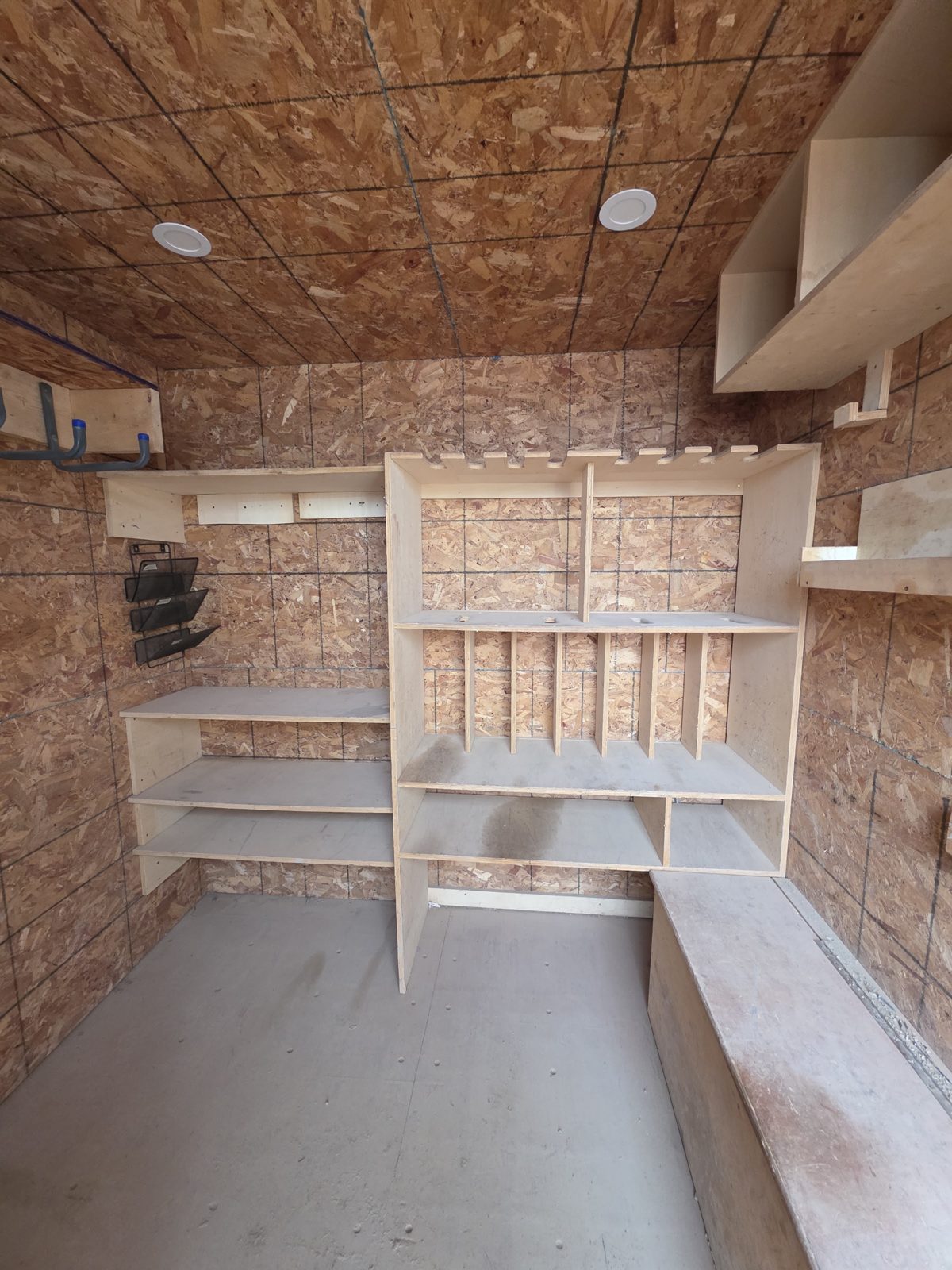
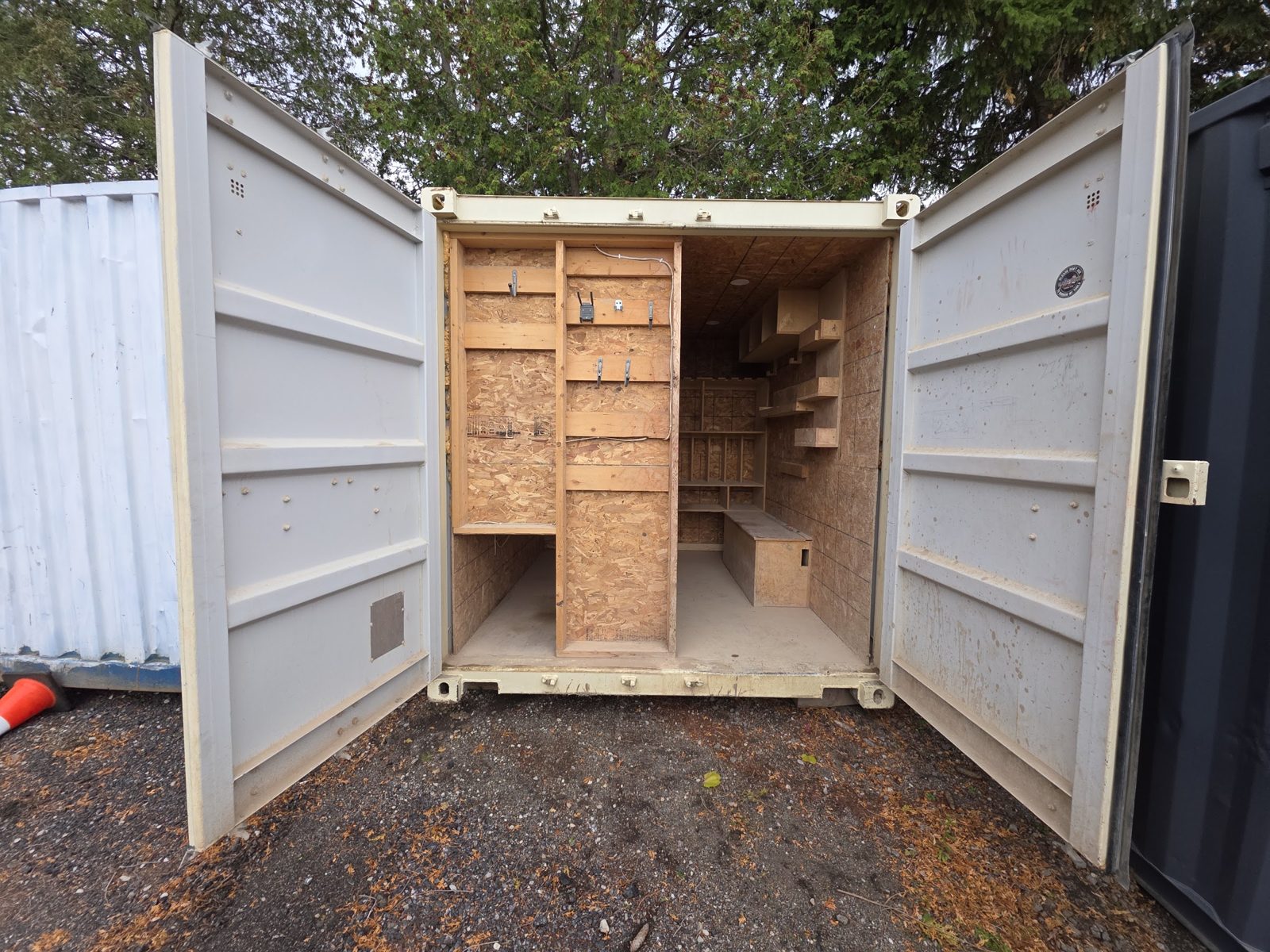
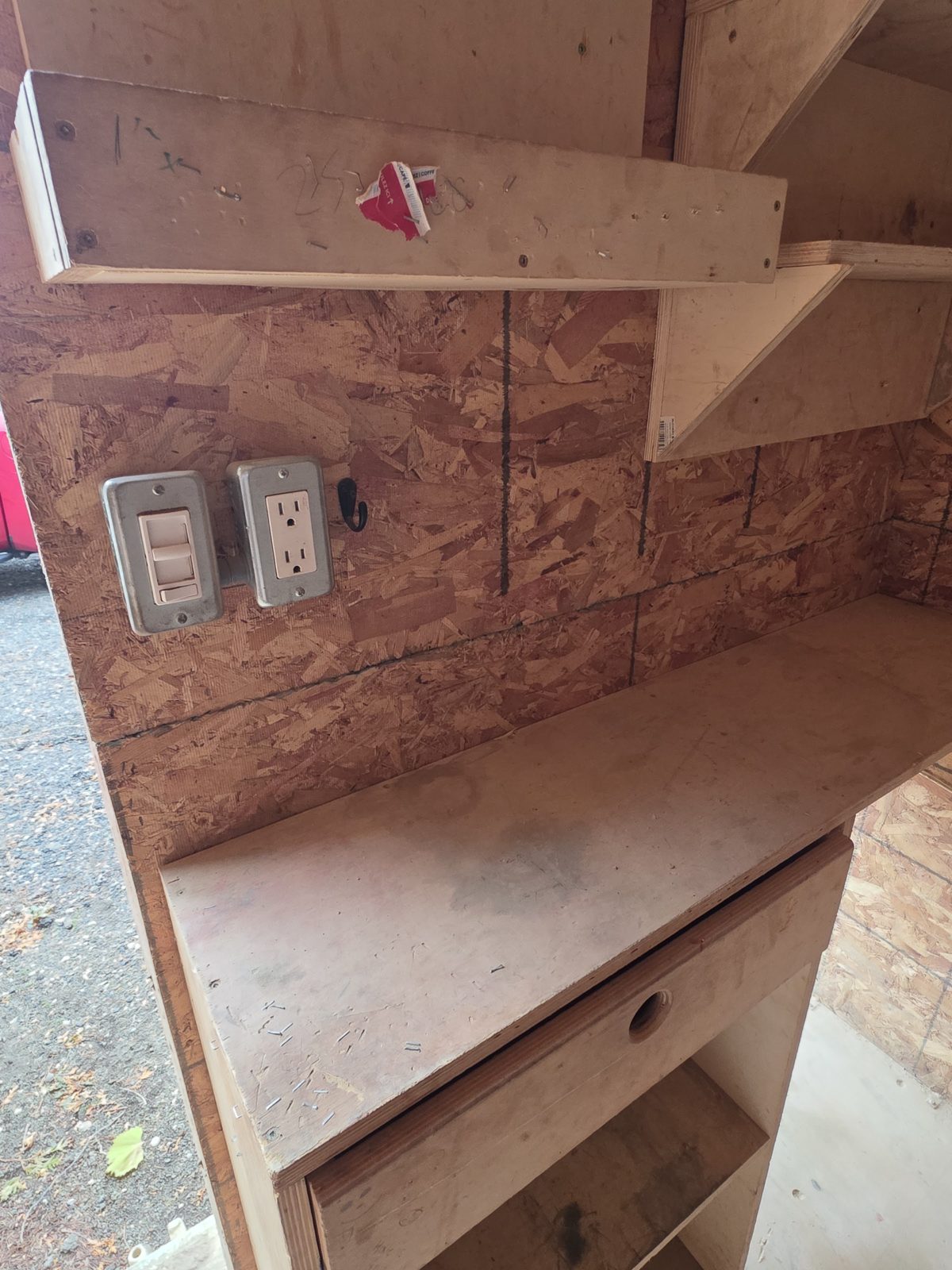
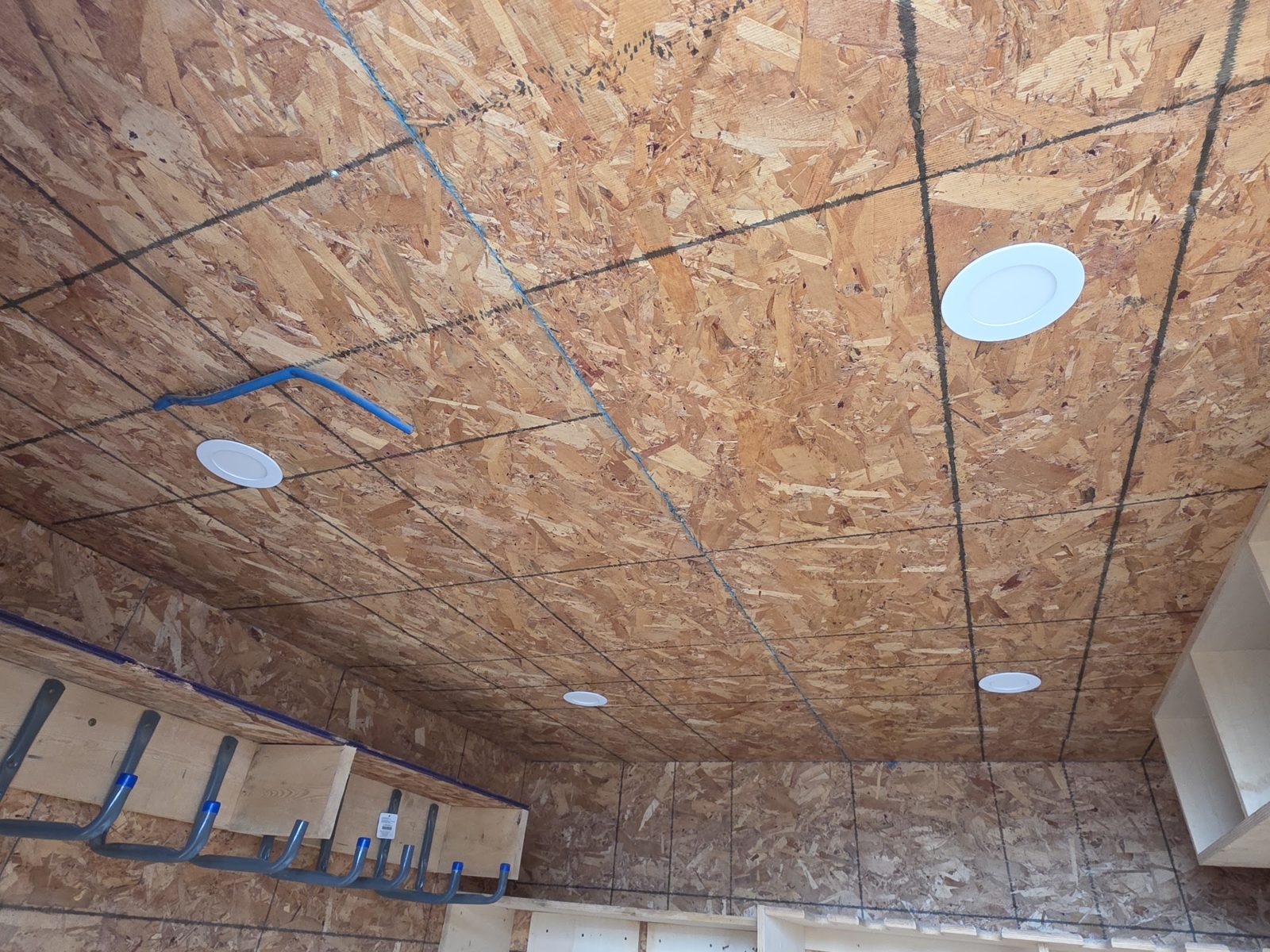
Recent stock at Van Blanc includes a new beige unit that is already insulated, framed and wired, with shelving built in. It goes a step past the three products above, because the interior work is done. Open the two cargo doors and the walls and ceiling are lined in OSB sheets over wood framing. A framed partition with hooks stands just inside the doors, and the room opens up behind it.
The fit-out reads like a tool room. The table lists what the photos of this unit show, part by part, and nothing more.
| Part of the unit | What the photos show |
|---|---|
| Walls and ceiling | OSB sheets over wood framing, seams marked with black layout lines |
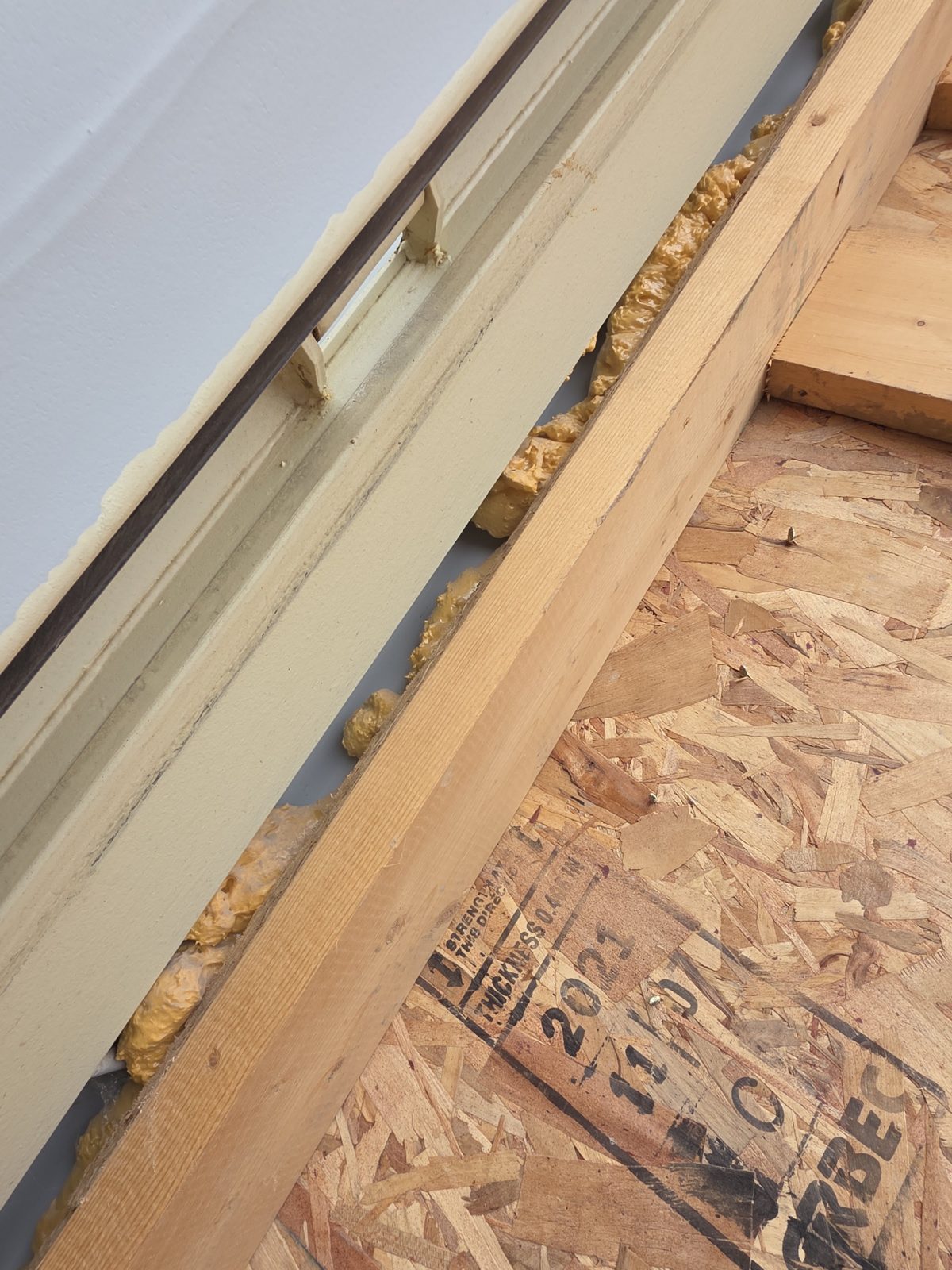
| Insulation | Amber foam visible between the framing and the steel at the door end |
| Lighting | Round flush lights set into the OSB ceiling |
| Power | A wall switch, duplex outlets and cable runs along the framing |
| Storage | Slotted shelving, wall shelves, a cubby cabinet up high, a lidded bench with two compartments, a rail of steel hooks and a wire file rack |
| Work area | A plywood workbench with a drawer and an open shelf below |
| Doors and outside | Two cargo doors with locking bars; two weatherproof flip-cap covers on a side wall |
For a contractor’s tool crib, the hooks, bench and shelving are already where a crew would want them. A hobby shop or a seasonal gear room starts from the same layout. The guide to lighting and power for a container workshop covers what a buyer might add from here.
The switch, outlets and lights are wired into the framing. Connecting the unit to power at your site, and any inspection, is work for a licensed electrician, and ESA inspection on container wiring explains that step. The photos show no panel label, R-value or amperage marking, so Van Blanc does not quote one. Ask to see the framing and the wiring on the yard before you decide.
Stock rotates, so call 519-754-6844 to ask whether this unit is still on the ground. The same call gets its size and a delivery figure to your postal code.
The Spray-Foam Retrofit: What We Do at the Yard
The retrofit is the insulated product most Ontario buyers take home from Van Blanc. It starts from a box that is in stock and finishes on a date we can name. The shop sprays two to three inches of closed-cell polyurethane on the walls and ceiling of a one-trip or cargo worthy container. It foams or builds up the floor where the job needs it. Then it lines the interior in plywood, FRP or steel sheet, so the foam is protected and the walls can take shelving.
A man door, windows, a roll-up, electrical rough-in and ventilation go on the same build sheet. Final electrical connections at your site are made by your own licensed electrician. Closed-cell foam is the only foam we spray. Open-cell absorbs the moisture a steel box breathes and turns into a wet sponge against the wall. The full modification list is priced with the container in one written quote. Van Blanc treats the ventilation a foamed box needs as the part no retrofit should skip. An airtight insulated container with no air change sweats at the doors, however good the foam is.
Grades: Which Box to Insulate
Insulation hides the wall it is sprayed on, so the grade matters more on an insulated build than on a plain one. A one-trip box has clean interior steel for the foam to bond to, straight corrugations and an unmarked floor. It is the grade Van Blanc recommends under any foam that will be lined and lived with. A cargo worthy unit with a sound floor and no interior rust takes foam well, and it is the working default for a storage build. A wind and watertight box can be foamed only if the interior is clean. Foam over rust seals the rust in, and nobody sees it again until the wall fails.
Van Blanc’s full grade-by-grade breakdown has the detail. On factory-insulated and non-operating reefer units, the grade question becomes a liner question: intact liner, intact panels, doors that seal and a floor that is not soft.
Insulated Container Price: What Sets It
An insulated container costs more than a standard box of the same size and grade, and the premium depends on which of the three products it is. A new factory-insulated unit sits roughly thirty to fifty percent over a comparable general purpose container. That premium moves with size, panel thickness and the current build cost. A used factory-insulated box, when one comes through, sits well below new. A non-operating reefer is usually the cheapest factory-built insulated path. A spray-foam retrofit is the container plus the foam, liner and any doors and rough-in, quoted as one number.
From that baseline the same inputs move every Van Blanc quote. They are the grade of the box underneath, the delivery distance from Brantford quoted per kilometre, and the steel and freight markets in the month you order. We do not post a list price for a product that comes in three forms and a dozen configurations. The piece on how the grade ladder prices a container covers the box. The insulation is quoted with it, in writing, usually the same day.
Lead Time by Product
A spray-foamed unit is the fastest insulated container to get. The box is in stock, the shop time is quoted with the build sheet, and the finished container ships on a Van Blanc tilt-deck when it is done. A non-operating reefer is instant when one is on the ground and unavailable when it is not, so the first call decides it. A factory-insulated container is sourced to order and built in Asia. It ships to Vancouver or Halifax, rails across and is trucked to Brantford for inspection. That runs six to ten weeks end to end in a normal market. The one or two factory 20ft units we keep as walk-in stock are the exception.
Every quote comes with a real lead time, not a hopeful one. Buyers who want to see the liner and the seals before paying can walk the yard or watch on a video call. Once the unit is in the rows, the Ontario delivery window applies: fast 1-3 day delivery across Ontario, shipped from our 4 Brantford yards. Payment is on delivery, never a deposit, on every one of the three.
Insulated Container Delivery and Site Prep
The truck and the drop for an insulated container are the same as for any container. That means a tilt-deck, a level and drained pad, blocks under the corner castings and a straight run for the truck to pull out. Two things change. An insulated box weighs more than a plain one. iCON lists its 20ft insulated unit at 3,440 kg (7,580 lb) empty, against 2,260 kg (4,982 lb) on the Van Blanc 20ft dry page. That gap matters only if the pad is soft.
The doors are the weak point of the envelope, so face them away from the prevailing wind and give them a firm apron. A gravel pad sized for the heavier box is the standard base, and the straight run a tilt-deck needs is the measurement to take before you order. Permits are managed by your municipality, so check with your local building or planning department before you order.
Frequently Asked Questions
Can shipping containers be insulated?
Yes, three ways. Factory-insulated containers are built with polyurethane panels in the walls, ceiling and floor. Standard containers can be spray-foamed with closed-cell foam and lined, which Van Blanc does in the Brantford shop. A used reefer with its refrigeration unit removed is a factory-insulated box at a lower price. Which one fits depends on what the container will hold and whether anyone will work in it.
How much does an insulated shipping container cost?
A new factory-insulated unit sits roughly thirty to fifty percent over a standard container of the same size. A used factory-insulated box or a non-operating reefer sits well below that. A spray-foam retrofit is the container plus the foam, liner and any doors, quoted as one number. Delivery from Brantford is quoted per kilometre on top. Send the size, the product and your postal code, and the written, all-in figure comes back, usually the same day.
Are insulated containers worth the cost?
For anything that has to stay above freezing or below cooking through an Ontario year, yes. The same goes for any container that will become a room, because the insulation is what makes the box usable. A foamed one-trip is also the first layer of a finished wall. For tools, equipment and dry goods, the insulation buys a steadier inside and a box that can turn into a workshop later. Van Blanc will show you an insulated unit and a vented standard one side by side.
What is the cheapest way to insulate a shipping container?
Buy a non-operating reefer if one is on the ground, because the factory panels and liner come with it. Failing that, a closed-cell spray-foam retrofit on a cargo worthy box is the lowest number that holds up. Rigid board and batts cost less on paper. On steel they leave air against a cold wall, and the wall sweats. Open-cell foam costs less again and is the wrong product in a container for the same reason.
Do you have insulated containers in stock?
Usually one or two factory-insulated 20ft units, a spray-foamed build in progress, and sometimes a non-operating reefer. Recent stock also includes a new unit that is already insulated, framed and wired, with shelving built in. The rest is sourced to order or built on a quoted date. Call 519-754-6844 and we will tell you what is on the ground that day.
What R-value does an insulated container have?
Natural Resources Canada rates closed-cell polyurethane spray foam at R-5.2 to R-6.5 per inch, and says to design with about R-5.1 per inch once the blowing gases escape. At that cautious figure, a factory wall of 50 to 120 mm works out near R-10 to R-24, and it holds through the corner posts. A two-inch spray retrofit gives about R-10 on the flat and less at the ribs. That is why a foamed box wants ventilation and a heater sized for the bridging.
Is an insulated container the same as a reefer?
No. A reefer is an insulated container with a refrigeration unit that holds a set temperature. An insulated container has no unit and only slows how fast the inside follows the outside. A reefer with its unit removed is an insulated container, which is why non-operating reefers are the middle path between a foamed box and a factory panel unit.
How much does it cost to insulate a 20 ft shipping container?
Van Blanc quotes the foam and the box together as one written number. The figure moves with the foam thickness, two or three inches of closed-cell, and with whether the floor is done too. The liner matters as well: plywood, FRP or steel sheet. Doors, windows and electrical rough-in go on the same build sheet and the same quote. Send the size and your postal code for the all-in figure, usually the same day.
What is the cost of a 20ft shipping container insulation kit?
A kit is sold as panels or rolls that the owner fits. Its price moves with the board type, the thickness, and whether furring strips, fasteners and a liner come in the box. Labour and the container itself sit outside the kit price. The Van Blanc quote for a 20ft covers the container, the closed-cell foam and the liner, finished in the Brantford shop and written as one number. Call 519-754-6844 with your postal code to compare the two.
Sources
- Natural Resources Canada. Keeping The Heat In, Section 3: Materials: insulation, house wrap barriers and weatherstripping. Table 3-1 and the closed-cell foam technical note, checked September 2026.
- CIMC TLC RYC. Reefer Container, CIMC TLC product page. Wall thickness and insulation material, checked September 2026.
- iCON International Container Service. 20′ insulated containers, iCON Container-Finder. Dimensions and weights, checked September 2026.
- iCON International Container Service. 20′ reefer containers, iCON Container-Finder. Internal dimensions, checked September 2026.
Viewing Insulated Stock in Brantford
Van Blanc Ent. Inc., 90 Morton Ave. East, Unit 1-B, Brantford, ON N3R 7J7. Cell 519-754-6844. Open Monday to Thursday 9:30 to 5 and Friday 9:30 to 4.
The LeBlanc family has run Van Blanc since 1995. Tell us what the container will hold and whether anyone will work in it, and we will match it to one of the three insulated products, or to the framed unit while it is still on the ground.