
Quick Answer
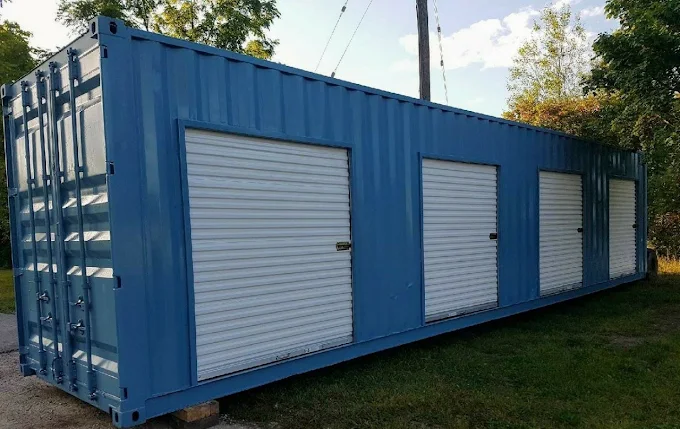
A shipping container with a roll-up door is a standard 20ft or 40ft box with an overhead coiling door cut and framed into the side or end wall at our Brantford yard. Van Blanc sells them outright, 8 or 10 feet wide, steel or insulated slats, delivered Ontario-wide by tilt-deck.
Roll-Up Door Containers for Sale: What We Build and Sell
A shipping container with a roll-up door for sale from Van Blanc starts as a graded box in our rows and leaves as a unit with a coiling door framed into it, priced as one number. The buyer picks the container first, usually a 20ft standard for a driveway workshop or a self-storage bay and a 40ft standard or High Cube for a yard with two bays, then picks the door: 8 or 10 feet wide, in galvanized steel slats or an insulated panel, cut into the long side at any position or into the end wall opposite the cargo doors. The cutting, the welded steel frame and header, the door itself, the slide bolts and the weather seal are all done in the shop at 90 Morton Avenue East before the truck loads, so the unit lands ready to open with one hand. The roll-up door retrofit guide covers the how; this page is the what and the how much.
The cargo doors stay. A roll-up is an addition, not a replacement, unless a buyer asks for the end wall cut and the swing doors welded shut, which almost nobody does, because the factory doors remain the most weather-tight and secure opening on the box and cost nothing to keep. What buyers get is a second way in: a wide, fast opening for the tools, the mower or the pallet jack that goes in and out fifty times a day, and the sealed cargo doors for the long-term end of the container. Two roll-ups on a 40ft, one per 20 foot half with a partition between them, make a pair of independent storage bays that a small self-storage operator or a two-trade contractor yard can lock separately.
“The roll-up is the first thing a workshop buyer asks for after a week with the cargo doors, because the swing doors take a minute and six feet of clearance and the roll-up takes fifteen seconds and none. I tell them two things before we cut. Keep the cargo doors; you will want that seal in January. And measure the widest thing going through, then add fourteen inches, because an eight foot door and a lawn tractor with a deck on it is a call I have taken more than once.”
Christian LeBlanc, second-generation operator, Van Blanc Ent. Inc.
Roll-Up Door Options: Width, Height, Slat and Position
Four choices set the door, and the container sets the limits on two of them. Width is the buyer’s call between 8 feet and 10 feet; height is mostly the container’s, because the door coil has to sit above the opening inside the box, which leaves roughly 7 feet of clear height on a standard 8 foot 6 inch container and close to 8 feet on a High Cube. The 8 foot against 10 foot width decision comes down to what drives through it: an ATV, a mower, a pallet jack and a motorcycle clear an 8 foot door with room to spare, a side-by-side, a compact tractor with a deck or two people carrying a sheet of drywall want the 10. Slat material is galvanized steel for a jobsite or a yard, or an insulated panel where the container will be heated, and the insulated roll-up on a heated container explains where that premium earns its keep.
| Option | Standard 20ft or 40ft | 40ft High Cube | Notes |
|---|---|---|---|
| Door width | 8 ft or 10 ft | 8 ft or 10 ft | Measure the widest item and add 14 inches |
| Clear door height | About 7 ft | About 8 ft | The coil sits above the opening inside the box |
| Position | Side wall, any station, or end wall | Side wall or end wall | Cargo doors stay unless you ask otherwise |
| Slat material | Galvanized steel or insulated panel | Galvanized steel or insulated panel | Insulated where the box is heated |
| Frame | Welded steel frame and header | Welded steel frame and header | Restores the stiffness the cut removes |
| Locking | Slide bolts, padlock, optional lockbox | Slide bolts, padlock, optional lockbox | Interior bolts on a workshop unit |
| Doors per container | One on a 20ft, one or two on a 40ft | One or two | Two doors plus a partition make two bays |
Position matters more than most buyers expect. A door cut into the long side puts the opening where the yard is, so a forklift or a truck pulls up square, and it leaves both ends of the box intact; a door in the end wall opposite the cargo doors makes a drive-through, which is what a car storage or a wash-bay conversion wants. On a 40ft with two roll-ups, the doors sit at the quarter points of the side so each bay gets its own opening, and the partition, shelving and lighting that turn two openings into two rooms are quoted on the same sheet.
What Ontario Buyers Order a Roll-Up Door Container For
The workshop is the first. A 20ft with a 10 foot roll-up in the side, a man door at the end, a bench along the closed wall and a light on a switch is the most common conversion that leaves our yard, and the container workshop guide for Ontario is the long version of what goes in it. Second is the storage bay: self-storage operators and property managers buy 40ft units with two roll-ups and a partition, put them in a row, and rent the bays out as lockers, which is a business model that starts with a purchase from us and never involves us renting anything. Third is the small-engine and equipment fleet, a landscaper’s mowers, a contractor’s compressors, a farm’s ATVs, where a 15 second door beats a 60 second one every morning of the season. Fourth is the retail and food unit: a roll-up serving window cut at counter height turns a 20ft into a kiosk that locks in a second at closing.
The buyer it does not suit is the one who wants the box for sealed long-term storage and nothing else. A roll-up is a coil-spring door with a brush seal, and however well it is fitted it is not the gasketed, four-bar cargo door the factory built; for a container that will be opened twice a year and hold something that must stay dry, the cargo doors alone are the better product, and the roll-up against cargo door comparison says so in detail. We sell both and will tell you which you are.
Grades: Which Container to Cut a Roll-Up Into
A roll-up cut is a structural job, and the container under it decides how well it lasts. A one-trip box has straight corrugations, an unmarked floor and factory paint, so the frame welds in square, the door tracks true, and the paint around the cut matches; it is the grade we recommend for a workshop, a kiosk or anything customers will see. A cargo worthy unit takes the cut well too, with a valid plate and a sound floor, and it is the working default for a yard bay or a tool crib where appearance is not the point. A wind and watertight box can be cut if the wall at the cut station is sound, and we check the panel and the rails before we quote it rather than after, because a rusted bottom rail under a new door frame is a door that sags inside a year. The grade guide for every unit we sell sets out the four grades; on a roll-up build the honest floor is cargo worthy.
What Sets the Price of a Roll-Up Door Container
Two numbers make the quote: the container and the door. The container moves with grade and size, a used cargo worthy 20ft at the bottom of the ladder and a one-trip 40ft High Cube at the top. The door moves with width (a 10 foot door costs more than an 8 foot), slat material (insulated panels cost more than galvanized steel), position (an end-wall cut is more work than a side cut), and the count. Delivery from Brantford is quoted per kilometre on top, and the steel and freight markets shift the whole ladder by the month. We do not post a list price, because a list price for a container plus a door in a size you have not chosen yet would be a guess; how the grade ladder prices every container covers the box, and the door is quoted with it, in writing, usually the same day you send the size, the door and your postal code.
Lead Time: The Container Is in Stock, the Door Adds Shop Time
The 20ft and 40ft standard units are in the rows at Brantford and deliver in 1 to 3 days on their own. A roll-up adds shop time, because the cut, the frame, the door hang and the paint happen at the yard before the truck loads, and that time is quoted with the option list rather than promised in advance; a single door on an in-stock box is the shortest build we do, two doors with a partition and paint is longer. Every quote carries a real date, and buyers who want to see the door hung before they pay can walk the yard or watch it on a video call, then take delivery on the standard Ontario window once the unit is finished. Payment is on delivery, never a deposit, on a modified unit as on a plain one.
Delivery and Site Prep for a Roll-Up Door Container
The truck is the same tilt-deck that delivers every other container and the drop is the same: a level, drained pad, blocks under the corner castings, and a straight run in front of the drop spot for the truck to pull out. What changes is orientation. The driver sets the box so the roll-up faces the yard or the driveway and the cargo doors face the direction you told us, which means deciding before delivery day which way the openings point; which way the doors face on delivery is the five-minute conversation to have when you order. Give the roll-up side a firm apron: a door that opens onto soft ground gets driven over by whatever it was cut for, and a gravel pad carried a metre past the door line keeps the threshold clean. Permits are managed by your municipality, so check with your local building or planning department before you order.
Keeping a Roll-Up Door Working Through an Ontario Winter
A roll-up is the one part of a container that has moving parts, and it wants a few minutes of attention a season. The coil spring carries the door’s weight and loses tension over years of cycles; adjusting the spring tension is a ten-minute job with the right bar and the wrong job to guess at. The bottom brush seal and the side guides collect grit and ice; replacing the weather seal is the fix when daylight shows at the sill. Keep snow cleared off the threshold so the door is not lifted into a frozen ridge, lubricate the guides in the fall, and lock the slide bolts from inside on a workshop unit so the door cannot be lifted from outside. Do those and the door outlives the truck that delivered it.
Frequently Asked Questions
How much does a shipping container with a roll-up door cost?
The container plus the door, quoted as one number. The container moves with grade and size; the door moves with width (8 or 10 feet), slat material (galvanized steel or insulated), position and count. Delivery from Brantford is quoted per kilometre on top. Send the size, the door spec and your postal code and the written, all-in figure comes back, usually the same day.
Can you put a roll-up door on a 20ft container?
Yes, and it is the most common roll-up build we do: an 8 or 10 foot door cut into the long side, or into the end wall opposite the cargo doors, with a welded frame and header. Clear height is about 7 feet on a standard 20ft because the coil sits inside above the opening; a 20ft High Cube gives close to 8 feet.
Do the cargo doors stay when a roll-up is added?
Yes, unless you ask for the end wall cut and the swing doors sealed. The factory cargo doors are the most weather-tight and secure opening on the container, so nearly every buyer keeps them for the long-term end of the box and uses the roll-up for daily access.
Is a roll-up door as secure and weather-tight as cargo doors?
No. A roll-up is a coil-spring door with a brush seal and slide bolts; cargo doors are gasketed steel panels with four locking bars. A well-fitted roll-up is secure and dry enough for a workshop, a storage bay or a kiosk, and a lockbox or interior bolts close the gap for a jobsite. For a box that must stay sealed for months, use the cargo doors alone.
How long does it take to get a container with a roll-up door?
The container is in stock and delivers in 1 to 3 days on its own; the door adds shop time at the Brantford yard, quoted with the option list as a real date rather than a hope. A single door on an in-stock box is the shortest build, two doors with a partition and paint the longest. Payment is on delivery when the finished unit lands.
Can I buy a roll-up door kit and install it myself?
Kits exist, and the retrofit guide on this site walks through what the job involves. The reason most buyers have us do it is the cut: a roll-up opening removes a section of load-bearing wall, and the welded frame and header that restore the stiffness are the part a kit cannot supply. If you want the kit route, ask, and we will tell you plainly whether your container and your welder are up to it.
Can a 40ft container have two roll-up doors?
Yes. Two doors at the quarter points of the long side with a partition between them make two independent storage bays, each with its own lock, which is the configuration self-storage operators and two-trade contractor yards order. Both doors, the partition, and any shelving or lighting are built at the yard and quoted with the container.
Reach Van Blanc in Brantford
Van Blanc Ent. Inc., 90 Morton Ave. East, Unit 1-B, Brantford, ON N3R 7J7. Cell 519-754-6844, toll-free 1-888-509-6658, office 519-751-1651. Open Monday to Thursday 9:30 to 5 and Friday 9:30 to 4. Send the container size, the door width and your postal code for a written quote, or walk the rows first and pick the box before the door goes in.