
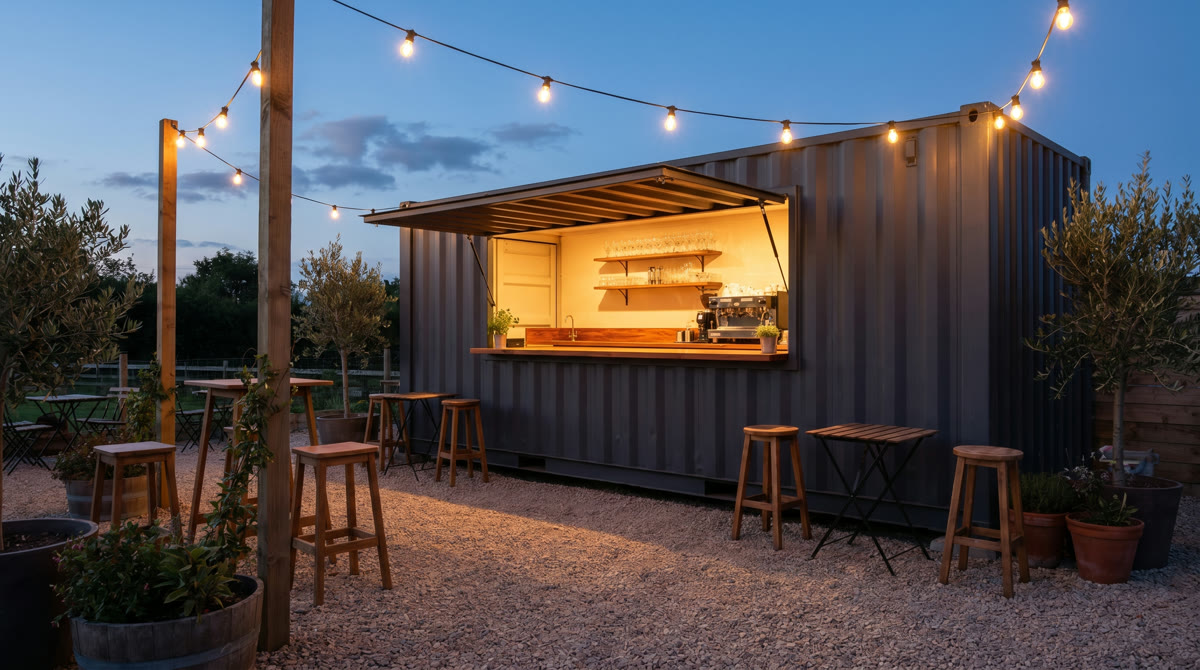
Short answer: Van Blanc supplies and modifies the containers behind Ontario hospitality builds: bars, taprooms, cafes, drive-thru units, kitchen-support boxes, wine cellars, and festival logistics. The base unit is graded in person at our Brantford yard, the structural work happens before delivery, and the build is quoted as one honest number with a schedule your opening date can trust.
Why Ontario Hospitality Keeps Choosing Containers
The proof of concept is a short drive away. STACKT Market turned 120 shipping containers into Toronto’s reference-point marketplace, and the model has been spreading through the province since: laneway restaurants, brewery taprooms, golf-course halfway houses, winery crush-pad storage, and pop-ups that graduated into permanent container restaurants. The reasons are practical: a container build opens in weeks instead of seasons, moves if the location does not work, and turns a patio or parking pad into revenue without a landlord.
What the trend pieces skip is the part we live with daily: the build is only as good as the box. A hospitality container carries food, customers, and your brand, which makes grade selection, clean steel, and honest condition reporting the foundation of the whole project. That is the part that starts in our yard.
Conversions We Build, Systems We Prep
The conversions happen at our yard, under our custom-features program: bar and cocktail-station build-outs, cafe and drive-thru conversions with serving windows, office and retail interiors, insulation packages, roll-up doors, man doors and windows, security hardware, all built before delivery under engineered drawings. The licensed systems that finish a food business, exhaust hoods, grease handling, plumbing, tap lines, final electrical connections, are completed on site by your licensed trades, and our field guides document exactly what the container needs so those quotes come back accurate the first time. Cold chain we supply directly: reefers and insulated units for breweries, wineries, and caterers, sized to the power your site actually has. Logistics too: festival and event containers that arrive before the gates open and leave after teardown, to buy or to rent.
The Hospitality Field Guide Library
Thirty-plus working guides from the build side of the counter:
Bars, Taprooms, and Cafes
- Container Bars in Ontario
- Bar and Restaurant Conversions
- Cocktail Station Build-Outs
- Container Bars and Breweries
- Taproom Glycol Cooling
- Container Cafes
- Drive-Thru Window Builds
- Three-Compartment Sink Plumbing
Restaurants and Kitchen Support
- Container Restaurants in Ontario
- Container Restaurants in Canada
- Exhaust Hoods and Makeup Air
- Grease Trap Installs
- Walk-In Cooler Integration
- Floor Drains and Trenches
- CFIA Food-Grade Conversions
Wine, Beer, and Cold Chain
- Container Wine Cellars
- Wine Cellar Conversions
- Cellar Climate Control
- Niagara Winery Storage
- Winery Cold Storage and Bottling Cycles
Events, Pop-Ups, and Retail
- Festival and Event Logistics
- Pop-Up Storefronts
- Retail Kiosks
- Container Retail: the 2026 Build Guide
- Display Windows
The Three Shapes Most Builds Take
Every hospitality build is quoted per project, but most arrive as one of three shapes. Use these as starting points, not limits.
| Build | Base container | Interior space (approx.) | Typical openings | Systems prep |
|---|---|---|---|---|
| Patio / event bar | 20ft one-trip | 150 sq ft | One fold-up serving window, man door | Bar counter, electrical rough-in; trades connect on site |
| Cafe / coffee window | 20ft one-trip | 150 sq ft | Serving window, drive-thru window option | Counters, insulation, water and electrical rough-in; trades finish |
| Bar-kitchen combo | 40ft or 40ft high-cube | 300+ sq ft | Serving window, man doors, vent openings | Full interior fit-out; hood, gas, and plumbing scoped for your trades |
| Cold-chain support | 20ft or 40ft reefer | Powered cold room | Standard cargo doors | Power requirement scoped before delivery |
Call with the concept and we will tell you on the spot which shape fits it, and what the build adds to the base container.
What We Build, What Your Trades Certify
| Item | Built at our Brantford yard | Finished by your licensed trades |
|---|---|---|
| Serving windows, doors, openings | Cut, framed, welded, weather-sealed | Complete on arrival; no on-site trade certification required |
| Bar counters and interior fit-out | Built under engineered drawings | Delivered finished; your trades tie in only the services they certify |
| Insulation and interior walls | Installed | Ready on delivery; no separate trade sign-off needed |
| Electrical | Rough-in, panel placement, conduit | Final connection and certification |
| Water and sinks | Rough-in, lines placed | Plumbing tie-in and certification |
| Exhaust hood, grease, gas, tap lines | Scoped and documented for your contractor | Installation and certification |
That split is stated in every quote so nothing lands on the wrong side of an inspection.
What Drives Your Hospitality Quote
Six things move the number: the grade of the base container (one-trip is the usual canvas), the size, how many openings get cut, the finish level inside, how deep the systems prep goes, and the delivery distance. None of them are mysteries, which is why the fastest path is a call: describe the concept and we will tell you which of the six actually matter for your build before any money moves.
From First Call to First Pour
1. The call. Concept, site, opening date; you will know on the spot if the season is achievable. 2. Grade and size. We match the base container in the yard; walk the row and pick it yourself if you like. 3. The build. Openings, counters, insulation, and rough-ins happen at 90 Morton Avenue East under engineered drawings. 4. Delivery. Tilt-deck placement, level, where the pour happens. 5. Sign-off. Your licensed trades make the final connections and certify; you open. The quote carries the real schedule for all five steps.
Delivered Across Southern Ontario from Brantford
Hospitality builds leave Brantford for venues across southern Ontario, delivery quoted with the build. Closest-city pages for the routes we run most:
- Hamilton
- Kitchener-Waterloo
- Cambridge
- London
- Guelph
- Niagara Falls
- Toronto
- Mississauga
- Brampton
- St. Catharines
- Woodstock
- Barrie
- Paris
Outside this list? We deliver to 160+ Ontario communities; tell us the postal code and the quote includes the trip.
What Custom-Build Customers Say
“From start to finish excellent service. Very helpful and knowledgeable. Did some custom work to the 2 sea containers and then had the delivery done promptly. Would highly recommend this company anytime to anyone.“
“Very nice team. Excellent approach to customer service. Clear and comprehensive explanation of any questions we had about shipping containers. Great quality and prices, and delivery was handled exceptionally.”
Part of 4.9 stars across 140+ verified Google reviews.
Hospitality Container FAQ
Can a shipping container really become a bar or restaurant?
Yes, and Ontario has been proving it at scale since STACKT Market opened in Toronto on 120 containers. The build is the discipline: food-safe surfaces, proper exhaust and grease handling, refrigeration that holds temperature on the line, and a base container clean enough to deserve the investment. That last part is where the yard matters.
What hospitality builds does Van Blanc support?
Bar and cocktail-station build-outs, cafe and drive-thru conversions, office and retail interiors, serving windows, roll-up doors, insulation, and security hardware, all converted at our Brantford yard before delivery under our custom-features program. Licensed systems like exhaust hoods, grease handling, plumbing, and tap lines are finished on site by your licensed trades, with our field guides documenting what the container needs.
Which container grade should a hospitality build start from?
One-Trip, almost without exception. Customers see the box, food-grade standards favour clean steel, and the doors and seals behave like new. We will say so plainly if a cheaper grade is the wrong economy for your build.
How fast can a hospitality container be ready?
The container itself delivers in 1 to 3 days. A modified build is quoted with a real schedule attached, and the season is the deadline that matters in this industry, so tell us your opening date and we will tell you honestly whether it is achievable.
Do you handle the food-safety and electrical sign-offs?
We build the shell and the structural modifications under engineered drawings, and we scope electrical so a licensed Ontario electrician can finish the connection at your site. Health-unit and food-safety processes belong to your operation; our field guides cover what the build needs to make those conversations easy.
Which size suits a patio bar versus a full kitchen?
A 20ft container carries a patio or event bar comfortably: about 150 square feet, one serving window, room for two behind the counter. A working kitchen wants a 40ft: prep line, equipment, and the vent run all need the extra length. If you are between them, call and describe the menu; the menu decides.
Should a food-service build start on new or used steel?
Most hospitality builds start on a new one-trip container: clean factory floors and straight walls make the interior fit-out faster and the finished space easier to keep inspection-ready. Used cargo-worthy steel can carry a simpler bar build, and we will tell you honestly when it can.
Can a container bar operate through an Ontario winter?
Yes, as a four-season build: insulation, interior walls, and heat provisions are part of the yard fit-out when winter service is the plan. Say so on the first call and the build is scoped for it from the start.
Can the unit move between events or seasons?
That is one of the best reasons to build in a container: the bar travels on the same tilt-deck that delivered it. Secure the loose equipment, book the move, and the venue changes without rebuilding anything.
Build the bar before the season does
The fastest way to scope a build is a call: concept, site, opening date, and you will know on the spot if the season is achievable. The quote covers the base unit, the yard build, and delivery, one number, real schedule, no surprises at inspection time.