
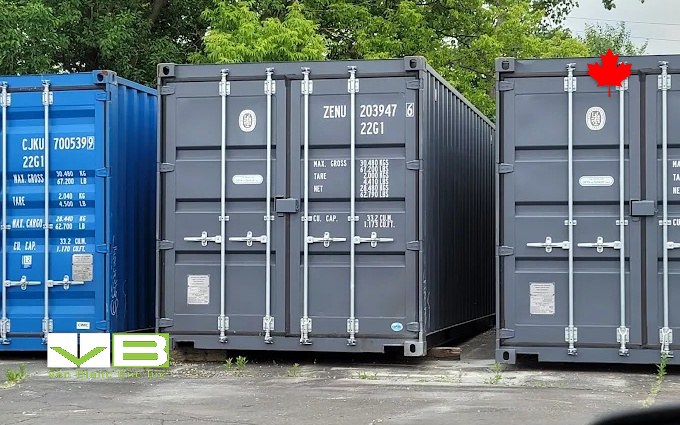
Quick Answer: A quonset hut is a clear-span steel building made of corrugated arch panels bolted together and sold as a kit. Named for Quonset Point, Rhode Island, it was designed for the US Navy in 1941. The arch is the cheap part; endwalls, doors and the slab set the real budget.
- What’s a Quonset Hut?
- Quonset Hut History: Quonset Point, 1941
- Quonset Hut Models: Q, S, P and A
- Quonset Hut Cost: What Moves the Quote
- Quonset Hut Foundations in Ontario
- Winter Snow and Condensation
- Quonset Hut DIY Assembly: Crew and Days
- Heating and Insulating an Arch
- New, Used and Surplus Arches
- Are There Quonset Huts in Ontario?
- Quonset Hut Disadvantages
- Where a Quonset Fits
- The Other Steel Answer on the Same Farm
- Sizing the Arch for Year Five
- Quonset Hut FAQs
Reading Time: 20 minutes
What’s a Quonset Hut?
A quonset hut is a building whose walls and roof are the same part. A run of corrugated, galvanized steel arches is bolted together rib by rib until the row becomes a hall. There is no frame inside and no column anywhere, which is the format’s signature trick. The whole interior, wall to wall and floor to peak, is usable clear span. People often spell it quanset or quansit, and the building is the same whichever way it’s typed.
Before we go further, a disclosure: Van Blanc sells shipping containers, not quonset kits. The LeBlanc family has supplied steel boxes to Ontario farms and yards since 1995, from our 4 Brantford yards. A quonset suits wide machinery, hay and any job that needs clear span; lockable storage that fits inside a 40-foot box suits a container. Paul LeBlanc owns the business, and Christian LeBlanc was raised in the container trade.
The two formats solve neighbouring problems, which is why we think a plain quonset guide belongs on the Van Blanc site. The head-to-head argument lives on a separate page, so this one can stay a buyer’s guide to the arch. The same disclosure sits on our Sprung Structures review, the fabric clear-span cousin of the arch.
Quonset Hut History: Quonset Point, 1941
The name is a place. In 1941 a team of engineers at Quonset Point Naval Air Station in Rhode Island designed the building that took the base’s name. That account comes from the Washington State Department of Archaeology and Historic Preservation’s style guide to the quonset hut. Future Buildings, an arch seller based in Markham, Ontario, credits the George Fuller Construction Company with making the first one for the US Navy. Fuller worked from the Nissen hut design that was common in the First World War.
The wartime numbers explain why the shape is still everywhere. The Washington State guide records that a team of ten could put up a typical twenty-foot hut in one day. By the end of the Second World War, an estimated 150,000 had been built around the world. Two standard sizes did most of the work. The Quonset 20 measured 20 by 48 feet (6.1 by 14.6 m), and the 40, nicknamed the Elephant Hut, measured 40 by 100 feet (12.2 by 30.5 m). The Quonset 20 enclosed 960 square feet. The same guide notes that a good part of it was unusable because of the sloping sides, still the first complaint about a semicircular arch today.
The huts were designed for 86 official uses, and after the war the shape moved into civilian life and the wider steel building trade. Stran-Steel issued a press release in late 1946 that listed 257 adaptations. The kits sold across Canada now descend from that design, and they still arrive stacked on pallets. The buyer’s job has barely changed: pour something honest to stand it on, bolt the arches in order, and close the ends. One Ontario dealer that sells Q, S and Alpine models gets a full page in our read on Metal Pro Buildings, which explains who actually rolls the steel.
Quonset Hut Models: Q, S, P and A
Canadian quonset sellers quote by model letter, and the letters describe the arch profile. The differences decide your usable width, your wall clearance, and how the building sheds weather, so they are worth two minutes of attention.
| Model | Profile | What that means in use |
|---|---|---|
| Q model | The full semicircle, the classic wartime shape | Strongest shape per pound of steel; curved walls start at the floor, so shelving and machinery lose the outer strip of floor on both sides |
| S model | Straight vertical sidewalls with an arched roof | Usable width right to the walls; sidewall height quoted separately; the compromise most shops and garages choose |
| P and A models (peaked) | Straight walls rising to a peaked, gabled arch | Sheds snow aggressively and reads more like a conventional building; the pick in heavy snow districts and for buyers who want a house-adjacent look |
| Mini and utility series | Scaled-down arches | Garden and equipment sheds; same format, small enough for two people and a weekend |
Every maker brands these differently (one company’s Alpine is another’s P model), but the profile taxonomy underneath is stable, and it maps to buyers cleanly. Grain, hay and machinery live happily under a Q, where the curved wall is irrelevant to a pile. The sealed-steel side of the same farm yard is covered in the farm storage guide. A mechanic’s bay wants the S, because a hoist and a workbench both want vertical wall behind them. The peaked models earn their premium in the snow belts, where shedding snow is worth more than any other feature on the sheet. One of the largest Canadian sellers of the Q and S profiles is covered in our Toro Steel Buildings review. One Ontario seller’s version of that taxonomy, its Q, S, P and A models, is read model by model in the Future Buildings arch review.
The spec sheet is where makers differ, and a few published figures show what a serious one contains. The table below takes each number from the maker’s own page. Treat it as a checklist of questions to ask any supplier, including the ones named in it.
| Spec to ask about | A published figure | Whose figure |
|---|---|---|
| Steel gauge range | 22 to 12 gauge (the lower number is the thicker steel) | SteelMaster spec summary |
| Steel grade | grade 80 | SteelMaster spec summary |
| Coating | Galvalume Plus: 55% aluminium, 43.4% zinc, 1.6% silicon | SteelMaster spec summary |
| Wind rating | up to 190 mph (306 km/h) | SteelMaster spec summary |
| Snow-shedding roof | 4:12 pitch on its X model, built for heavy snow | SteelMaster kit page |
| Peaked A model | introduced by SteelMaster in 1992 | SteelMaster kit page |
| Widths on a Canadian quote form | 12 to 60 feet (3.7 to 18.3 m) in 2-foot steps, wider on request | Future Buildings, Markham, Ontario |
| Rust cover | 50-year rust-perforation warranty | Future Buildings |
Gauge talk follows the same rule we gave in our carport guide: smaller number, thicker steel. A seller who cannot quote the panel gauge for your exact model and span is reading their own brochure. Canadian steel building makers can be certified under CSA A660-10. CWB Group, which audits plants against it, says the standard covers the maker’s whole process, from design and engineering through fabrication, shipping and erection documentation. Ask whether the quote is A660-certified steel with stamped engineering for your snow district. No other question sorts serious suppliers from importers as fast. For arches beside rigid frames and post-frame barns, Van Blanc keeps a guide to the wider steel building market in Ontario.
Quonset Hut Cost: What Moves the Quote
We don’t sell quonsets, so this guide carries no quonset prices; our posted prices cover the 20ft and 40ft boxes among the container sizes we stock and sit on a separate container price page. What we can lay out is what moves a quonset quote in Canada, using the non-price figures makers and cost guides publish. BuildingsGuide’s 2026 cost guide puts the arch’s low cost down to having no heavy beams and to erection with 40-50% less labour. The rest of the quote is built from these lines.
| Cost driver | How it moves the quote | Published figure |
|---|---|---|
| Arch profile | The Q uses the least steel for the floor it covers; straight walls and peaks add steel | BuildingsGuide: a Q model runs approximately 20% cheaper than a peaked P model; an S model about 10% more than a Q |
| Width and length | Width sets the arch size and often the gauge; length only adds more of the same ribs | Width range in the spec table above |
| Snow and wind district | Heavier local loads call for thicker steel on the same span | Engineered per order, per BuildingsGuide and the makers |
| Endwalls and doors | Usually separate line items from the arch kit | Set by door count and size |
| Foundation | Full slab, perimeter footing, or piers; the trade-off between screw piles and a poured slab applies here too | BuildingsGuide: a perimeter foundation costs approximately 30% less than a full concrete slab |
| Freight | Distance from the maker’s plant to your site | BuildingsGuide: 2% to 4% of the building cost; most packages ship on 1 or 2 pallets |
| Labour | Your own crew, hired trades you coordinate, or a general contractor | BuildingsGuide: general contractor fees of 10-20% of the project cost |
| Insulation | Only needed if the building will be heated | R-values in the insulation section below |
For a Canadian buyer, two of those lines carry more weight than they do in a US cost guide. Snow district engineering decides the gauge, so the same span can quote differently in Chatham and in Bracebridge. Freight depends on whether the kit is made in Ontario or crosses the border, so ask where the plant is before comparing totals. (Freight is a house obsession here too; our delivery logistics hub is the container version.)
The Endwall Surprise
The arch kit and the endwalls are usually separate line items, and the arch price is the one on the banner. Read the banner price as the arch alone.
An arch run with no ends is a tunnel. To make it a building you buy or build two endwalls, and every choice there is real money. The options are steel endwall panels from the maker, framed-and-clad ends built by your carpenter, or one steel end with an open face for a drive-through hay shelter. Then the doors go in the endwall, and door hardware is its own market: a machinery-width roll-up or sliding door, a man door, maybe a window or two. By the time the tunnel has become a shop, the ends-and-doors bundle can rival the arch kit itself. Good sellers say so up front.
Price the Whole Building
Get every quote itemized as arch kit, endwalls, doors, foundation, freight, and (if you are not bolting it yourself) labour. The arch is the cheapest square footage in the stack; the ends and the slab are where quotes diverge. Two suppliers quoting the same span can land thousands apart once the ends are specified, and the spread tells you something about each supplier.
Quonset Hut Foundations in Ontario
A quonset hut needs a foundation. The arch pushes outward along its whole length, so it doesn’t sit on the ground so much as grip it. That grip is the foundation’s job, and there are three workable ways to provide it.
A full concrete slab with a thickened perimeter is the default for shops and garages, since one pour gives you the floor and the anchorage. In Ontario’s freeze-thaw climate, the perimeter goes below frost or the slab is detailed as a frost-protected shallow foundation. The grade-beam or pier approach anchors the arch feet on concrete runs along the two long sides. The floor stays packed gravel, a legitimate saving for hay, grain and equipment storage where concrete buys nothing. A third route bolts base plates to an existing slab, for buyers roofing over an old yard pad. Someone competent has to confirm the old concrete can take the arch thrust.
All three are engineered work, and the foundation is almost never in the kit price. It is also the part of the project most sensitive to your actual site. Sand plain in Norfolk, clay in Haldimand and shield-edge gravel near the Kawarthas are three different excavation and drainage conversations under the identical arch. Van Blanc’s own pad and ground primer walks the same soils from the container side. Budget the ground before the steel. On paperwork, one sentence covers it: permits are managed by your municipality, so check with your local building or planning department before you order.
Christian LeBlanc, Van Blanc: “I grew up around steel buildings on two continents, and the quonsets I see on Ontario farms are honest structures, the fifty-year-old ones included. The pattern I notice from the delivery truck is that the happy owners talk about their slab and their doors, and the frustrated ones talk about the arch price they saw online before the rest of the project found them.”
Winter Snow and Condensation
Ask a quonset owner about February and you will hear about two kinds of water: the kind on the roof and the kind on the ceiling.
Snow first, because the news is good. The arch is among the best snow geometries in building: loads travel down the curve into the foundation, and the steeper models shed before depth builds up. Reputable Canadian makers engineer each order to the buyer’s district and will show stamped numbers for your ground snow value. Insist the engineering matches your district, and treat any kit sold without stamped numbers as the tent it legally is.
Condensation is the quieter enemy. Put a bare steel shell over warm, breathing contents (livestock, curing firewood, a heated shop, a tractor parked wet) and it will sweat on the first cold night. By morning it drips on everything below. Van Blanc answers the same question about containers, and why bare steel sweats on a cold night is the same physics under an arch. The fix is the trio the container world uses. Size the ventilation to the use. Insulate where the interior will be conditioned (closed-cell spray foam bonds well to the corrugation and kills the cold face). And keep wet machinery and green firewood in moving air. (The container version is written up in our ventilation guide.) Owners who skip all three get a rain cloud with a door.
Quonset Hut DIY Assembly: Crew and Days
Quonset kits are self-assembly, and that matters: it is why the format’s cost per enclosed square foot undercuts most alternatives at machinery scale. BuildingsGuide tells buyers to expect a professional crew to erect a 30 by 40 foot building in 2-4 days. A 40 by 60 takes about 4-6 days, and a first-time DIY crew should roughly double both.
Each arch rib is assembled flat from curved panel sections, then raised and bolted to the previous rib. The work is repetitive more than complicated. A building takes hundreds of bolts, torqued consistently, and the first three ribs decide whether the next thirty go up straight. Two or three people with basic lifting help is the realistic shape of a garage-sized build, and farm crews with a telehandler move much faster. Wind is the enemy of a half-built arch row, so raising happens in calm weather with bracing taken seriously. The labour is real and it is yours. Pricing a local crew for the raising is a sensible middle path plenty of Ontario buyers take. On the container side, a tilt-deck drop is the whole assembly. Write both labour lines on the same sheet before choosing.
Heating and Insulating an Arch
An uninsulated quonset is a magnificent cold building, and for most of its classic jobs, cold is fine. Machinery does not shiver, and hay prefers airflow to warmth. Insulation on a pure storage building is money the contents will never thank you for. So the first question is whether the building should be conditioned at all, and for many Ontario arches the answer is no, plus good ventilation.
When the answer is yes (the hoist bay, the workshop, the winter project space), the arch needs a different insulation logic than a framed building. There are no stud cavities to fill. Closed-cell spray foam on the inside face is the usual choice, since it bonds to the corrugation, adds stiffness and kills the condensation face. Natural Resources Canada’s Keeping the Heat In guide lists closed-cell polyurethane foam at R-5.2 to R-6.5 per inch. Its design value is roughly R-6 per inch. Over the long term, NRCan says the value should be limited to RSI 0.90 per 25 mm, because the foam loses blowing gas. At NRCan’s long-term figure of RSI 0.90 per 25 mm (about R-5.1 per inch), a two-inch pass works out near R-10 and three inches near R-15.
Blanket systems are glass fibre with a reinforced facing, hung on pins. The same NRCan table rates glass fibre at R-3.1 to R-4.3 per inch, and blankets need careful detailing at every rib to avoid loose, saggy runs. Either way, thermal bridging at the ribs is the weak point. Rigid board with strapping suits flat endwalls far better than curved arch faces. The same R-values apply to the insulated containers Van Blanc converts in our Brantford yards.
The floor matters as much as the shell. An uninsulated slab drains heat all winter. Buyers pouring new concrete for a heated arch should price under-slab foam and in-floor heating lines while the pour is cheap, because retrofitting either is not. Heating equipment then follows the building’s duty cycle. A shop used evenings and weekends wants fast-recovery heat, such as overhead radiant tube or a good unit heater. A building used every day can justify the in-floor investment. The volume under an arch is generous, which is wonderful for hoists and hard on heating bills, and radiant heat that warms objects suits the shape.
New, Used and Surplus Arches
Because the format has been in continuous production since the war, the arch market runs three tiers deep, and each tier has its own rules.
New certified kits are the straightforward tier: current-gauge steel, stamped engineering matched to your district, warranty paper, and the freight quoted from a known plant. For a building you intend to heat, insure or work under daily, it is the tier to buy.
The used market is real and worth respect, with eyes open. Whole arches come up for sale when farms consolidate or yards get cleared. A disassembled arch is, mechanically, a pile of numbered panels and a bolt count. The buyer’s checklist is short but unforgiving. Start with galvanizing condition: white storage stain is cosmetic, red rust through the coating is not. Then check the straightness of the base channel and the completeness of the hardware. Above all, ask the engineering question. A 1980s arch was stamped, if at all, for a different code era and possibly a different province. Re-erecting a used arch without an engineer’s review puts an unknown roof over known machinery. The steel checks overlap with a rust and corrosion checklist for a used container.
Actual military surplus is mostly a collector’s market in Canada now. Genuine wartime huts surface occasionally with heritage patina, and buyers love them for event spaces and shop character. Treat them as restoration projects with building-shaped outcomes; the cheap-square-footage crown belongs to the modern kit.
Are There Quonset Huts in Ontario?
Yes, plenty of them, and Ontario also has its own arch sellers. Future Buildings lists its address in Markham, and Metal Pro Buildings lists an office in Thornhill. Drive the province and the quonset population is not evenly spread, because the format follows specific working histories.
The heaviest belt is the southwest’s cash-crop and former tobacco country. Norfolk and the sand-plain townships turned tobacco infrastructure over to grains, ginseng and greenhouse operations. The arch was a natural machinery answer there: wide, affordable, and indifferent to curved walls because a grain pile has no shelving. Many of those arches have outlived the crop cycles that justified them, which is the format’s sales pitch visible from the road.
The second population tracks the hobby-farm and rural-shop wave within an hour of the cities. Think S-model garages and hoist bays on severed lots from Wellington down through Brant, where the arch competes with other prefab garage kits. The buyers have exactly the build-it-yourself temperament the kit format rewards. The third population is northern and institutional. Townships, contractors and camps put peaked arches over sand, salt and equipment, because the shape handles lake-effect snow and a palletized kit trucks north easily.
If your project rhymes with one of those stories, neighbours you can go look at have already proven the format on your ground. Looking at a local, decades-old arch before buying is diligence no brochure replaces. Van Blanc gives the same advice about containers: go see one that has lived through a few winters.
Quonset Hut Disadvantages
Every building format has trade-offs, and the arch’s are well known to the people who own one. None of them is a reason to avoid a quonset; each is a line to plan for.
- Curved walls on a Q model take usable floor away from both sides, the same problem the wartime Quonset 20 had. The S and peaked models solve it with straight walls and more steel.
- Bare steel sweats. A Q or S over warm contents needs ventilation, and a heated one needs insulation that suits a curved face.
- Insulating a curve is harder than insulating a framed wall, since there are no stud cavities for batts. Van Blanc’s notes on how insulation behaves on corrugated steel apply to arch panels too.
- The build is labour, and a half-raised arch row is vulnerable to wind until it is braced and closed.
- Once bolted to a foundation, an arch stays put. Moving it means unbolting it rib by rib.
- Some owners and neighbours dislike the look of a round roof; the peaked models read more like a conventional building.
Weigh those against what the arch does well. For wide storage the list is short and manageable. For a small, lockable tool store it is long enough to point at a different format, which the next two sections cover. Van Blanc also has a guide to a post-frame pole barn in Ontario, and a page on other drive shed options.
Where a Quonset Fits
Van Blanc sells the other format, so read this list as a concession from a container yard.
The Jobs a Quonset Does Better Than Anything We Sell
Wide clear span on a budget: when a combine, a truck or a full hay season needs to live indoors, nothing encloses width per dollar like the arch. This is the format’s home turf and no container configuration touches it.
The permanent farm building: a certified kit on a proper foundation is a multi-decade structure, and the old survivors on Ontario concessions back the claim.
The tall shop: S and peaked models put real vertical wall under an arch. BuildingsGuide’s size list includes a standard 40x60x14 S-model with factory-supplied end walls. (The 8-foot-wide rival for that shop is the container workshop build.)
The build-it-yourself temperament: for a capable crew, the kit format converts sweat directly into enclosed space with no framing trade required.
If that list is your project, buy the quonset, buy it certified, and put the saved money into the endwalls and the slab. The comparison shopping worth doing from there is between arch suppliers. Compare plant location for freight, A660 certification, stamped engineering for your district, endwall pricing, and the gauge on your exact span. Van Blanc has no stake in which arch supplier you pick.
The Other Steel Answer on the Same Farm
Now the part we know from the inside, disclosed and kept in its lane. On the same properties that quonsets serve, a different steel format keeps arriving on our trucks. The sorting between them is clean once the specs sit side by side.
| Line | 30 by 40 foot quonset kit | 40ft high cube container |
|---|---|---|
| Footprint or inside size | 30 by 40 feet (9.1 by 12.2 m) of clear span | 39 ft 6 in by 7 ft 8 in inside (12.040 by 2.337 m) |
| Height | Set by width and model; S and P models add straight wall | 8 ft 10 in inside (2.692 m) |
| Door opening | Whatever the endwall is built to take | 7 ft 8 in by 8 ft 6 in (2.340 by 2.597 m) |
| Foundation | Engineered slab, grade beam or piers | A level bed of compacted gravel, or piers at the four corner castings for permanent placement |
| On-site assembly | Crew days of bolting, longer for a first DIY build | None; the truck sets it down |
| Delivery | Palletized kit freighted from the maker’s plant | 1-3 day delivery across Ontario from Van Blanc |
| Security | As secure as the endwall doors | Steel cargo doors, lockbox option |
| Moving it later | Unbolt rib by rib | Lift onto a truck |
A quonset is enclosed space you assemble: wide, permanent, and priced per square foot of span. A shipping container is enclosed security you drop: sealed, floored, lockable, moveable, and working the moment the truck leaves. The overlap is smaller than it looks. Nobody stores a combine in a sea can, and nobody should bolt together a forty-foot arch to lock up tools, seed and a quad. The two formats co-exist happily in the working yard that uses both. The arch covers the machinery and the hay, and a 20-foot or 40-foot container beside it holds everything that walks away. That means parts, chemicals, tools and the season’s valuables, behind a lockbox. Lockbox and lock choices are their own short science. The container figures above come from the 40ft high cube spec sheet Van Blanc publishes for the units in our rows.
The full head-to-head lives in our container versus quonset comparison, span for span and cost driver for cost driver. The fabric-covered cousin of the arch gets the same treatment in our fabric structure piece. The one buyer we will actively redirect: if your whole project is secure storage under 320 square feet, price sealed steel before you price any kit. A wind and watertight container needs no foundation pour, no assembly weekends and no endwalls. It also holds resale value as a moveable asset. For that buyer the arch is the wrong tool bought for the right instinct, and good sellers on both sides say so.
Pricing the Arch and the Box
Send the list of what has to fit inside and name the concession. The container path comes back priced as one honest, all-in number with a real lead time, not a hopeful one. Fast 1-3 day delivery across Ontario from our Brantford yards, and the sale rows are open to walk before you decide anything.
Van Blanc Ent. Inc. · Family-run since 1995 · 4.9 stars across 140+ Google reviews · Every quote comes with a real lead time
Sizing the Arch for Year Five
The last trap in quonset buying is sizing by the contents you own instead of the contents you are about to own. Van Blanc warns container buyers about the same trap. Farm equipment grows, and so does everything else that lives indoors once indoors exists. These rules of thumb hold up in real yards. Measuring the fleet before choosing any span, arch or box, is the first step in sizing a machine shed around the tractors.
- Measure the tallest, widest thing you will own in five years, not the one you own today. Clear it through the door you are actually buying, not the arch peak. (Container door apertures carry the same gotcha, tabled in our dimensions hub.) Door clearance is the number that bites.
- Add working room as well as parking room. A shop needs walk-around space on every service side of a machine; a storage hall needs an aisle you can actually drive.
- Length is the cheap dimension on an arch. Adding ribs costs less per foot than adding span, so when the budget argues, argue toward longer and narrower before wider and shorter.
One last piece of homework before any deposit: find an arch in your township that has stood for twenty winters, and ask the owner what they would change.
Quonset Hut FAQs
Why were they called Quonset huts?
Quonset huts are named after Quonset Point Naval Air Station in Rhode Island, where engineers designed the building for the US Navy. The design was made to ship flat and go up quickly with hand tools. That bolt-together simplicity is still the format’s main virtue.
How much does a Quonset hut cost in Canada?
Van Blanc doesn’t sell quonsets, so it publishes no quonset prices. The quote is driven by arch model, width, and steel gauge for your snow and wind district. Endwalls, doors, foundation, freight, labour and any insulation make up the rest. Get every quote itemized on those lines.
Does a Quonset hut need a foundation?
Yes. The arch pushes outward along both long sides, so it has to be anchored to a concrete slab, a grade beam or piers. Each is engineered for your soil and frost depth. Hay and equipment buildings often use perimeter footings with a gravel floor; heated shops usually get a full slab.
What are the disadvantages of Quonset huts?
Curved walls on the Q model cost usable floor, and endwalls and doors are extra. Bare steel sweats without ventilation, and a curve is harder to insulate than a framed wall. Assembly is real labour, and a bolted arch is hard to move. Straight-wall S and peaked models answer the first problem.
How long does a quonset hut last?
Metal Pro Buildings says a well-maintained quonset can last 40 to 80 years or more. Lifespan tracks maintenance at the details: the base connection, endwall flashing, and any spot where the coating gets breached.
What is the difference between Q, S, and P models?
The arch profile. Q is the full semicircle, strongest per pound but with curved walls from the floor. S puts straight vertical sidewalls under an arched roof for full usable width. P and A models rise to a peak, shedding snow hardest and reading most like a conventional building.
Is a quonset hut or a shipping container better for farm storage?
Different jobs. The arch wins wide clear span: machinery, hay, grain, and anything measured in bays. The container wins sealed security: tools, parts, chemicals, and valuables behind a lockbox, working the day it arrives with no foundation pour. Many working yards sensibly run one of each.
Sources
- Washington State Department of Archaeology and Historic Preservation, Quonset Hut (Architectural Style Guide), checked September 2026.
- SteelMaster Building Systems, Quonset Hut Kits: Custom DIY Prefab Building Packages, checked September 2026.
- Future Buildings, Quonset Hut: Everything You Want To Know with 5 Great FAQ’s, checked September 2026.
- BuildingsGuide, Quonset Hut Prices, Cost Guide and Sale List for 2026, checked September 2026.
- Metal Pro Buildings, What Is a Quonset Hut? The Complete Guide, checked September 2026.
- Natural Resources Canada, Keeping The Heat In, Section 3: Materials, checked September 2026.
- CWB Group, CSA A660 Quality Certification for Steel Building Systems, checked September 2026.
See Sealed Steel Beside the Arch
Van Blanc has been selling steel boxes to Ontario buyers since 1995. If your project turned out to need sealed steel beside the arch, or in place of it, 90 Morton Avenue East is where you can put hands on every grade we sell.
Van Blanc Ent. Inc., 90 Morton Ave E Unit 1B, Brantford, ON N3R 7J7, 519-754-6844
Bring your machinery list and your site sketch. Sorting arch jobs from container jobs is a short conversation.