
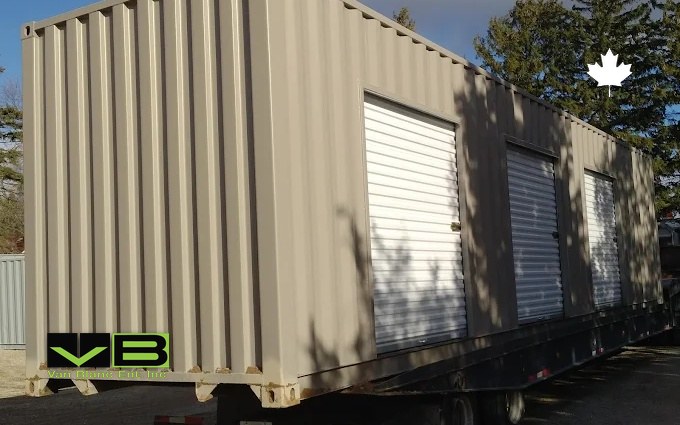
Quick Answer: A carport is an open-sided roof, fabric or steel, that keeps sun, rain, and snow off a vehicle without walls, a slab, or a locked door. In Ontario, the snow rating and the anchoring decide everything. Fabric canopies, tube-frame steel, boxed-eave, vertical-roof, and cantilever models each earn a different job.
In This Guide
- What a Carport Buys You
- The Five Carport Families, Walked Left to Right
- How Much Snow Is Your Carport Roof Really Carrying?
- Anchoring Is Most of the Outcome
- Panel Gauge, Frame Gauge, and Brochure Words
- Wood and Attached Carports
- A Carport Through the Ontario Year
- Where a Carport Fits
- When the Job Outgrows a Roof on Legs
- Buying Well: Questions for Any Carport Seller
- Carport FAQs
Reading Time: 14 minutes
What a Carport Buys You (and What It Never Will)
A carport is the simplest shelter money buys: a roof held up by posts, open on at least two sides, parked over a vehicle, a boat, a camper, or a stack of firewood. No door, no slab requirement, no framing inspection drama. (When a project does want engineered ground, our site prep primer covers what good base work looks like.) That simplicity is the whole appeal. A carport goes up in a weekend, costs a fraction of a garage, and does one job well: it keeps sun, rain, hail, and most of the snow off whatever sits under it. (If garage is the word doing the heavy lifting in your search, the container garage guide is the other road.) Whether it is the right shelter, against the garage it is usually priced beside, is judged neutrally in the carport-versus-garage verdict.
It helps to be clear about what the roof does not do. A carport does not lock. It does not stop wind-driven snow from drifting across your hood. It does not slow down a thief who can see exactly what you own from the road. And in Ontario, a carport that was engineered for a Carolina winter does not automatically survive a Bruce County February. We supply shipping containers in Brantford, not carports, so we have no carport to sell you. What we do have is thirty years of delivering steel into the same yards, farms, and driveways where these structures stand, and a front-row view of which ones are still standing each spring.
Christian LeBlanc, Van Blanc: “Half the properties we deliver to already have a carport standing beside where the container lands. The good ones are anchored like the owner meant it. The ones folded into the fence line after a February blow usually went in with four rebar stakes and a hopeful attitude.”
So this guide plays it straight. Every carport family gets an honest description, the snow-load arithmetic gets real numbers from the National Research Council rather than brochure adjectives, and near the end we lay out plainly what a sealed steel box does that a roof on legs cannot.
The Five Carport Families, Walked Left to Right
Walk any rural Ontario concession and you will see all five kinds within a few kilometres. They are not interchangeable, and the price ladder tracks the engineering almost exactly.
| Family | Frame and roof | Honest Ontario verdict |
|---|---|---|
| Fabric canopy (portable carport) | Tube steel frame, polyethylene cover | Seasonal shelter; the cover is a wear item and snow must be knocked off |
| Regular-style metal carport | Tube frame, rounded rolled-corner roof, horizontal panels | Entry-level steel; fine in moderate snow country if anchored well |
| Boxed-eave (A-frame) carport | A-frame roofline, horizontal panels | Better looks, house-like eave; same horizontal-panel drainage limits |
| Vertical-roof carport | A-frame with panels running ridge to eave, ridge cap, trim | The winter pick: snow and meltwater travel with the ribs, off the roof |
| Cantilever / commercial | Engineered steel or laminated timber on one post row | Parking lots and farm rows; an engineered-drawings purchase, not a kit |
The fabric canopy is the one most Ontarians meet first, usually under the ShelterLogic badge at a big-box store. A carport canopy of this kind is honest about itself if you read the fine print: the manufacturer’s own published ratings run from roughly 35 pounds per square foot of ground snow load on standard models to 43 on their heaviest square-tube series, and every one of those numbers is conditioned on a correctly anchored frame. The cover fabric is ultraviolet-treated polyethylene, and Ontario sun plus Ontario winters will eventually win; owners who love these units treat the cover as a consumable and budget a replacement every handful of years.
The three metal families in the middle of the table are what most people mean when they search for a metal carport. The differences sound cosmetic and are not. Horizontal panels on regular and boxed-eave models lay their ribs across the slope, so sliding snow and meltwater cross every rib on the way down. A vertical-roof carport runs the ribs downhill, adds a ridge cap and gutters the water off the ends, and that one drafting decision is why installers in snow country steer buyers toward vertical roofs even though they cost more. If the structure will stand north of, say, Orangeville, the vertical roof is rarely the wrong call.
The cantilever family is a different animal: single-row posts holding a wing of roof over a parking row, common at dealerships, municipal yards, and dairy operations. Those are engineered structures priced per project. If that is your scale, you are already talking to an engineer, and the honest note from us is further down this page in the section about steel boxes, because fleet-scale storage is exactly where the comparison gets interesting.
How Much Snow Is Your Carport Roof Really Carrying?
Here is the arithmetic almost no carport brochure walks you through. Canadian structural design starts from ground snow load, the weight of the deepest snow pack your district can reasonably expect, and the National Building Code’s climatic tables put design values of roughly 30 to 60 pounds per square foot (about 1.4 to 2.9 kilopascals) across the populated parts of the country. Snow-belt districts run heavier. The code then treats a roof as carrying a basic 0.8 of the ground value, and only 0.6 where the designer can show the roof stays fully exposed to scouring wind.
Now put a 20-by-20-foot carport under that math. At a 40 pounds-per-square-foot roof load, that little roof is holding up around 16,000 pounds of settled snow, roughly the weight of four pickup trucks, on a frame you may have bolted together in an afternoon. This is why the rating sticker matters more than the colour chart, and why “heavy duty” as a marketing phrase deserves the follow-up question: rated to what number, certified by whom, and anchored how?
The Two-Minute Snow Check
Ask any seller two questions. First: what ground snow load is this exact model certified for, in pounds per square foot or kilopascals? Second: is that rating conditional on a concrete or engineered anchor set? If the answer to either is a shrug, the structure is priced for a milder map than the one Ontario lives on. Fresh snow is fluffy; a thaw-freeze crust after a February rain event is not, and it is the crust that folds roofs.
Fabric units deserve one extra sentence of honesty: their ratings assume you also participate. ShelterLogic’s own guidance treats the published wind and snow numbers as reference values for an anchored, maintained shelter, which in practice means brooming heavy falls off the cover before they bond into ice. A fabric carport in Ontario is a working relationship, and it suits people who are home and willing. It does not suit the cottage laneway nobody visits between Thanksgiving and May.
Anchoring Is Most of the Outcome
Talk to anyone who has seen a carport fail and the story is almost never the roof caving under snow. It is the whole structure moving: lifting in a gust front, racking sideways, walking off its footprint one storm at a time. An open-sided roof is functionally a wing. Wind that would lean politely on a wall gets under a carport and lifts.
Anchoring is therefore not a footnote; it is most of the outcome, and it changes with what is underfoot:
Anchor to What You Actually Have
- Bare earth or lawn: screw-in earth augers (the mobile-home style anchor), one per post minimum. Rebar stakes are for weekend party tents, no matter what the kit box implies.
- Gravel pad: augers again, driven past the gravel into undisturbed soil, or concrete deadmen poured at the corners. Gravel alone grips nothing.
- Asphalt: purpose-made asphalt anchors, drilled and set. Asphalt is softer than it looks in July heat.
- Concrete slab: wedge or sleeve anchors into cured concrete, the gold standard, and the base every certified snow rating quietly assumes.
One sentence on paperwork, because it is the customer’s side of the transaction: permits are managed by your municipality, so check with your local building or planning department before you order. Beyond that, our advice is mechanical, and it is the same advice the manufacturers print in their own fine type: the rating on the sticker is only real when the anchors under it are.
Panel Gauge, Frame Gauge, and the Words on the Brochure
Metal carport listings lean on two numbers, and both run backwards: smaller gauge means thicker steel. The frame tube on economy kits is commonly 14-gauge; the upgrade tier is 12-gauge, noticeably heavier in the hand and stiffer in a gust. Roof sheeting typically starts at 29-gauge with 26-gauge as the step up. None of these are exotic choices, but a seller who cannot tell you the gauges without checking is reading the same brochure you are.
The finish question is simpler than the sales floor makes it. Galvanized tube resists rust at the scratches; powder coat looks better on day one and is only as good as its prep underneath. Ask what happens at cut edges and drill points, because that is where an Ontario winter starts its work. And treat the word “certified” with respect: a certified unit ships with an engineering stamp tied to specific snow and wind values and a specified anchor set, while an uncertified unit ships with optimism. In most of Ontario the certified sticker is worth its upcharge, for resale value if nothing else.
If you find yourself cross-shopping the biggest 12-gauge vertical-roof kits against enclosed structures, it is also worth an hour with the rest of our honest comparisons; the alternatives series we keep updated walks the same trade-offs for quonsets, fabric buildings, and sheds without a sales agenda for any of them.
The Sixth Option Nobody Ships: Wood and Attached Carports
One family never shows up in the kit listings because it cannot be flat-packed: the site-built wood carport, freestanding on posts or attached along a house or shop wall. Drive the older concessions around Brant, Norfolk, and Oxford counties and you will see fifty-year-old versions still standing square, cedar posts gone silver, steel roof on its third coat of paint.
Wood earns its place on three counts. It is the easiest structure to match to a house, sharing shingle lines and trim so well that an attached carport can read as original construction. It is the friendliest to modify, because any carpenter can add a rafter bay, close in a wall later, or hang a bike rail off a post. And a properly sized timber frame carries Ontario snow with the calm indifference of overbuilding, which is how the farm carpenters of the 1970s handled load tables: generously.
The honest costs run the other way. Wood is the most labour-priced option per square foot of roof, it asks for real footings below frost depth, and it commits you to maintenance steel never asks for: re-staining, checking posts at grade for rot, and watching the flashing line wherever an attached roof meets the wall. If the appeal is speed and price, wood is the wrong aisle. If the appeal is a structure that belongs to the house and can evolve with it, that is what wood is built for.
A Carport Through the Ontario Year
Whatever family you buy, the structure’s real enemies arrive on a schedule, and ten minutes per season keeps most owners out of the failure stories:
The Ten-Minute Seasonal Walkaround
Late fall: put a wrench on every visible bolt and every anchor. Frames loosen through their first summer of thermal cycling, and a snug frame going into winter is the whole game. Fabric owners: inspect the cover’s stitch lines and ratchets now, in glove weather, on purpose.
Mid-winter: after any thaw-freeze or wet 15-centimetre fall, look at the roofline from a distance. Sagging panel lines or a fabric cover holding pockets of crusted snow mean it is broom time today, from the ground, with a roof rake.
Spring: walk the drip lines. Where meltwater trenched the gravel or stained the slab tells you where next winter’s ice will form, and whether gutters on the eave ends would pay for themselves.
Summer: touch up every scratch and cut edge on steel with cold-galvanizing paint, and check posts where they meet grade. Rust and rot both start at ankle height.
Where a Carport Fits
We told you this guide would serve the carport buyer first, so here are the jobs a carport is built around:
Four Carport Jobs on Ontario Properties
The daily driver: a roof you drive under twice a day. Frost-free windshields in January and a hail buffer in June, with zero door-wrestling.
The RV and the boat on a budget roofline: a tall vertical-roof carport keeps ultraviolet light and snow load off gelcoat and rubber roofs, and its open sides leave the boat or camper in view of the road. (The trailer-versus-steel version of that call lives in our RV and hunt camp comparison.)
Farm machinery you use weekly: a cantilever or deep A-frame row keeps rain off the baler between cuts without slowing anyone down. Open access is the point. Bigger farm programs get the full treatment in our farm storage rundown.
The workshop apron: bolted to a proper slab beside a shop, a carport becomes an all-weather work bay, a staging area, or the world’s best wood-drying roof. (The enclosed cousin of that work bay is the container workshop.)
Notice what all four cases share: frequent access, low theft exposure, and contents that tolerate open air. A carport for those jobs should be vertical-roofed and certified if snow is real where you live, and anchored like you mean it.
When the Job Outgrows a Roof on Legs
The conditions stop holding in three predictable ways, and we watch all three happen from the delivery truck.
The first is security. The month a carport starts sheltering tools, ATVs, a sled, or anything with a resale market, its openness flips from feature to liability. That is the week buyers start reading about lockboxes and container security. The second is weather sideways: carports handle weather from above, but wind-driven snow, dust, and blowing rain own everything under an open roof, which is why the tarp industry thrives beside the carport industry. The third is the moment the thing being stored stops being a vehicle at all: furniture between houses, a contractor’s materials, harvest overflow, a business’s stock. At that point what you are pricing is no longer a roof; it is walls, a floor, and a lockable door.
That is the fork where a shipping container enters the comparison honestly. A 20-foot sea can is a sealed, marine-grade steel room: wind and watertight by definition of its grade, floored in structural plywood over steel cross-members, and holding a padlock and a lockbox between your gear and the road. It needs no assembly weekend, no cover replacement, and its roof was engineered for stacked ocean freight rather than a psf sticker. We wrote up the head-to-head against fabric-covered shelters separately in our portable garage comparison, and the short version is: for anything you store and worry about, sealed steel locks, seals out the sideways snow, and has no cover to replace.
Pricing the Sealed-Steel Option?
Tell us what you are protecting and your postal code, and we will quote a container with an honest, all-in number and a real lead time, not a hopeful one. Fast 1-3 day delivery across Ontario from our Brantford yards, and you are welcome to walk the sale rows at our Brantford yards before you decide anything.
Van Blanc Ent. Inc. · Family-run since 1995 · 4.9 stars across 140+ Google reviews · Every quote comes with a real lead time
Plenty of the yards we deliver to keep the carport for the daily driver and put the tools, sleds and stock in a container a few steps away. The fastest answer is a call.
Buying Well: Questions for Any Carport Seller
Six questions separate the serious sellers from the drop-shippers, whether the listing says carport, carport garage, or portable carport:
The Seller Interview
- What certified snow and wind values does this exact model carry, and is the engineering stamp available before purchase?
- What anchor set does that certification assume, and is it included or an add-on line?
- What are the frame and panel gauges, stated without checking the brochure?
- Who installs, and what does the site need to be: level to what tolerance, on what base?
- What does the warranty actually cover on the frame, the panels, and (for fabric) the cover, in years and in exclusions?
- What is the real lead time, in weeks, in writing?
A seller who answers all six crisply is worth paying a premium. And the same interview works on us: call about a container and you will get grades explained against IICL-style inspection criteria, the delivery truck’s turning needs described before you commit, and a lead time we expect to be held to.
The pattern under this whole guide is one sentence long: open shelter is bought by the rating and the anchors, closed storage is bought by the seal and the lock, and the honest sellers in both industries will tell you which one your actual problem needs.
Carport FAQs
Will a fabric carport survive an Ontario winter?
Yes, with participation. The published ratings on quality fabric units (roughly 35 to 43 pounds per square foot of ground snow on ShelterLogic’s own comparison chart) assume a fully anchored frame and an owner who brooms off heavy falls before they bond into ice. Unattended at a seasonal property, the odds worsen every thaw-freeze cycle.
What snow load rating should a carport have in Ontario?
Match or beat your district’s design ground snow load, which runs roughly 30 to 60 pounds per square foot (1.4 to 2.9 kilopascals) across populated Canada and higher in the snow belts. Code practice treats a roof as carrying about 0.8 of the ground value. When in doubt, buy the certified vertical-roof model one rating up.
Does a carport really need to be anchored?
More than almost anything else about it. An open-sided roof behaves like a wing in wind, and nearly every carport failure story starts with movement rather than snow. Earth augers in soil, engineered anchors in asphalt, wedge anchors in concrete: the sticker rating is only real when the anchors under it are.
Is a vertical roof worth the extra cost over a regular carport?
In most of Ontario, yes. Vertical-roof panels run ridge to eave, so snow and meltwater travel with the ribs and off the structure instead of across every rib on the way down. On a structure you expect to stand for twenty winters, that one drainage decision is the cheapest durability you can buy.
When is a shipping container better than a carport?
When security, sideways weather, or non-vehicle storage enters the picture. A sealed 20-foot container locks up tools, toys, stock, and anything you would rather keep behind a lockbox, and it keeps out the wind-driven snow an open roof lets in. Many rural properties run a carport for the daily vehicle with a container beside it.
Sources
- National Research Council of Canada. (1960, revised). CBD-18: Snow Loads on Roofs. Canadian Building Digests. the digest text
- National Research Council of Canada. (n.d.). Maximum snow depths and snow loads on roofs in Canada. NRC Publications Archive. the NRC survey record
- ShelterLogic. (2026). Compare Wind and Snow Load Rated Shelters. ShelterLogic’s rating comparison
- Sunjoy Canada. (2026). Best Snow-Resistant Carports for Canadian Homes. Sunjoy’s winter guide
- Future Buildings. (2026). Metal Carport Kits. the Future Buildings kits page
Reach Van Blanc in Brantford
We have been supplying shipping containers across Ontario since 1995, from our yards in Brantford. If your storage problem turned out to be a sealed-steel problem somewhere in the middle of this guide, the fastest answer is a call, and the second fastest is a walk through the rows at 90 Morton Avenue East.
Van Blanc Ent. Inc., 90 Morton Ave E Unit 1B, Brantford, ON N3R 7J7, 519-754-6844
Bring the measurements of whatever will not fit under your carport. We will match it to a grade and a size on the spot.