
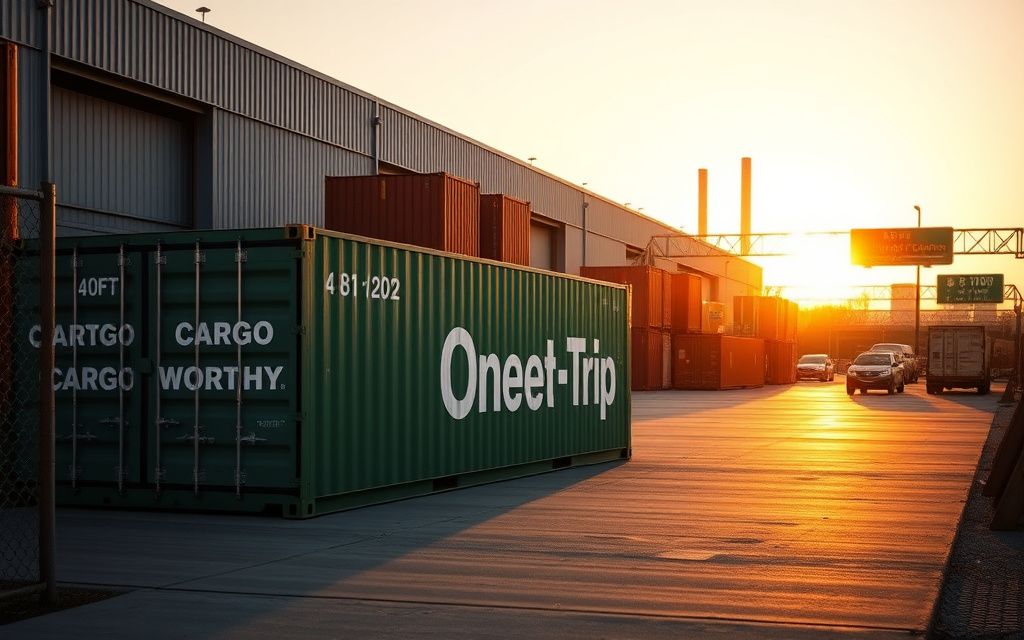
Quick Answer: Van Blanc supplies CSC-plated shipping containers to Stoney Creek manufacturers, fabricators and QEW warehouse overflow operators along Centennial Parkway, South Service Road, Arvin Avenue and Millen Road. One-Trip, Cargo Worthy and Wind & Watertight grades. Bulk orders welcome. 1-3 business day delivery from our Brantford yards. Call 519-754-6844 or 1-888-509-6658. 30+ years operating, 4.9 stars on 140+ Google reviews. 1-3 day delivery Ontario-wide from our Brantford yards.
Part of our Hamilton and Niagara service area, QEW east flank. See the regional hub for the full lineup of container grades and delivery details plus nearby coverage including Hamilton proper, Ancaster up the escarpment and the residential side of Stoney Creek.
In This Guide
- Stoney Creek as Hamilton’s QEW industrial east flank
- Warehouse overflow for QEW manufacturers
- On-site material storage for fabrication yards
- Why do CSC-plated bins matter for insurance and liability?
- Bulk orders and multi-bin scheduling
- Fork-truck access and pad placement reality
- Container grades for industrial buyers
- Stoney Creek pricing
- Delivery from Brantford to Stoney Creek
- The too-cheap Facebook trap
- Frequently Asked Questions
- Reach Van Blanc in Brantford
Reading time: 12 minutes
Stoney Creek as Hamilton’s QEW industrial east flank
Stoney Creek is not a quiet bedroom suburb. It is the working east shoulder of Hamilton, the stretch of the QEW between Hamilton Harbour and the Niagara fruit belt where the heavy industry that built southern Ontario still runs three shifts. The freight corridor that ties Burlington and Toronto to Buffalo and the New York border passes directly through Centennial Parkway, South Service Road and the Fruitland Road interchange. Every shipping container we deliver east of the Red Hill Valley Parkway lands inside that working corridor.
The numbers carry the same story. Stoney Creek hosts roughly 307 active manufacturing operations across steel processing, custom machining, chemical blending, food production and tool-and-die work. ArcelorMittal Dofasco, Hamilton’s largest private-sector employer with around 4,500 staff and 4.5 million net tons of flat-rolled steel a year, operates its Baycoat continuous-coating facility inside Stoney Creek itself. Kubes Steel at 925 Arvin Avenue has been rolling and bending plate since the mid-1980s. Fox 40 International, Fruitland Manufacturing, Bartek Ingredients (chemical, founded 1969), Stoney Creek Machine Ltd, and Kodarin Industries (1979, custom steel-industry components) all anchor blocks within a five-minute drive of one another.
What ties them together is not glamour. It is the same trade reality every shop owner along Arvin Avenue or Millen Road already knows. The bays fill up. The yard fills up. The forklift route between the laser-cut nesting area and the shipping dock starts to crowd. Somebody asks the foreman how much longer the current rack arrangement can hold, and the answer is usually three weeks shorter than the foreman wants to say out loud. That is the moment a shipping container stops being a maybe and starts being a line item.
Three Stoney Creek industrial anchors worth knowing
- ArcelorMittal Baycoat (Stoney Creek): continuous-coil paint facility supporting Dofasco’s flat-rolled-steel output. Sits inside the Stoney Creek industrial belt and shapes the steel-handling vocabulary of every shop within a 5 km radius.
- Arvin Avenue corridor: Kubes Steel (40+ years rolling and bending), Baffin Inc. (346 Arvin), Precise Tool Ltd. (216A Arvin). Tight cluster of steel, tooling and precision machining work that runs Monday to Saturday.
- QEW South Service Road: 19,800 square foot industrial facilities with QEW exposure, multi-tenant industrial parks at 201 Barton, and a continuous line of trucking and logistics yards from Centennial Parkway east to Fruitland Road. Pure freight corridor, the kind that needs container storage measured in dozens, not ones.
The buyer profile that follows from that mix is not a homeowner storing patio cushions. It is an operations manager at a fabrication shop, a warehouse supervisor at a logistics provider, a plant manager at a food-grade ingredient plant, or a procurement officer at a tier-two automotive supplier. They want a steel box. They want it CSC-plated. They want it on the pad before month-end. The conversation with us starts there, not at a brochure photo. A shipping container, also called a sea can, sea container, or C-can, is the same unit whichever word the foreman uses; if you want the difference between a sea can and a C-can spelled out, our terminology guide covers it.
Warehouse overflow for QEW manufacturers
Warehouse overflow is the single most common reason a Stoney Creek manufacturer picks up the phone for a container. The pattern repeats across the corridor. Inbound freight runs ahead of production schedule for two months. The on-site receiving bay backs up. The aisles between racks narrow. Then a single shift loses an hour to a forklift bottleneck, and the plant manager runs the math: building a new bay means permits, steel, and months of downtime, a leased warehouse 10 km away costs more in trucking shuttle than it ever saves in rent, and a 40ft High Cube container drops on the existing yard pad in one delivery for a fraction of either.
The math works because the container is not pretending to be a warehouse. It is acting as a pressure-release valve. Seasonal inbound, bonded inventory waiting for ITAR or import clearance, slow-moving SKUs that block the active-pick face, end-of-line packaging stock that arrives by the trailer-load before a big run, returned goods that need a 30-day decision window. Each of those use cases lives well in a steel box on a concrete pad outside the main bay door. Most of them live badly inside the bay where the active pallet flow lives.
For a typical Stoney Creek manufacturer with 30,000 to 80,000 square feet of bay space, the right starter overflow unit is a 40ft High Cube Cargo Worthy container. A growing site might run three to five of those bins along the back fence and treat them as overflow racks the way a retail back-of-house treats a stockroom mezzanine.
Overflow rule of thumb for QEW manufacturers
If the overflow inventory is staying for more than four weeks, you want to own the bin, not rent it. The math crosses over at roughly month four on a 40HC. How renting from a fleet operator prices out for surge weeks around a model changeover or a Black Friday push is set out separately. Purchase makes sense for the ongoing two-pallet-deep seasonal stock that comes back every spring and autumn.
On-site material storage for fabrication yards
Fabrication is the second-most-common Stoney Creek use case, and it has its own vocabulary. A custom-machining shop on Arvin Avenue or a structural-steel fabricator off Millen Road does not buy a container the way a logistics yard does. They buy it as a tool. The bin holds plate stock, channel, angle, square tube, rebar bundles, weld consumables, blasting media, dunnage lumber, banding stock, and the kind of mid-fabrication assemblies that need protection from rain but not interior bay space.
A 20ft Cargo Worthy or One-Trip container with a single set of doors, a heavy-duty lockbox over the cam-bar handles, and a basic vent kit handles all of the above. Some shops cut a personnel side door so the welder can walk in and pull a stick of 6061 aluminium without rolling open the eight-foot cargo doors. Some shops add a 110V lighting circuit through an ESA-certified electrical contractor so the bin doubles as a checked-in tool crib. Both modifications carry transparent surcharges and we walk every fabricator through the cost in the Brantford yard before the cut work starts.
The part of fabrication storage that gets skipped is the lifting math. A loaded 20ft container with plate steel and dunnage can hit its 25,400 kg rated gross weight a lot faster than the operator expects. A 40ft High Cube is no better balanced when you fill the door end with rebar bundles and leave the front empty. Christian walks every fabrication buyer through how to load the bin properly. The corner castings carry the load. Distributed weight matters. The CSC plate on the door records the maximum gross weight and tare weight for a reason, and the reason is that the corner posts and the bottom side rails are engineered around those numbers.
Christian on the difference between a container and a warehouse
“A container is not a small warehouse. A warehouse is engineered to hold what you put in it where you put it. A container is engineered to hold cargo distributed across a sea voyage. Same steel. Different assumption about how the weight sits. We see fabricators stack 18 tons of plate on the door end of a 40ft High Cube and wonder why the doors no longer close in March. The bin twisted because the load was not distributed. We tell every Stoney Creek fabricator the same thing on day one: load like a ship, not like a basement. The bin will outlive your business if you do.”
Why do CSC-plated bins matter for insurance and liability?
CSC stands for Convention for Safe Containers, the 1972 international treaty that governs how shipping containers are inspected, plated, and re-certified for cargo use. Every export-qualified container carries a CSC plate bolted to the cargo doors that records the manufacturer, build date, max gross weight, tare weight, allowable stacking weight, and inspection history. For a homeowner storing lawn equipment, the plate is a curiosity. For a Stoney Creek industrial buyer, the plate is the document that satisfies the commercial-property insurance carrier.
Here is the part most pool-supplier sales reps do not mention. Many commercial-property and general-liability policies covering Ontario manufacturers and fabricators include language requiring stored materials to sit inside a structure rated for the load. A non-CSC container with a missing or removed plate is, from the insurance carrier’s point of view, a yard ornament holding inventory. A CSC-plated, in-date container is a rated steel structure. If a worker is injured loading or unloading the bin, or if a wind event tips a stack, the plate is the document the adjuster asks for first.
Every container Van Blanc supplies to Stoney Creek industrial buyers comes with its CSC plate intact and readable. We do not strip plates. We do not buy bins with missing plates and rebrand them. If the plate is past inspection, we say so in the quote and either re-certify the unit or steer the buyer to a One-Trip bin with current dates. The buyer’s insurance file ends up cleaner than it would with a Marketplace bin of unknown provenance, and that cleaner file is the part that matters at the next renewal.
Christian on CSC plates and industrial liability
“Industrial buyers ask us about the plate before they ask us about the paint. They have learned the hard way. A fabricator I have known for fifteen years lost an insurance argument over a container with a removed plate, and the next year his premiums climbed by enough to pay for a One-Trip 40HC three times over. Now every time he buys, the first question is whether the plate is current. We give him the answer in writing inside the quote. That is the part of the trade nobody outside the yard sees, and it is the part that actually matters when a claim lands on a desk in downtown Toronto.”
Bulk orders and multi-bin scheduling
A homeowner orders one bin. A Stoney Creek industrial buyer orders four, sometimes eight, sometimes a rolling order of twelve units across a quarter. That changes the conversation on our side. Bulk orders get pricing breaks, but they also get scheduling structure. We do not drop six bins on a tight industrial yard in one morning. We stage them across two or three days so the on-site crew can place, level, and align each unit before the next one arrives.
The mechanics work like this. The buyer confirms grade, quantity, and intended door orientation in writing. We allocate stock from the appropriate Brantford yard and confirm available delivery windows across the next 5 to 10 business days. The buyer’s site manager confirms pad readiness, fork-truck or telehandler availability if any unit needs interior placement, and access constraints. We then book the tilt-deck trucks one bin per truck per slot, typically two to four bins per day depending on yard access. The driver radios ahead on each leg. The site signs each bin in on a delivery manifest.
The reason for the cadence is mechanical, not bureaucratic. A tilt-deck unloads one bin at a time and the driver needs clear lane access from the truck nose to the chosen pad. Dropping a second bin while the first is still being positioned doubles the lift risk and quadruples the chance of a corner casting hitting another corner casting on the pad. We have run this protocol since the late 1990s and we have yet to damage a unit on a Stoney Creek delivery using it.
Stoney Creek bulk-order use case
A QEW logistics operator with a 70,000 square foot bay off Centennial Parkway ordered six 40ft High Cube Cargo Worthy containers from us last autumn to handle a 90-day surge of seasonal inbound that was already exceeding the receiving-bay queue. We staged the delivery across three business days, two bins per morning, with the site’s telehandler placing each unit on the prepared concrete pads along the east fence. Total time from purchase order signature to all six bins on pads: 7 business days. The operator’s monthly rate for the equivalent leased off-site warehouse space would have paid for the containers outright in 14 months.
Fork-truck access and pad placement reality
Stoney Creek industrial yards are tighter than they look from the QEW. Many sites along Arvin Avenue, Millen Road and the Barton Street corridor were built in the 1960s and 1970s with smaller trucks in mind. A modern tilt-deck plus its trailer can run 22 metres bumper to bumper, and that length needs straight clearance from the yard gate to the chosen pad. On half of the sites we deliver to, the driver and the site manager pre-walk the route by phone with photos before the truck leaves Brantford.
Fork-truck access matters separately. The bin itself does not need a forklift to land, since the tilt-deck handles placement, but unloading the bin into the inventory flow does. A 40ft High Cube container with the cargo doors facing the wrong way blocks fork-truck approach on three sides and forces an awkward back-and-forth pattern that adds 30 seconds to every pallet move. Multiply that by a thousand pallet moves a year and you have lost a shift. We confirm door orientation by photo before the truck departs Brantford, every time, and we do not charge for the reorientation if we got it wrong.
The third constraint is overhead. QEW industrial sites occasionally route hydro lines, fibre runs and overhead crane rails across yard pads. A 40ft High Cube container on a tilt-deck reaches roughly 4.4 metres at the peak of the lift arc. If there is a hydro line, a sprinkler standpipe, or a low canopy in the path, we identify it before the truck arrives. The Stoney Creek delivery file we keep on each site notes overhead clearances so the second and third visits to the same yard go faster than the first.
Three things to confirm before we dispatch the tilt-deck
- Gate-to-pad lane width: 4 metres minimum for a 40ft container delivery, 5 metres preferred for a clean approach.
- Overhead clearance: 5 metres clear above the pad for the lift arc plus a safe margin.
- Pad readiness: level and dry, gravel or concrete. A bin landed on soft ground tilts within a single freeze-thaw cycle.
Container grades for Stoney Creek industrial buyers
Container grading is the part of the trade where most pool-supplier websites get vague. Vague is bad for an industrial buyer because the grade carries the price and the insurance file at the same time. Here is the breakdown the Stoney Creek buyer should know before signing anything.
| Grade | What it is | Best industrial fit | Relative cost (highest to lowest) |
|---|---|---|---|
| One-Trip | Built in Asia, used for a single loaded cargo crossing to North America. Original factory paint, intact gaskets and seals, current CSC plate. | Front-of-yard placement, customer-facing fabrication shop, food-grade adjacency, branded delivery to a sensitive site. | Highest. The near-new condition and current plate carry a premium. |
| Cargo Worthy (CW) | Used, re-inspected and re-certified for export under IICL criteria. Cosmetic wear, surface rust, paint variance. Structurally sound. Current CSC plate. | Back-of-yard overflow, fabrication tool crib, the day-to-day workhorse grade for QEW industrial overflow. | Roughly two-thirds of the One-Trip level. The value pick for most buyers. |
| Wind & Watertight (WWT) | Used. Weather-resistant, rodent-proof, structurally sound. Not re-certified for export. May or may not have current CSC plate. | Back-fence storage where the bin will not move again. Lower-stakes inventory. | Below Cargo Worthy. No re-certification, so the saving comes off the plate. |
| As-Is | Older units with structural questions. Sold for parts or low-cost donor projects. | Rarely recommended. Donor unit for custom modification only. | Lowest. Priced as a donor shell, not as storage you would insure. |
The Cargo Worthy grade is the right answer for roughly seven of every ten Stoney Creek industrial buyers we quote. It carries the current CSC plate, satisfies the commercial-insurance file, sits behind a perimeter fence where the cosmetic variance does not matter, and costs roughly two-thirds of the One-Trip price. The exception is a customer-facing site, a food-grade adjacency, or a fabricator who wants the bin photographed for marketing. For those buyers the One-Trip premium pays for itself in finished appearance.
One pattern we will not recommend is a Wind & Watertight bin without a current CSC plate dropped into an industrial-liability environment. The bin is fine for storing patio furniture. It is not fine for storing inventory that an insurance adjuster will ask about after a workplace incident. The modest saving over a Cargo Worthy unit is exactly the saving that buys you trouble in an insurance file. We say so out loud because the alternative is watching a buyer learn the lesson on his own. Read more in our used shipping container buying guide.
Stoney Creek pricing
The all-in Stoney Creek landed price runs a touch higher than rural Brant County because the QEW corridor draws toll-free traffic that bunches the tilt-deck schedule on Mondays and Tuesdays, and because the industrial-yard delivery windows often require advance scheduling with site security. Here is what actually moves the number for each size and grade:
| Container | Grade | Floor footprint | What sets its landed cost |
|---|---|---|---|
| 20ft Dry | WWT | 160 sq ft (20ft x 8ft) | Lowest of the dry boxes. Used steel, no export re-certification, single tilt-deck run. |
| 20ft Dry | Cargo Worthy | 160 sq ft (20ft x 8ft) | Steps up from WWT for the current CSC plate and the insurance file it satisfies. |
| 20ft Dry | One-Trip | 160 sq ft (20ft x 8ft) | Near-new condition and original paint carry the 20ft premium. |
| 40ft Dry | WWT | 320 sq ft (40ft x 8ft) | Twice the footprint of a 20ft, so the steel content drives the step up. |
| 40ft Dry | Cargo Worthy | 320 sq ft (40ft x 8ft) | The corridor workhorse. CSC plate plus double the storage area. |
| 40ft High Cube | Cargo Worthy | 320 sq ft, extra foot of height | The added foot of interior height adds cube without adding floor area. |
| 40ft High Cube | One-Trip | 320 sq ft, extra foot of height | Top of the dry range: most cube, near-new condition, current plate. |
| 20ft Reefer | Operational | 160 sq ft, insulated | Working refrigeration unit and insulation set the cost, not just the steel. |
| 40HC Reefer | Operational | 320 sq ft, insulated | Largest insulated unit. Reefer machinery and model year drive the quote. |
The cost swings with grade variation, model year on reefers, and the specific delivery zone within Stoney Creek. Bins landing inside an industrial park off Centennial Parkway or South Service Road cost less to deliver than bins going up the escarpment edge toward the Mountain. Every quote we issue lists the bin, the grade, the delivery, and the timeline in one document. No surprise line items at the door. No paperwork chase.
Most of our Stoney Creek volume is shipping containers for sale, both used shipping containers for sale in Cargo Worthy and Wind & Watertight grades and near-new One-Trip units, and we do not rent. Whether the order is a single bin or a rolling quarter of container sales, the quote works the same way. Bulk-order pricing is straightforward. Three to five bins on a single PO take a roughly five percent discount. Six to ten bins on a rolling quarter take a seven to ten percent discount, depending on the mix. We do not run special introductory rates that get clawed back on the next order. The number we quote is the number we will quote next year if the order comes back.
Delivery from Brantford to Stoney Creek
The trip from our 90 Morton Avenue East yard in Brantford to a Stoney Creek industrial site runs roughly 65 kilometres. The route is Highway 403 east through Ancaster and Hamilton, then a quick swap onto the QEW at the Freeman Interchange, then east on the QEW to the Centennial Parkway, South Service Road, or Fruitland Road interchange depending on the destination. Standard drive time is 50 to 60 minutes off-peak, 75 to 90 minutes during the morning rush.
For most deliveries we schedule the truck to clear Brantford by 6:30 a.m. so the tilt-deck is at the Stoney Creek gate before the 8:00 morning shift change. The container lands on the pad, the driver radios back to the office, the site signs the manifest, and the truck is back on the QEW heading west by 9:30. The whole sequence runs inside three hours from yard departure to yard return. The 1 to 3 business day standard lead time covers the time from order signature to truck dispatch, not the drive itself. The drive is the easy part.
What slows a Stoney Creek delivery is rarely the road. It is the site. Multi-tenant industrial parks along South Service Road sometimes require 48 to 72 hours of advance notice to the property manager. Solo-tenant sites with their own security gate take a single phone call. Yards with overhead-crane interference need a pre-walked route. We handle each of those constraints inside the lead-time window so the buyer never sees the back-end logistics. The number we quote is the date we land.
Christian LeBlanc: “Stoney Creek is the easy half of Hamilton to deliver into and the hard half to negotiate. The road is straight. The industrial parks are mature. The buyers know what they want. The trouble is that the yards were built for smaller trucks, the overhead lines are not always mapped, and the property managers expect to be talked to before the gate opens, not after. We have been delivering into Centennial Parkway and Arvin Avenue since the late 1990s. The drivers know the gates. The office knows the property managers. That is the part that makes a Stoney Creek delivery land on time instead of slipping a week.”
That property-manager call is on us, not the buyer; it is part of how we book the truck for any multi-tenant park.
The too-cheap Facebook trap
Every other week, a Stoney Creek industrial buyer calls us after seeing a Facebook Marketplace listing for a 40HC priced far below our quote. They want to know if we can match it. The answer we give is the same one we give every QEW corridor caller: no, and that listing is almost always a scam. We have seen the pattern for thirty years and it has gotten worse since 2020, not better.
The pattern is consistent. The listing shows a stock photo, not a real container with a real CSC plate visible. The seller is reluctant to meet at a yard. They want an e-transfer deposit, or sometimes a full payment, before the bin moves. The container “ships from a yard in Mississauga” or “Hamilton” but the seller cannot provide an address you can drive to. The delivery window keeps slipping by a week at a time. Two to four weeks later, the buyer cannot reach the seller. The e-transfer has cleared. There is no bin and no recourse.
The cure is mechanical, not philosophical. Walk the bin before you pay. We let every Stoney Creek industrial buyer drive to our Brantford yard, see the exact unit on the line, walk the corners, check the CSC plate dates, confirm the grade in person, and confirm the price in writing before any money moves. The drive from Stoney Creek to 90 Morton Avenue East runs about 60 minutes. For a purchase, the drive is the cheapest insurance available. Read more on shipping container scams and the red flags to watch for.
Ready to price your container?
Tell us the size and your postal code and we’ll send back an all-in number, container, delivery, and placement, usually within 1-3 days. No pressure, no mystery fees.
Family-run in Brantford since 1995 · 200+ containers in stock · 4.9★ across 140+ Google reviews · every box graded by a person, walk it before it lands.
Frequently Asked Questions
How fast can Van Blanc deliver a shipping container to a Stoney Creek industrial address?
Most Stoney Creek deliveries land within 1 to 3 business days of order confirmation. The container ships from one of our Brantford yards via Highway 403 and the QEW. Multi-tenant industrial sites along South Service Road or Centennial Parkway may need an additional 48 to 72 hours for property-manager scheduling. Every quote includes a real lead time, not a hopeful one.
Can a Stoney Creek manufacturer place a bulk order for multiple containers?
Yes. We regularly handle bulk orders of three to twelve bins for QEW industrial buyers. Pricing breaks apply at the 3 to 5 bin tier and the 6 to 10 bin tier. We stage delivery across two or three business days so the on-site crew can place, level and align each unit before the next one arrives. The Brantford yard holds enough rolling stock to fill most bulk orders without backorder.
Why does a CSC plate matter for industrial container storage?
The CSC plate records manufacturer, build date, maximum gross weight, tare weight, and inspection history. Commercial-property and general-liability insurance carriers often require stored inventory to sit inside a structure with a current rating. A CSC-plated container with current inspection dates satisfies that file. A non-plated or expired-plate bin can cost a manufacturer at insurance renewal time.
Which container grade is best for warehouse overflow at a QEW industrial site?
Cargo Worthy is the right answer for most QEW industrial overflow. It carries the current CSC plate, satisfies the commercial-insurance file, sits behind a perimeter fence where cosmetic variance does not matter, and costs roughly two-thirds of the One-Trip price. We recommend One-Trip for customer-facing sites or food-grade adjacencies. Wind & Watertight is acceptable for back-fence storage where the bin will not move again.
Can a 40ft container be delivered into a tight multi-tenant Stoney Creek industrial park?
Usually yes, with advance route planning. We confirm gate-to-pad lane width (4 metres minimum), overhead clearance (5 metres above the pad for the lift arc), and pad readiness with the site manager before the tilt-deck leaves Brantford. Half of our Stoney Creek deliveries pre-walk the route by phone with site photos to avoid a same-day surprise.
How do you schedule multi-bin delivery to avoid blocking other tenants?
One bin per tilt-deck per slot, typically two to four bins per business day depending on yard access. We book delivery windows with the property manager 48 to 72 hours in advance, confirm door orientation by photo before each truck departs Brantford, and radio ahead on each leg. Other tenants in the park retain forklift access to their own bays throughout the placement.
Are your containers strong enough for a fabricator’s plate-steel storage load?
Yes, when loaded correctly. A 20ft Cargo Worthy or One-Trip container is rated for roughly 25,400 kg gross weight. The corner castings and bottom side rails carry the load. The CSC plate records the exact rating for each unit. We walk every fabricator buyer through load distribution because uneven loading on the door end is the single most common cause of premature door misalignment. Load like a ship, not like a basement.
Can a shipping container be modified for use as a fabrication tool crib?
Yes. Common modifications for fabrication yards include a personnel side door (so the welder can grab stock without rolling open the main cargo doors), a 110V interior lighting circuit installed by an ESA-certified electrical contractor, vent kits, and shelving runs. We handle the cut work in Brantford before delivery so the bin arrives ready to use. Surcharges are quoted transparently before any work begins.
What is the closest container yard to Stoney Creek?
Van Blanc Ent. Inc. at 90 Morton Avenue East in Brantford is the closest yard offering walk-the-bin inspection of CSC-plated industrial containers. The drive from Stoney Creek runs about 60 minutes via Highway 403 and the QEW. Portable-storage pool suppliers service the QEW corridor, but those are online operations, not yards with rolling stock you can walk. A quick call to your site’s property manager or planning contact is the easiest way to confirm what works for your yard. Most QEW industrial-park properties accommodate containers without complication for back-of-house storage. We focus on the delivery side of the trade and leave the site-specific questions to the people who know your property best.
What sizes of shipping containers are available for Stoney Creek delivery?
20ft Dry, 40ft Dry, 40ft High Cube, 45ft High Cube, 20ft Reefer, and 40ft High Cube Reefer. All grades available subject to current stock: One-Trip, Cargo Worthy, Wind & Watertight, and (rarely recommended) As-Is. See our sea can sizes overview for full interior and exterior dimensions.
Can Van Blanc deliver climate-controlled containers for food-grade or chemical Stoney Creek sites?
Yes. We supply 20ft and 40HC reefer (refrigerated) containers with active temperature setpoints between minus 20°C and plus 25°C, useful for food-grade ingredient storage near ArcelorMittal Baycoat or Bartek Ingredients adjacencies. For passive thermal stability we also offer spray-foam-insulated One-Trip units. See our reefer container guide for the trade-offs.
Do you sell used sea containers for QEW-corridor industrial overflow in Stoney Creek?
Yes. We sell used sea containers, Cargo Worthy and Wind and Water Tight grades, for QEW-corridor industrial overflow in Stoney Creek: secure, weather-tight steel for inventory, parts, and equipment in sizes up to 53ft High Cube, at a lower cost than a new one-trip unit.
Is there a container store or yard closer than Brantford for Stoney Creek manufacturers?
Our Brantford yard at 90 Morton Avenue East is the closest place to walk the units and pick your box, a short run from Stoney Creek down the highway. Manufacturers make the drive to inspect the grades, or we deliver in 1 to 3 days on a tilt-deck truck.
Are storage containers a good alternative to renting off-site warehouse space in Stoney Creek?
Yes. For Stoney Creek manufacturers, a storage container is often a better-value alternative to renting off-site warehouse space: you own a secure steel box on your own yard outright, with no monthly rent and no trips to an off-site unit. We deliver every size and grade.
Where can I buy a used shipping container for sale in Stoney Creek?
Van Blanc supplies used shipping containers for sale in Stoney Creek straight from our Brantford yard at 90 Morton Avenue East, a short run down Highway 403 and the QEW. Drive out to walk the Cargo Worthy and Wind & Watertight units and check the CSC plates yourself, or we deliver to your QEW industrial site in 1 to 3 business days.
Can you rent a shipping container in Stoney Creek?
No. Van Blanc sells containers outright and does not rent, lease, or offer rent-to-own. For overflow that stays past about four weeks, buying a 40ft High Cube usually beats renting one, and you can sell it on or ask us about buyback when the surge ends.
Sources
- International Organization for Standardization. (2022). ISO 6346:2022, Freight containers: Coding, identification and marking. iso.org/standard/82754.html
- International Maritime Organization. (1972, amended 2014). International Convention for Safe Containers (CSC). imo.org CSC reference
- Invest in Hamilton, Hamilton Economic Development. (2025). Stoney Creek Business Park profile. investinhamilton.ca
- ArcelorMittal Dofasco. (2025). About ArcelorMittal Dofasco, Hamilton operations. dofasco.arcelormittal.com
- Institute of International Container Lessors. (2024). IICL inspection criteria for container grading. iicl.org
- Transport Canada. (2025). Cargo Securement Standard 10: Containerized Cargo. tc.canada.ca
Reach Van Blanc in Brantford
We have been supplying shipping containers across Ontario since 1995. Our warehouse is at 90 Morton Avenue East in Brantford, and we deliver right across the province on a transparent quote basis. No surprise fees, no paperwork chase. The drive from Stoney Creek runs about 60 minutes via Highway 403 and the QEW, and it is worth the drive for unbeatable quality, family customer service, and 30 years of experience.
Van Blanc Ent. Inc., 90 Morton Ave E Unit 1B, Brantford, ON N3R 7J7. Call 519-754-6844 or toll-free 1-888-509-6658.
Stoney Creek industrial buyers, fabrication-yard foremen and QEW logistics operators are welcome to walk the yard with Christian or Paul. Inspect the bin, check the CSC plate, confirm the grade in person, and then commit. That is the Van Blanc model and it has been the same since 1995.
Placement requirements vary by municipality. A quick call to your local planning office before delivery is the easiest way to confirm what works for your property.
Related Reading
- Hamilton, the parent service area for this corridor
- Burlington Marine and Lakeshore Container Storage
- What sets the price on a 40ft container in Canada
- CSC plate and grade inspection checklist
- Reefer containers for food-grade and chemical sites
- Interior and exterior dimensions for every sea can size
- How container rental works in Ontario, if you only need weeks
- Our full lineup of container sizes and grades