
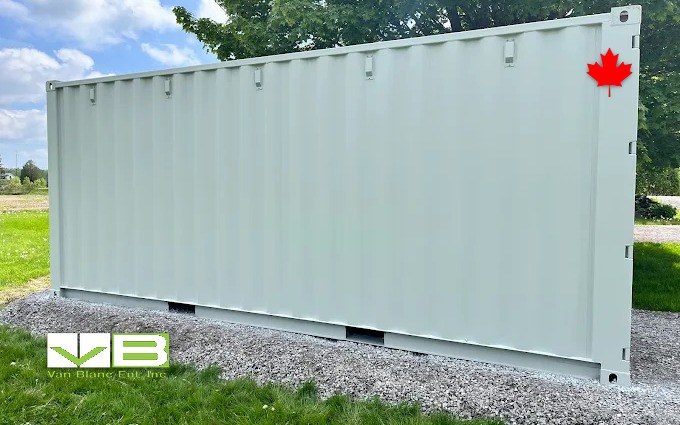
Quick Answer: A yurt is a round, lattice-walled tent-building hybrid, and modern Canadian makers engineer four-season versions that carry real snow loads on insulated platforms. The platform and the heat source decide winter comfort more than the yurt itself. Glamping operators typically pair guest yurts with locked steel for the back-of-house side.
In This Guide
- What a Yurt Is, From Steppe to Muskoka
- The Canadian Makers and Their Two Philosophies
- The Platform Decides Everything
- Heat, Snow, and the Minus-Twenty Test
- The Private Buyer’s Yurt
- Water, Washrooms, and the Serviced Yurt
- The Glamping Business Math
- The Back-of-House Nobody Photographs
- The Security Gap Every Canvas Wall Shares
- Mixed Fleets: Yurts, Bunkies, and Steel Guest Units
- Buying a Yurt Well
- Yurt FAQs
Reading Time: 13 minutes
What a Yurt Is, From Steppe to Muskoka
A yurt is a round structure built on a collapsible lattice wall, roofed with rafters that meet a central compression ring, tensioned by cables, and skinned in layered fabric membranes. Mongolian herders refined the design across centuries of steppe winters colder than anything Ontario offers, which is worth remembering whenever someone calls a yurt a tent: the original users lived in theirs through minus-forty, and the architecture they settled on, round walls that shed wind, a low profile, a stove in the middle, is winter engineering of a very high order. The modern North American yurt industrializes that inheritance with engineered framing, insulation layers, and membranes rated for decades, and it has become the signature structure of the glamping economy.
Ontario’s interest in the category runs on two tracks at once. Private buyers want a yurt as a backcountry retreat, a studio, or the most interesting guest space on the property. Operators want fleets of them, because a yurt books at a premium over a tent site while costing a fraction of a cabin. Both tracks eventually reach the same discoveries: the yurt itself is the most solved part of the project, and the platform under it, the heat inside it, and the storage economy around it are where the real decisions live. We sell shipping containers, none of which are round or charming, and our honest place in this story is the third discovery. We will get there after serving the first two properly.
Christian LeBlanc, Van Blanc: “Glamping operators are some of my favourite calls because they think in systems. The guests see canvas and lanterns; the operator is running linen cycles, tool cribs, furniture that winters somewhere, and a season’s worth of consumables. Every pretty resort has an unpretty corner doing the logistics, and that corner is usually where our steel ends up.”
The Canadian Makers and Their Two Philosophies
The Canadian market has sorted itself into two philosophies worth understanding before any brochure. The modern-engineering school, led by makers like The Out Factory, treats the yurt as a performance building: reflective cross-linked polyethylene insulation, aircraft-grade tension cabling, certified wood framing marketed to stand under five feet of wet snow, and options lists that read like cottage specifications, right through to mini-split climate control. The traditionalist school, anchored by Groovy Yurts, imports and adapts the genuine Mongolian article, hand-painted rafters and felt layers included, and backs it with a four-season line built for Canadian moisture and heating patterns. Quebec’s Imago Structures rounds out the field at the large end, with engineered yurts reaching thirty-two feet across.
Neither school is wrong, and the choice tracks the buyer’s story. The engineering school suits operators who need predictable performance, warranty paper, and guest reviews that never mention drafts. The traditional school suits buyers for whom the yurt’s lineage is the point, and its felt-and-canvas build rewards the more attentive ownership it asks for. Prices, options, and lead times vary enough that the honest advice is the same we give in our own trade: talk to the maker, stand inside one before committing, and treat any seller who cannot show you a standing example with appropriate caution.
The Platform Decides Everything
Every experienced yurt owner says the same sentence eventually: build the platform right or nothing else matters. A yurt sits on a round or polygonal deck, and that deck is the building’s entire foundation, floor structure, insulation envelope’s bottom face, and levelness guarantee in one assembly. Under-insulate it and the finest wall package loses the winter war through the floor, because heated air stratifies and the cold works upward from below. Under-build it and the lattice walls rack, the door frame argues, and the dome ring stops sitting square. The platform also carries the utility decisions: where power enters, where plumbing rises if there is any, and how air moves beneath the deck so the structure never sits in its own trapped moisture.
The practical Ontario spec the makers converge on: piers or screw piles below frost depth, framing sized for the real snow load path, rigid insulation between joists with the gaps foamed honest, and a skirt that keeps wind out from under the floor while still letting the assembly breathe. Permits are managed by your municipality, so check with your local building or planning department before you order. Budget-wise, first-time buyers are consistently surprised that a proper platform rivals a meaningful share of the yurt’s own cost. It should. It is doing the job a foundation does for any building, and skimping there is how four-season yurts become three-and-a-half-season disappointments.
Heat, Snow, and the Minus-Twenty Test
The four-season claim stands or falls on heating strategy, and the field notes are consistent. The wood stove remains the classic answer, run through the maker’s flashing and chimney kit rather than improvisation, and it suits the off-grid sites where yurts naturally land. Pellet stoves trade romance for thermostat control. Mini-splits have become the operator favourite where power exists, heating shoulder seasons efficiently and cooling July as a bonus, and electric baseboards backstop everything. What every option shares is the physics of heating a single round volume: the space warms fast, stratifies toward the dome, and rewards a ceiling fan pushing heat back down. Insulated window and dome covers earn their keep on the coldest nights.
Snow behaves better on yurts than newcomers fear, because the conical roof sheds and the engineered lines are rated for serious accumulation. The winter duties that remain are familiar from every structure we write about: the deep, wet loads deserve clearing, the door path needs shoveling like any door path, and the membrane appreciates a spring inspection where the tension cables and ring hardware get a look. Owners who run that modest regime report yurts sailing through Ontario winters intact, guests booking them specifically for the snow-globe effect, and the wood stove doing more for occupancy rates than any amenity on the listing.
Outfitting a Glamping Operation?
The guest structures are your maker’s business; the operations backbone is ours. Locked storage for linens, furniture, tools, and the off-season, converted utility units built at our Brantford yard, delivered on your timeline with a real lead time, not a hopeful one. Fast 1-3 day delivery across Ontario from our Brantford yards. Multi-unit orders are ordinary here.
Van Blanc Ent. Inc. · Brantford, Ontario · Since 1995 · 4.9 stars across 140+ Google reviews · Cash on delivery
The Private Buyer’s Yurt
Off the commercial track, the private yurt has quietly become one of Ontario’s favourite third buildings. The most common briefs we hear about from customers who own both a yurt and our steel: the backyard studio, where the round room’s light and acoustics make it a natural for music, yoga, and work that benefits from not being in the house; the bush retreat on family acreage, heated by wood and reached on snowshoes; and the wellness compound, where the yurt plays lounge and cool-down room beside a sauna. That last pairing has real momentum, and the sauna half of it is mapped in the outdoor sauna category walkthrough, with the barrel-shaped contingent covered separately in the barrel sauna field guide.
The private buyer’s trap is scale creep. A thirty-foot yurt is a magnificent object and a serious building, with a platform to match and a heating load to respect; most private briefs are genuinely served by the sixteen-to-twenty-four-foot range, which heats fast on one stove and leaves budget for the platform quality that actually decides the experience. Buy the diameter your use needs, and spend the difference below the floor.
Water, Washrooms, and the Serviced Yurt
Plumbing is where yurt projects change class, and honesty here saves five-figure surprises. A dry yurt, guests walking to a washroom building, is a deck-and-membrane project. A serviced yurt, with a real washroom or kitchenette inside, inherits everything any plumbed building inherits: supply lines that must survive winter, drains that must go somewhere lawful, and the licensed trades to install and certify all of it. Operators mostly solve this at the property level instead, running dry guest structures around a central comfort station, which concentrates the plumbing in one heated building and keeps each yurt simple.
That comfort-station pattern is also where converted steel shows up in the guest-facing part of a glamping property after all: a container washroom-and-shower block, lined, insulated, and roughed in at a shop under engineered drawings, then finished and certified by the customer’s plumber and electrician on site, serves a loop of guest structures from one utility trench. It is the least romantic building on the property and the one the reviews mention when it is done badly, which is an argument for doing it in a material that cannot rot around its own showers.
The Glamping Business Math
The operator’s spreadsheet explains the yurt boom better than any aesthetic argument. A guest yurt costs a fraction of a serviced cabin, installs on piers rather than foundations, books at rates conventional campsites never touch, and photographs like free marketing. Ontario’s glamping demand has grown every season as the province’s city dwellers pay for wilderness with a duvet, and the operators who thrive run the same playbook: a handful of distinctive guest structures, a booking calendar that stretches shoulder seasons with wood-stove romance, and operating costs held down by doing housekeeping and maintenance with small crews and tight logistics.
Tight logistics is the phrase doing the work in that sentence. Every guest structure generates a service load: linen turnover per stay, firewood staging, consumables, seasonal furniture swaps, and the repair kit that keeps membranes, decks, and stoves guest-ready. Operations running the seasonal-business storage pattern put that whole load in locked steel at the service yard, and event-heavy properties add a dedicated events-gear unit for the wedding-season inventory. The guests never see any of it, which is precisely the point.
The season-extension play deserves its own sentence, because it separates the profitable operators from the summer hobbyists. A tent site earns for perhaps sixteen weekends; a wood-stoved yurt earns for forty, and the winter bookings come with less competition, higher rates, and guests who arrive already delighted by the premise. Every dollar spent making a yurt genuinely comfortable in February, the stove upgrade, the platform insulation, the covered wood staging by the door, buys weeks of calendar the neighbouring campground cannot sell. The operators who understand this build for January first and let July take care of itself.
The Back-of-House Nobody Photographs
Here is our product’s honest position in the yurt economy, stated without costume: we are the back-of-house. A glamping property is a small hospitality company operating in a field, and it needs what every hospitality company needs, secure dry storage scaled to its ambitions. The pattern our commercial deliveries follow: one 20-foot unit as the housekeeping hub, shelved for linens and consumables; a second as the maintenance shop holding tools, membrane patches, stove parts, and the winter’s furniture; and for larger properties, a converted unit from the yard’s conversion benches serving as check-in office or staff room, built under engineered drawings with licensed trades certifying services on site.
Operators who want the cost spread across seasons finance the purchase through their own bank or an equipment lender, and the units belong to the property from delivery day. We do not rent; a glamping property planning five seasons of growth is exactly the brief the model fits.
The Security Gap Every Canvas Wall Shares
The uncomfortable fact about every fabric-walled structure, said respectfully because it is nobody’s design flaw: a yurt has no security whatsoever. The wall is a knife-width from open, the door is decorative deterrence, and everything of value inside a seasonal property’s yurts, heaters, furnishings, tools, sound systems, spends the off-season protected by hope and distance. Cottage country’s break-in statistics do the rest of this argument. Operators and private owners alike converge on the same architecture we recommend everywhere: charm sleeps in the fabric buildings, value winters in steel, behind hardware designed to bore burglars into leaving.
The autumn migration takes an afternoon per yurt: furnishings, textiles, electronics, and anything mice would enjoy come out, cross the property, and lock into the container until spring, exactly the mouse-and-moisture discipline every seasonal building on this site preaches. Owners who run it report opening day in May as unpacking rather than damage assessment, which is the entire return on the habit.
Insurance conversations reinforce the same split. Ask any broker who writes seasonal-property policies where claims concentrate, and unattended contents in soft-walled structures rank near the top of the list. Concentrating the insurable value in one hardened building simplifies the policy, the premium, and the February phone call nobody wants to make. The steel box is not just where the gear sleeps; it is where the risk sleeps.
Mixed Fleets: Yurts, Bunkies, and Steel Guest Units
The most interesting Ontario properties have stopped choosing one guest structure and started curating fleets, because variety books. A property might run yurts for the signature stays, a timber bunkie or two for guests who want walls, and increasingly a converted container unit as the design-forward option for travellers chasing the industrial aesthetic. The timber end of that fleet is mapped in the timber bunkie category guide, and the steel end, guest-occupied container conversions with real egress, engineering, and trades certification, is walked through in steel guest units in the booking economy. Off-grid properties extend the same logic through powering a cabin beyond the grid, and the hunt-camp crowd has run the ruggedest version of it for years via the camp built to be left alone all week.
The fleet logic holds at every scale: match each structure to the guest it books and the winter it faces, and let no single material pretend to every job. Canvas charms, timber comforts, steel endures and guards, and the properties that understand the division run smoother Octobers than the ones that ask any one of them to be everything.
The yurt earned its moment honestly: a thousand-year-old answer to wind and cold, re-engineered until it books itself out every fall weekend. Build the platform like it matters, heat it like the makers say, and it will hold its snow-globe magic for decades. Then walk to the unphotographed corner of the property, where the linens, the tools, and the furniture winter in a locked steel box, and notice that the oldest structure on the site and the plainest one are doing exactly what each was born for.
Buying a Yurt Well
| Guest structure | Books on | Winters by |
|---|---|---|
| Yurt | Novelty, snow-globe romance | Standing, stove running, contents stripped |
| Timber bunkie | Cabin comfort, walls and doors | Closed up, mouse-proofed, ventilated |
| Container guest unit | Design-forward industrial appeal | Locked, indifferent, occasionally smug |
The buying rules mirror every structure market we cover. Stand inside a built example before ordering, because diameter photographs poorly and feels entirely different underfoot. Get the platform specification in writing with the quote, since the yurt price without the platform is half a number. Confirm lead times honestly, as the good makers run real queues ahead of every season. And ask how delivery works to your specific site, because a yurt kit arrives as serious freight, and a bush lot that a crew must pack materials into is a different project than a lawn a truck can reach. The makers named on this page all survive those questions comfortably, which is exactly why they were named.
Sold outright. Delivered in 1 to 3 days.
Van Blanc sells new and used shipping containers outright from our 4 Brantford yards, with delivery in 1 to 3 days and payment on delivery. We do not rent, lease or offer rent-to-own. Request a sale quote or call the yard at 519-754-6844.
Yurt FAQs
Can you live in a yurt year-round in Ontario?
Modern four-season yurts from Canadian makers are engineered for it, with insulation packages, snow-rated framing, and heating from wood stoves to mini-splits. Winter comfort depends most on an insulated, properly built platform and a real heat source. Whether year-round occupancy is permitted on a given property is a municipal question.
How much snow can a yurt handle?
Engineered Canadian models are marketed to carry substantial loads, with one Ontario maker rating its framing and tension system for around five feet of wet snow. The conical roof sheds naturally. Deep wet accumulations still deserve clearing, and the platform must be framed for the load path the roof delivers.
What goes under a yurt?
A round or polygonal platform, and it decides the yurt’s winter performance. The Ontario consensus: piers or screw piles below frost depth, joists sized for real loads, rigid insulation between them, and a wind skirt that still lets the assembly breathe. Skimping on the platform is the classic four-season failure.
How do glamping operators store everything off-season?
The common architecture: guest charm in the fabric and timber structures, value in locked steel. Linens, furnishings, heaters, tools, and consumables migrate each fall into containers at the service yard, shelved for housekeeping and maintenance. Fabric walls offer no security, so the off-season inventory winters behind steel instead.
Are yurts cheaper than cabins?
Generally yes, substantially, which drives the glamping economics: a guest yurt installs on piers, skips full foundations, and books at premium nightly rates. The honest total includes the platform, heating, and delivery, and the platform surprises first-time buyers by rivaling a meaningful share of the yurt’s own price.
Sources
- The Out Factory. (2025). Best Yurt Companies in Canada: A Buyer’s Guide. theoutfactory.com. The Canadian market map and the engineered four-season specifications cited
- Groovy Yurts. (2025). The True Canadian Yurt. groovyyurts.com. The traditionalist maker’s four-season line and heating compatibility
- Imago Structures. (2025). The 32-Foot Yurt. imagostructures.com. The Quebec maker’s large-format engineered yurt
- The Out Factory. (2025). Yurts for Sale in Ontario, Canada. theoutfactory.com. Ontario-specific insulation, membrane, and snow-load positioning
Reach Van Blanc in Brantford
We have supplied Ontario’s outdoor economy with containers since 1995, and glamping properties have become regular names on our delivery board: housekeeping hubs, maintenance shops, and the locked corner where the whole operation winters. If your property’s unphotographed side needs building, walk our rows at 90 Morton Avenue East.
Van Blanc Ent. Inc., 90 Morton Ave E Unit 1B, Brantford, ON N3R 7J7, 519-754-6844
Planning a glamping build-out? Call with your structure count and season plan, and we will size the back-of-house honestly, including the moment to add the second unit instead of overstuffing the first.