
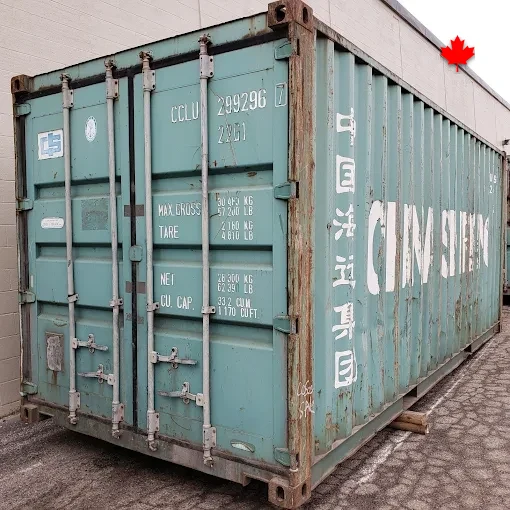
Quick Answer: A sea can home is a container home by its Canadian name: a dwelling built from one or more steel shipping containers. The build succeeds or fails on the box you start with, which is why new (one-trip) sea cans are the standard shell, and why Ontario builders start at a yard they can walk.
Canadians who learned to call the steel box a sea can naturally call the dwelling a sea can home, and the search engines treat the phrase as its own little country. Same builds, same steel, same questions as the container homes the rest of the world searches for. This guide covers the sea can version of the story the way a supplier who has sold shells into these builds actually talks about it: which box, which grade, what the steel does well and badly as a building, and where our part of the job ends and your licensed trades begin. The umbrella guide to container homes in Canada covers the same ground under the international name.
What Is a Sea Can Home, Exactly?
A sea can home is a dwelling whose structure is one or more ISO shipping containers: 8ft wide, 20ft or 40ft long, built to the ISO 668 standard from corten weathering steel. Builds range from a single 20ft bunkie behind a cottage to multi-container houses with the walls cut wide open and the boxes acting as stacked structural modules. The appeal is real: the shell arrives structurally complete, square, and weatherproof on day one, and the corten skin shrugs off decades of Ontario weather. The constraints are just as real: 2.44m of interior width before insulation, steel’s enthusiasm for conducting heat and cold, and the engineering that responsible builds put behind every big opening cut into a load-bearing wall.
The Box Decides More Than the Blueprint
Every sea can home conversation at our counter reaches the same early fork: which grade of container deserves to become a building. The honest ladder, read for dwellings, is short. New (one-trip) is the standard answer: one loaded crossing from the factory, no rust history, no mystery cargo in its past, straight walls that take framing cleanly, and decades of life ahead of the build investment. Cargo Worthy can work for workshops and studios where budget outranks finish, with every dent inspected before commitment. Wind and Watertight belongs to storage, not dwellings; its honest cosmetic history becomes a liability once walls are insulated shut around it. As-Is is donor stock for cladding and experiments, never an occupied shell. Builders sometimes arrive planning to save money on the box and spend it on finishes; the antidote is sea cans a builder can walk first, because shell quality is visible in person and invisible in listings. Even so, three decades of watching builds suggests the opposite ratio ages better, because everything in the build touches the shell and nothing fixes a bad one afterward. If you are weighing a factory module against building on site, the Honomobo comparison lays out what each route includes and leaves out. Readers still weighing a container against a factory-built house of any kind can start with the prefab families compared, which puts the container beside kit, panelized and modular.
Three Steel Truths Every Build Must Respect
Condensation is the enemy, insulation is the answer. Warm interior air touching cold steel writes its moisture on the walls, which is why closed-cell spray foam directly against the skin is the near-universal Ontario spec: it insulates and vapour-seals in one pass. Builds that skimp here meet their mistake the first February morning.
The corrugations are the strength. A container’s walls are structural; cut a window or a wide patio opening and the loads redistribute. Real builds put engineered reinforcement around every major opening, designed by people licensed to design it. When we cut openings at the yard, it is done under engineered drawings, and the same standard should follow the box wherever it goes.
Width is fixed; length and count are not. Interior width lands near 2.35m before insulation, which disciplines floor plans hard. Designs that fight the width lose; designs that run rooms lengthwise, or marry two boxes side by side with the facing walls opened, get the proportions people are happy living in.
Three Ontario Sea Can Metamorphoses
The cottage bunkie. A single 20ft one-trip, one window, a man door, spray foam, pine cladding inside, and a small mini-split. Sleeps the summer overflow, locks like a vault all winter, and arrives on a tilt-deck in an afternoon. The gateway build, and for many properties the only one needed.
The hunt camp. A 40ft high cube on blocking at the back of an acreage: bunks at one end, a wood stove cleared to code by the installer, gear storage at the door end behind the original cargo doors. The container’s security is the feature here; the camp stands empty forty weeks a year and nothing walks away.
The full home. Multiple boxes, real foundations, engineered openings, licensed trades throughout, and a finished result that reads as architecture rather than novelty. These builds are real and growing in Ontario, and they begin exactly where the small ones do: standing in a yard row, picking the straightest shells on the lot.
Start With the Shell
Tell us the build you are imagining and your postal code, and we will quote the right boxes for it honestly, one-trip first, with a real lead time. Better yet, walk the Brantford rows and pick your shells in person; builders always do.
What We Supply, What Your Trades Finish
The split deserves plain language, because blurred versions of it cause most container-build regret. Our side: the shells, in the grade the build deserves; cutting and framing openings, man doors, windows, and roll-up doors under engineered drawings at the Brantford yard; insulation; interior framing and finish carpentry; and electrical rough-in. Your licensed trades’ side: final electrical connection and certification under the Ontario Electrical Safety Code, plumbing completion and certification, HVAC commissioning, foundations, and everything the building officials of your municipality require sign-off on. Permits are managed by your municipality; check with your local building or planning department before you order. A supplier who claims to hand you a fully certified turnkey dwelling off a truck is describing a product category that mostly does not exist; the honest version is a superbly prepared shell and a clean handoff to your trades, and that version builds excellent homes.
What Shapes the Money (Without the Fantasy Numbers)
We publish no prices, and container-home budgets published anywhere deserve suspicion, because the shell is the cheapest major line in the build. What actually shapes the total: the number and grade of boxes; how many openings get cut and engineered; the insulation and finish level; foundations; and the trades’ scope, which behaves exactly as it does in any construction. The internet’s favourite fantasy, the nearly free house made of nearly free containers, dissolves on the first engineered drawing, and the builds that thrive are the ones budgeted as real construction that happens to start with a magnificent shell. For the honest financing side, including what CMHC’s rules mean for factory-built and container dwellings, our guide to container homes and mortgage approval in Canada covers the terrain.
Sea Can, Container, C-Can: One Build, Every Name
The vocabulary is pure geography. Sea can homes, container homes, seacan houses, c-can cabins: identical builds wearing regional accents, all starting from the same ISO steel. We wrote the full naming story in the sea can terminology guide, and the practical takeaway for builders is just this: search all the names when you research, because the good build threads are split across them, and half the best Canadian container-build documentation lives under the sea can spelling.
Sea Can Home FAQ
What is the difference between a sea can home and a container home?
Only the name. Sea can is the Canadian word for a shipping container, so a sea can home and a container home are the same build: a dwelling structured from ISO steel containers. Research under both names; the useful material is split between them.
What grade of sea can should a home be built from?
New (one-trip) is the standard for occupied builds: no rust history, no unknown cargo past, straight walls, decades of life ahead. Cargo Worthy can serve workshops and studios. Wind and Watertight and As-Is belong to storage and donor projects, never to dwellings.
Are sea can homes warm enough for Ontario winters?
Properly insulated, yes: closed-cell spray foam against the steel insulates and vapour-seals in one pass, and finished builds hold Ontario winters comfortably. Uninsulated or under-insulated shells condense and freeze; the insulation line is where winter comfort is decided.
Can I cut big windows and doors into a sea can?
Yes, with engineering: the corrugated walls are structural, so major openings need designed reinforcement. We cut and frame openings under engineered drawings at the yard; whoever does yours, insist on the same standard.
Does Van Blanc build complete sea can homes?
We supply and prepare the shells: grade-matched containers, engineered openings, insulation, interior framing, and electrical rough-in, built at our Brantford yard. Foundations, certified electrical, plumbing, and occupancy matters belong to your licensed trades and your municipality.
How many containers does a sea can home need?
A bunkie or cabin runs on one. Family-scale homes typically marry two to four boxes with facing walls opened between them. The 2.44m width of a single unit disciplines the floor plan; multi-box designs are how builds escape it.
Sources
- International Organization for Standardization. (2020). ISO 668: Series 1 freight containers, classification, dimensions and ratings. iso.org
- Canada Mortgage and Housing Corporation. (2026). Financing factory-built and prefabricated homes. cmhc-schl.gc.ca
- CSA Group. (current). CSA A277: Procedure for factory certification of buildings. csagroup.org
- Levinson, M. (2016). The Box: How the Shipping Container Made the World Smaller and the World Economy Bigger, 2nd ed. Princeton University Press. press.princeton.edu
Every Build Starts in a Yard Row
Van Blanc has supplied container shells across Ontario since 1995: family-run, 4.9 stars across 140+ verified Google reviews, with 200+ units at 90 Morton Avenue East in Brantford. Builders walk the rows, tap the walls, and pick the straightest shells on the lot; yours are welcome to do the same.
Van Blanc Ent. Inc., 90 Morton Ave E Unit 1B, Brantford, ON N3R 7J7. 1-888-509-6658