
Quick Answer: Insulating a shed only pays when something heats or cools it. An unheated insulated shed still freezes in January, just a few hours later. For a heated shop, wood takes batts and a warm-side vapour barrier, metal takes foam bonded to the skin, and resin takes only glued foam board.
In This Guide
- Where We Stand
- What Insulation Does, and What It Does Not
- The Unheated Shed: The Reddit Question, Answered
- Three Sheds, Three Different Jobs
- The Materials, in One Table
- The Vapour Barrier Goes on the Warm Side
- The Floor and the Door Decide the Heating Bill
- Heating It: What a 10×12 Actually Takes
- Buying It Already Insulated
- The Steel Version: Where a Container Fits
- Who Should Insulate What
- Shed Insulation FAQs
Reading Time: 14 minutes
Where We Stand
This guide comes from a shipping container yard in Brantford, Ontario. We insulate steel boxes for a living, at the modification bay at the yard and through the pages we have written on our container insulation guide for Ontario, and the physics of a cold steel wall is the physics of a cold shed wall with the numbers changed. We do not sell sheds, so the first two-thirds of this page are written to help a shed owner decide whether to insulate at all and how to do it without growing mould, and the last third says where a steel box does the same job better. Material figures are the manufacturers’ published R-values per inch; the rest is thirty winters of watching buildings sweat.
What Insulation Does, and What It Does Not
Insulation slows the movement of heat through a wall. That is the whole job. It does not make heat, it does not stop moisture, and it does not keep a building warm unless something inside the building is producing warmth for it to keep. An R-value is a measure of how slowly heat crosses the assembly: a 2×4 wall stuffed with fibreglass is about R-12, a new Ontario house wall is in the low twenties, and an attic under a modern roof is R-50 or better. A shed wall of thin resin, or a single sheet of painted steel, is close to R-1, which is why the inside of a metal shed in July feels like the inside of a car.
Two other things happen inside a wall that insulation is blamed for and does not control. Air moves through gaps, carrying heat and moisture with it, and a shed is mostly gaps: the floor-to-wall joint, the door perimeter, the roof-to-wall line, every screw. And water vapour moves from the warm, humid side of a wall toward the cold side, and when it meets a surface below the dew point it turns back into water. In a house those two are handled by an air barrier and a vapour barrier, and in a shed they are usually handled by nothing, which is where most shed-insulation projects go wrong. How a vapour barrier goes onto steel is the container version of the same rule and the rest of this page leans on it.
The Unheated Shed: The Reddit Question, Answered
The most-read thread on the subject asks whether it makes sense to insulate a shed that is never heated or cooled, and the honest answer is mostly no, with two exceptions. An insulated shed with no heat source is a thermos with nothing warm in it. On a cold night the inside temperature follows the outside down, with a lag of a few hours; over a week of minus 15 it reaches minus 15. The mower is as frozen, the paint cans burst just the same, and the insulation has bought nothing but a slower swing. Where it does buy something is at the edges of the day: the shed stays cooler through a July afternoon because the roof heat takes longer to get in, and it stays a few degrees above a frosty dawn because yesterday’s warmth leaves more slowly, which matters for a stored battery, a case of wine or a can of latex paint that dies at one hard freeze.
The first exception is condensation. A bare metal shed drips on a thaw morning because the steel skin is colder than the dew point of the air inside, and a layer of foam bonded to that steel keeps the warm air off the cold surface. The gain is dryness, and for a metal shed it is the best reason to insulate one that will never see a heater. The roof-drip fix for a container is the same repair. The second exception is a shed that will be heated later. Insulating during a build is a weekend; insulating a finished shed full of things is a month of moving them. If there is any chance the 12×16 becomes a shop, insulate the walls and ceiling while they are open, and leave the heater decision for the winter it becomes real.
Three Sheds, Three Different Jobs
A wood-framed shed is the easy case and the one every online guide is really describing. It has stud cavities, usually 2×4 on 16- or 24-inch centres, so batts fit, a poly vapour barrier can be stapled to the studs on the warm side, and an interior panel of plywood or OSB finishes it. The roof needs the same treatment plus ventilation above the insulation, because a shed roof with batts pushed tight to the sheathing and no air path is the shed roof that grows black mould by the second spring. The wood shed framing guide covers how the Ontario kit and Amish builders frame their walls, which decides what fits in the cavity.
A resin shed, the Keter, Lifetime, Suncast and Rubbermaid families, has nothing to fasten to and nothing to fill. The walls are hollow or double-skinned polypropylene panels a fraction of an inch thick, and the makers themselves publish only cautious guidance: rigid foam board cut to the panel and held with adhesive, a plywood floor over foam if the floor is resin, and no spray foam, which attacks some plastics and voids most warranties. What that buys is a shed that swings a little more slowly and drips a little less; it will never be a heated room, and anyone selling a resin shed as a winter office is selling something else. The Keter wall-by-wall review and the Lifetime double-wall review read each maker’s wall construction and say which line has the double-wall panels worth lining at all.
A metal shed is the hard case, because it is the one where the wrong insulation makes the building worse. The skin is a single sheet of steel that is always at the outside temperature, so any warm, humid air that reaches it condenses on it. Fibreglass batts against that skin become a wet sponge in the first freeze-thaw week and a mould farm by spring; the steel-building makers in Ontario say so in their own condensation guides, and so does every container yard. The assembly that works is foam in contact with the steel, either closed-cell spray foam that bonds to it or rigid foam board with every seam taped and every edge sealed, so the warm air never touches cold metal. The alternative, used on big steel buildings, is a ventilated air gap and an anti-condensation membrane under the roof sheet, which keeps the drips off the contents without insulating anything. The insulated container guide is the long version of that assembly on a bigger steel box.
The Materials, in One Table
| Material | R per inch | Needs | Wood shed | Resin shed | Metal shed or container |
|---|---|---|---|---|---|
| Fibreglass batts | 3.2 to 3.5 | Cavity, warm-side poly, vented roof | The standard fill | No cavity | Wet sponge against steel; avoid |
| Mineral wool batts | 3.7 to 4 | Cavity, warm-side poly; tolerates damp better | The better fill | No cavity | Only as a second layer inside a framed wall over foam |
| EPS foam board | About 4 | Taped seams, sealed edges | Under the floor, over sheathing | Glued to panels, the only option | Furred out and taped; second choice |
| XPS foam board | About 5 | Taped seams; its own vapour retarder at 2 in | Floor and ceiling | Glued to panels | Acceptable when seams are sealed |
| Polyiso board | 6 to 6.5 | Foil facing sealed; loses R in deep cold | Walls as a continuous layer | Glued to panels | Acceptable; foil faces the room |
| Closed-cell spray foam | 6 to 7 | Professional install; is its own air and vapour barrier at 2 in | Expensive for a wood shed but complete | Attacks many plastics; no | The assembly that works, bonded to the skin |
| Open-cell spray foam | 3.5 to 3.8 | Separate vapour barrier | Fine in a cavity | No | Not vapour-tight; avoid on steel |
| Reflective bubble foil | About 1 when honest | An air gap on the shiny side | A radiant layer under a hot roof, nothing more | Same | Same; it is not insulation |
Two rows deserve a note. Reflective bubble wrap is sold as shed insulation with inflated R-claims that assume an air gap it rarely gets, and the container R-value comparison puts the honest figure beside the marketing one, and the LVP floor page is why the finished floor goes over the foam and never under it. And closed-cell spray foam is the only material on the table that does three jobs at once, insulating, air sealing and stopping vapour, which is why it wins on steel and why the spray foam R-value page treats two inches as the floor and three as the working standard for a box that gets heated.
The Vapour Barrier Goes on the Warm Side
In Ontario the warm side is the inside, for the nine months that matter. The rule for a heated wood shed is the rule for a house: batts in the cavity, six-mil poly stapled to the inside face of the studs and lapped and taped at every seam, then the interior panel. Vapour driven out of the warm room hits the poly and stops before it reaches the cold sheathing. Put the poly on the outside, or wrap the shed in a second barrier under the siding, and the wall has two vapour barriers with wet insulation trapped between them, which is the assembly that rots a shed from the inside without ever showing a stain. The exception is foam: closed-cell spray at two inches, or XPS board with sealed seams, is its own vapour retarder and needs no poly, and adding poly over it invites the same double-barrier trap.
The roof is where sheds sweat. Warm air rises, carries the most moisture, and meets the coldest surface in the building at the underside of the roof sheathing or the steel roof sheet. A vented roof, with soffit intake and a ridge or gable outlet and an air channel above the insulation, is the wood-shed answer; foam bonded to the underside is the metal answer. The roof thermal-bridge detail works through why the roof takes the thickest layer on a container, and the passive-or-mechanical vent sizing page covers the vent sizing that a heated shed of any material needs so that the humid air has somewhere to go.
The Floor and the Door Decide the Heating Bill
Most shed-insulation projects do the walls, do the ceiling if they are thorough, and forget the two surfaces that lose the most heat in a small heated building. A shed on skids over gravel has cold air moving under its floor all winter, and a 3/4-inch plywood floor is about R-1; the fix is rigid foam cut between the joists from below, or a layer of foam and a second floor on top, which costs a few inches of headroom and pays for itself the first February. A shed on a slab has a floor at ground temperature, which is above freezing and a better starting point than open air, and the gravel pad page explains why a compacted, drained pad under either building keeps the floor dry as well as level.
The door is the other leak. A shed’s double door is a big uninsulated panel with a quarter-inch gap around it, and a heated 10×12 loses more through a bad door than through a decent wall. Weatherstrip it, add a sweep, and if the shed is really becoming a shop, replace the panel doors with an insulated man door; the insulated roll-up door page covers the same choice for a container’s big opening, and the door gasket page is why a container’s cargo doors are already tighter than any shed door made.
Heating It: What a 10×12 Actually Takes
The number that surprises people is how small. A 10×12 wood shed with R-12 walls, R-20 in the ceiling, foam under the floor and a weatherstripped door holds a working temperature on a minus 15 day with an ordinary 1,500-watt plug-in heater, the same one that would barely take the edge off the uninsulated version. A well-foamed 20-foot container is tighter still. What decides the choice of heater is the hydro: a 1,500-watt heater is the full capacity of one 15-amp circuit, which is why an extension cord from the house is the wrong plan for anything beyond a few afternoons. A dedicated circuit, or a subpanel for a real shop, is the electrician’s job; the container panel install page is the same wiring conversation for a steel box. For year-round use, a ductless mini-split heats and cools on a fraction of the power, and sizing a mini-split for a small insulated room gives the arithmetic that applies to a shed of the same size.
Propane and kerosene heaters do not belong in a sealed insulated shed. They put out water vapour by the litre along with the heat, which is the condensation problem manufactured on purpose, and they need the ventilation that undoes the insulation. Electric resistance, a mini-split, or a properly vented wood stove in a shed built for one are the three honest choices, and the container office conversion guide walks through the heating and electrical package on the box that most often becomes a winter office.
Buying It Already Insulated
The other route is to buy a building that comes insulated, and the market has grown. Wundershed, out of Toronto, sells insulated backyard sheds under 108 square feet, installed on site in a couple of days with a three-year warranty, aimed squarely at the office and studio buyer. Duramax lists insulated buildings alongside its vinyl sheds. Ontario’s Amish and post-and-beam builders, the Pine View and Northern Star kind, will insulate a wood shed at the shop for a line on the quote. The question to ask every one of them is the one this page has been circling: insulated where, with what, and is there a vapour barrier and a vent. A listing that says insulated and means walls only, with fibreglass and no poly, is a shed that will sweat. The she shed buyer’s guide and the four-season bunkie guide cover the two categories where insulated is most often the word on the listing, and the Costco kit shed guide is honest about what the warehouse kits do and do not include.
The Steel Version: Where a Container Fits
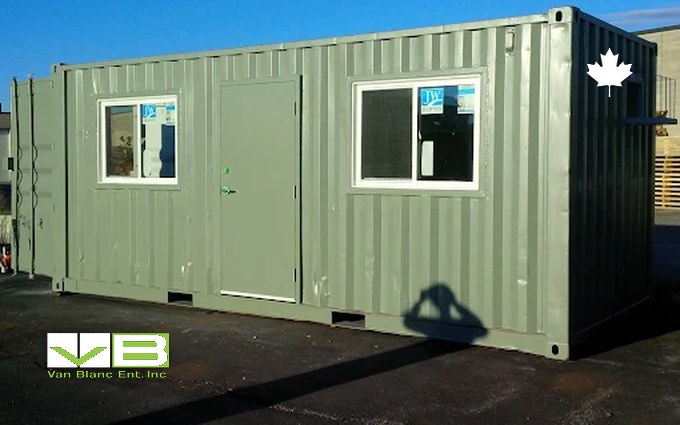
A shipping container is the metal shed taken to its conclusion: a single-skin corten steel box, airtight and lockable from the factory, with the same dew-point problem and the same answer. It is the hardest small building to insulate badly and get away with, because the steel forgives nothing, and the easiest to insulate well, because the shell is already the air barrier a shed never has. The working standard, on our own insulation pages and at our shop, is two to three inches of closed-cell spray foam bonded to the corrugation, walls, ceiling and the underside of the floor, which gives R-13 to R-21 with the vapour barrier built in, then framing and a liner. The cold-storage conversion goes the other way, holding cold in, and it uses the same foam.
What a foamed container gives a buyer that no insulated shed does is a building whose weak points are gone before the insulation starts. No floor joists over open gravel; the floor is marine plywood on steel cross-members and is foamed from below. No double door with a gap; the cargo doors seal on rubber gaskets, and a man door is cut and framed at the shop. No roof sheathing to vent; the roof is one sheet of steel, foamed from underneath, with the thermal-bridge detail on its own page. And no wall that rots when the vapour barrier fails, because there is no wood in the wall to rot. The result is the tightest small heated building most people will ever own, which is why the site office, the winter workshop and the studio and maker-space conversions start from one.
Three things to plan for. A container is a corridor 7 feet 8 inches wide, and three inches of foam plus framing takes it under 7 feet; the 40-foot high cube exists for the extra foot of ceiling. Foaming is a professional spray job, and it is a complete one: the foam is the insulation, the air seal and the vapour barrier in one pass, where batts in a wood shed still need the poly, the vents and the interior panel added before the two compare. And a foamed box in a suburban backyard is still a steel box unless it is clad, which the container shed against a traditional shed page weighs honestly. For the reader who only wants dry storage and no heat, a used reefer is worth knowing about: the 20-foot refrigerated container is a factory-insulated box, four inches of foam between stainless and steel, that holds a stable temperature with the machinery off, and the refrigerated container page explains which units are sold as insulated storage.
Christian LeBlanc, Van Blanc: “The insulation calls come in two kinds. One person wants a dry shed and I tell them a foamed roof or a reefer does it without a heater. The other wants a warm shop, and that’s a foamed twenty-footer with a man door and a proper circuit. What I won’t sell is the idea that stuffing batts into a cold steel box does either. It does the opposite.”
For the buyer that describes, the box is the one line we can speak to from the yard. A heated conversion starts from a one-trip or a clean wind-and-watertight unit with straight walls and dry floors, because foam bonds to clean steel and not to flaking paint, which the paint-prep page covers for a used box. Every unit in the used wind-and-watertight rows and the one-trip rows beside them at 90 Morton Avenue East can be picked by number before any money moves, the shop can foam it, cut the door and frame the windows before it leaves, and it lands on a gravel pad anywhere in the delivery area across Ontario in one to three days with payment on delivery. Everything is sold outright; Van Blanc keeps no rental fleet.
Who Should Insulate What
Do not insulate a shed that will never be heated, unless it is metal and drips, in which case foam the roof and walls and stop there. Insulate a wood shed during the build if there is any chance it becomes a room: batts or mineral wool in the cavities, poly on the inside, a vented roof, foam under the floor, and a real door. Line a resin shed with glued foam board if the goal is a slower swing for stored goods, and stop expecting more. Foam a metal shed or do not insulate it at all; there is no third option that survives an Ontario spring. Sea can or storage shed for winter is the wider comparison for anyone still choosing the building, and the season-by-season storage guide sorts what actually needs to be kept above freezing from what only needs to be kept dry.
Buy a container, foamed at the shop, if the goal is a heated workshop, office or studio that is tight on day one, sits on gravel, locks, and can be moved when the plan changes. Buy a reefer if the goal is dry, stable, unheated storage for things that hate a freeze-thaw.
Heated shop or dry storage? Price the foamed box once
Tell us what the building is for, whether it will be heated, and your postal code, and we will send an all-in number for the unit, the insulation package and delivery, usually the same day. Or walk the foamed units in Brantford.
The two pages that finish this one are the container workshop build, which takes a foamed box through bench, power and dust collection, and the hub of container alternatives, for anyone still deciding what kind of building the job needs at all.
Shed Insulation FAQs
Is it worth insulating a shed that is not heated?
Usually not for warmth: without a heat source the inside follows the outside temperature down with a lag of a few hours, so the shed still freezes. It is worth it in two cases: a metal shed that drips, where foam bonded to the steel stops condensation, and a shed that may be heated later, because insulating open walls during the build is far easier than emptying a finished shed to do it.
Can you insulate a metal shed?
Yes, but only with foam in contact with the steel: closed-cell spray foam bonded to the skin, or rigid foam board with every seam taped and every edge sealed. Fibreglass batts against a metal skin soak up condensation in the first freeze-thaw week and grow mould by spring. The alternative for drips alone is a ventilated air gap with an anti-condensation membrane under the roof sheet.
Do I need a vapour barrier in a shed?
If the shed is heated, yes, and in Ontario it goes on the warm side, which is the inside: six-mil poly on the inside face of the studs, lapped and taped, before the interior panel. Closed-cell spray foam at two inches or sealed XPS board is its own vapour retarder and needs no poly; adding poly over foam creates a double barrier that traps moisture. An unheated shed with no insulation does not need one.
What is the cheapest way to insulate a shed?
For a wood shed, fibreglass or mineral wool batts in the existing stud cavities, six-mil poly on the inside, and an OSB liner, done while the walls are open; foam board under the floor from below is the cheap addition that matters most. For a resin shed, glued foam board is the only option. For a metal shed there is no cheap way that works; foam is the assembly, and the cheap alternatives make the building worse.
How much insulation does a 10×12 shed need?
For a heated 10×12 wood shed: R-12 to R-14 in the 2×4 walls, R-20 or more in the ceiling with a vented air space above it, an inch or two of rigid foam under the floor, and a weatherstripped or insulated door. That package holds a working temperature on a minus 15 day with a single 1,500-watt heater. Doubling the wall R-value does far less than fixing the floor and the door.
What is the best insulation for a shed ceiling?
In a wood shed, mineral wool or fibreglass batts between the rafters with a clear air channel above them to the vents, and poly below; the ceiling takes the thickest layer because warm, humid air rises to it. In a metal shed or a container, closed-cell spray foam bonded to the underside of the roof, two inches at minimum and three as the working standard, because the roof is the coldest surface and the first to drip.
Can you buy a shed already insulated in Ontario?
Yes. Wundershed in Toronto sells insulated backyard sheds under 108 square feet installed in about two days, Duramax lists insulated buildings, and most Amish and post-and-beam shed builders in Ontario will insulate at the shop. Ask what is insulated (walls, ceiling, floor), with what, and whether there is a vapour barrier and a roof vent. A foamed shipping container from a yard is the steel equivalent, and a used reefer is a factory-insulated box.
Sources
- Northern Star Sheds. (2026). Insulating Outdoor Sheds: Complete Guide for Portable Buildings. northernstarsheds.ca
- ROCKWOOL Group. (2026). Shed Insulation. rockwool.com
- Keter. (2026). How To Insulate a Shed. keter.com
- Canadian Metal Buildings. (2026). How Do You Stop Condensation in a Steel Building? Insulation, Vapour Control, and Canadian Winters. canadianmetalbuildings.com
- Future Buildings. (2026). 7 Effective Ways to Prevent Condensation in Steel Buildings. futurebuildings.com
- Wundershed. (2026). Insulated Backyard Sheds. wundershed.com
- Van Blanc Ent. Inc. (2026). Shipping Container Insulation Ontario: Spray Foam, Rigid Panels, R-Values. vbinc.ca
Reach Van Blanc in Brantford
We have been supplying shipping containers across Ontario since 1995. Our yard is at 90 Morton Avenue East in Brantford, and we deliver right across the province with payment on the day of delivery. No deposit, no upfront wires, no chase-the-paperwork.
Van Blanc Ent. Inc., 90 Morton Ave E Unit 1B, Brantford, ON N3R 7J7, 519-754-6844 (cell) or 1-888-509-6658 (toll-free).
If the shed you were planning to insulate turned into a foamed steel box somewhere in this page, call with what it is for and your postal code and we will tell you on the spot what is in stock and how the shop would insulate it. Worth the drive for unbeatable quality, family customer service with 30 years of experience.