
Quick Answer: An apiary is the bee yard; the buildings behind it do the real work: a bee-tight extraction room, dry equipment storage, and increasingly indoor overwintering. Ontario beekeepers must register with the Provincial Apiarist and sign their yards. Converted containers increasingly serve beekeepers as small honey houses and controlled wintering rooms.
In This Guide
- The Yard Gets the Photos, the Buildings Do the Work
- The Ontario Register: Two Facts Every Keeper Knows
- Siting the Bee Yard
- The Beekeeper’s Year in Buildings
- The Honey House: Extraction Done Right
- Bee-Tight Storage: The Equipment Problem
- Wax Moths, Mice, and the Bear Question
- The Indoor Overwintering Turn
- What a Wintering Room Actually Holds
- Selling the Crop
- Sideliner Scale and Up
- Apiary FAQs
Reading Time: 13 minutes
The Yard Gets the Photos, the Buildings Do the Work
An apiary photographs as a row of painted hives in a sunny corner, and operates as a small agricultural business with a surprisingly demanding real-estate footprint. Behind every productive bee yard stands the unphotographed half: somewhere bee-tight to extract and bottle a food product, somewhere dry and sealed to store the tower of boxes, frames, and gear that beekeeping accumulates, and increasingly somewhere cold, dark, and controlled to winter the colonies themselves. Ontario’s beekeeping boom, hobby yards to sideliner operations selling at every farm gate, has made those buildings the difference between keepers who scale happily and keepers who fight their own equipment every season.
Our seat here is the humble one with one exception: bees live outdoors in hives, nothing about a steel box replaces that, and this page will not pretend otherwise. Where containers have quietly colonized the craft is the support half, the honey house, the bee-tight store, and the wintering room, and one of those three is genuinely a frontier, because the industry’s overwintering turn plays directly to what refrigerated steel does best. The yard first, then the buildings, in the order a growing keeper meets them.
Christian LeBlanc, Van Blanc: “Beekeepers were the customers who taught me the phrase bee-tight, and they mean it the way a banker means audit-proof. A gap a knuckle fits through is a catastrophe in August, because robbing bees find stored comb the way water finds a hole. The sealed box we sell for keeping mice out of grain turns out to be exactly the tolerance their equipment rules wanted all along.”
The Ontario Register: Two Facts Every Keeper Knows
Ontario beekeeping runs under a provincial framework old enough to have its own etiquette, and two of its facts belong in any honest guide. Anyone who owns honey bees, or even used beekeeping equipment, must hold a certificate of registration from the Provincial Apiarist, a rule aimed squarely at disease traceability, since used comb and boxes move pathogens as efficiently as bees do. And every apiary must post a sign identifying its keeper, so an inspector, or a neighbour with a swarm question, can find the human behind the hives. Both rules cost little and signal much: this is livestock agriculture with a public-health dimension, and the keepers who treat it that way from the first package of bees are the ones the inspectors remember fondly. Permits are managed by your municipality, so check with your local building or planning department before you order any structure to go with the yard.
Record-keeping rounds out the registered keeper’s building habits: treatment logs, yard maps, and sale records live better in the honey house than in a truck cab, and the operations that keep a dry shelf for the paperwork pass their inspections the way tidy shops pass audits, quickly and in a good mood.
Siting the Bee Yard
The yard itself wants what bees want, and the craft’s siting rules are pleasantly physical. Morning sun on the entrances wakes foragers early; a windbreak at the back cuts the winter wind that stresses clusters; a water source nearby keeps bees out of the neighbour’s pool; and entrances aimed away from paths keep the flight lines above human traffic. The keeper’s own logistics matter equally: vehicle access to the yard for the heavy work, because a deep super of honey is a two-hand lift and a season’s harvest is hundreds of them, and enough working room behind the hives that inspections do not happen in the flight path. The support buildings slot into that same map, close enough that the harvest travels metres rather than minutes, and the operations that plan the yard and its buildings together spend their Augusts extracting instead of carrying.
Urban and small-lot yards add their own etiquette layer, and the successful town keepers run it deliberately: flyway barriers, a hedge or fence line that lifts flight paths above head height at the property line, water provided on-site before the neighbour’s birdbath gets adopted, gentle stock chosen on temperament, and the diplomatic jar of honey that has settled more fence-line conversations than any bylaw ever written. The building implications shrink but never vanish, since even a two-hive yard extracts somewhere and stores somewhere, which is how the town keeper’s garage ends up smelling of wax by year three.
The Beekeeper’s Year in Buildings
The craft’s calendar is really a route between buildings, and walking it explains every one of them. Spring empties the store: supers and frames flow out to the yard as colonies build, the extraction room gets its scrub, and the wintering room, where one exists, releases its colonies to the stands. Summer is yard season with the store at low tide, the honey house waiting. Then August arrives all at once, the extraction crunch, when the season’s hundreds of heavy supers cycle through the honey house in the space of weeks and every design decision in that room pays or punishes. Fall runs the film backward, feeding, treatments, and the great re-shelving, comb into moth-managed storage, gear cleaned and racked, and either the hives wrapped in the yard or the colonies rolled into controlled cold. Winter belongs to woodenware repair and the catalogue. Keepers who read their buildings against that calendar size them for August and October, the two months that break undersized setups, and never for the gentle months between.
The Honey House: Extraction Done Right
Extraction is where beekeeping becomes food production, and the room it happens in has one non-negotiable and several strong preferences. The non-negotiable is bee-tight enclosure: open honey in August summons every forager in a kilometre, and extraction in a screened, sealed space is the difference between processing and a robbing frenzy. The strong preferences follow from honey being food and being sticky: washable floors and surfaces, hot and cold water where scale allows, layout running the crop one direction from uncapping through the extractor to the settling tank, and storage for the sticky emptied supers the bees will clean later. The equipment spine is standard across scales, uncapping knife or uncapper, the centrifugal extractor that spins honey out while sparing the comb, wax handling, and the clarifier where the crop settles clear.
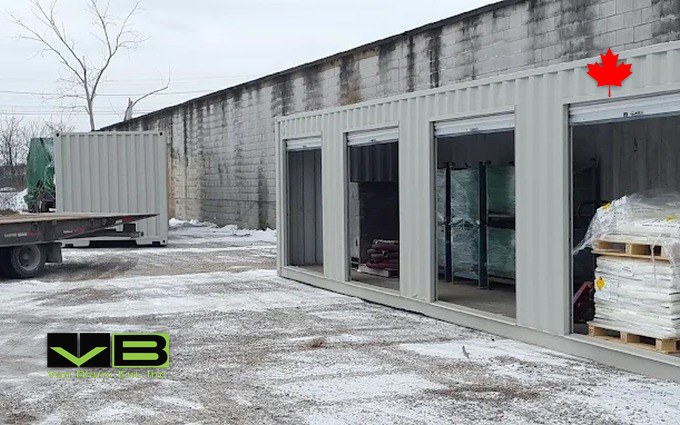
The converted container has become a natural honey house at hobby-to-sideliner scale for the same reasons it colonized the market-garden world: it arrives sealed to bee-tight tolerances by birth, lines with washable surfaces at the bench, and takes plumbing and power rough-ins under engineered drawings with the licensed trades finishing and certifying on site, the same food-adjacent standard mapped in what food-grade conversion honestly requires. Its produce-world sibling, the wash-pack room the vegetable growers run, shares the whole layout logic; honey just runs stickier and sweeter.
Honey’s own storage physics reward the keeper who learns them early: the crop is nearly immortal when kept sealed, cool, and dry, granulation being cosmetics rather than spoilage, and its enemy is moisture uptake, since honey is hygroscopic and open pails in a damp room slowly drink their way toward fermentation. The bottled inventory therefore shares the equipment store’s spec, dry and sealed, and gains one preference of its own, steady moderate temperatures that slow granulation between markets.
Bee-Tight Storage: The Equipment Problem
Beekeeping’s dirty secret is volume: every colony implies a tower of spare deeps and supers, drawn comb worth more than the boxes that hold it, feeders, excluders, and the seasonal gear of the craft, and the pile doubles every time the yard does. The provincial rule that used equipment be stored bee-tight has teeth for good reason, disease and robbing both, and the craft adds its own enemies below. What the storage building must deliver is therefore specific: sealed against insects and rodents at container tolerances, dry enough that comb and woodenware winter without mould, dark enough to slow the wax moth’s interest, and organized so spring finds equipment instead of archaeology. It is the plainest job on this page and the one that upgrades a keeper’s whole season when solved properly.
Building the Support Half?
Bee-tight is our factory setting. Sealed equipment stores, lined honey-house conversions with rough-ins under engineered drawings, and the wintering rooms the craft is turning toward. Every quote carries a real lead time, not a hopeful one. Fast 1-3 day delivery across Ontario from our Brantford yards.
Van Blanc Ent. Inc. · Brantford, Ontario · Since 1995 · 4.9 stars across 140+ Google reviews · Cash on delivery
The extraction crunch also explains the room’s one luxury worth paying for: warmth. Honey flows generously at hive temperature and grudgingly below it, so the honey houses that extract fast are the ones that hold the room warm and the supers warmer, staged in the heat before spinning. It is the same held-climate lesson every food craft on this site lands on, aimed at the sweetest crop of the lot.
Wax Moths, Mice, and the Bear Question
The apiary’s storage enemies deserve naming because each writes its own building spec. Wax moths destroy stored drawn comb, the craft’s most valuable slow asset, and cold, light-managed, sealed storage is the keeper’s side of that fight. Mice treat woodenware as winter condos and comb as bedding, and the difference between a wooden shed and a sealed steel box is the whole outcome. And bears, wherever Ontario keeps them, are the yard’s dramatic enemy, electric fencing being the field answer, while the storage answer is simpler: nothing that smells like honey or wax winters anywhere a bear can open. Add the human enemy the craft discusses quietly, hive and equipment theft being a real agricultural crime, and the locked steel store behind hardware that ends the conversation earns its place in even a small yard’s plan.
The Indoor Overwintering Turn
The craft’s most interesting building question is its newest: wintering the bees themselves indoors. The research consensus that has pushed commercial operations toward controlled storage is straightforward, clustered colonies held in stable cold and darkness spend less of themselves surviving, emerging stronger on fewer consumed resources than hives riding Ontario’s freeze-thaw winters outdoors. The practice runs from purpose-built wintering barns at industrial scale down to the version our own pages document, wintering colonies inside a controlled reefer, where a refrigeration unit built to hold produce steady holds bee-cluster conditions with the same indifference. It is genuinely specialized keeping, ventilation, CO2 awareness, and dark-red work lighting included, and it is the one place in this craft where our steel stops being the support act and becomes the husbandry itself.
What a Wintering Room Actually Holds
For keepers weighing the indoor turn, the room’s spec is worth stating plainly, because it is a husbandry environment rather than a storage one. The target is stable cold a few degrees above freezing, steady enough that clusters neither break nor chill, held in genuine darkness because light wakes bees, with the craft’s one lighting exception, dim red work light, which bees do not perceive. Ventilation is the serious engineering: thousands of clustered colonies respire, and CO2 and moisture must leave at a controlled rate, which is why the commercial barns run monitored air exchange and why the reefer-scale version borrows the same discipline at smaller numbers. Quiet and vibration control round out the spec, and the whole package explains the container fit: an insulated refrigerated box already holds temperature indifferent to weather, seals to darkness by default, and takes its ventilation engineering as shop work under drawings.
Wax deserves its closing footnote as the craft’s second crop: cappings rendered clean become candles, balms, and the premium the market pays for anything that smells like August. Rendering is messy, warm, and best exiled from the kitchen early, which is one more small vote the honey house collects every fall.
Selling the Crop
Honey sells best where it was made, and the apiary’s retail life runs on the same laneway economy this site mapped for produce: the gate stand, the market table, and the label with the family’s name on it. Honey’s advantages in that economy are real, shelf-stable, premium-priced, and photogenic, and its one caution is the honour-system inventory rule, since honey flats are exactly the high-value goods the unattended model handles worst. The full playbook, from cash box to the lockable serving-window store, lives in the farm-gate retail ladder, and honey operations climb it faster than most because the crop concentrates so much value per shelf. The maple world, the craft’s closest seasonal cousin, tells the same story in the sugar bush’s own economy, right down to the building that becomes the brand.
The pollination side of the craft deserves its note for keepers eyeing it: orchards and berry growers hire hives by the season, the hives travel by truck and trailer, and the operation that rents out colonies inherits a logistics layer, ratchet straps, night moves while foragers are home, and equipment standardized for stacking. The support buildings feel it as churn: more pallets, more spare gear, and a store organized for loading rather than archiving. It is honest income and honest work, and the keepers who thrive at it run their yards like the small trucking companies they have quietly become.
Sideliner Scale and Up
The hobby-to-sideliner jump, from a few hives to dozens and a real crop, is where the buildings decide the business. The pattern the successful operations run: the honey house sized for the biggest week rather than the average one, the bee-tight store scaled a season ahead of the yard, and the wintering question answered deliberately rather than inherited. Steel serves that scaling the way it serves every seasonal agriculture on this site, added unit by unit as the yard count grows, and operations building the plant without the single cheque finance each unit through an agricultural loan from their own lender, owning it from delivery day. We do not rent, which suits a craft whose whole model is patient accumulation anyway.
Many people call us saying they can get a bin for $1,000 less on Facebook. Two weeks later some of them call back to say they got scammed. Beekeepers, who already guard against every other kind of robbing, will recognize the pattern instantly: buy the steel from a yard you can walk, the way you buy nucs from an apiary you can visit.
Scale that pattern up and the buildings simply multiply along the same lines: more extraction line, more sealed storage, and wintering capacity that matches the colony count rather than chasing it. The commercial operations running hundreds of colonies are logistics companies that happen to keep bees, and their yards read like it, in the best way.
Beekeeping is the agriculture of small margins patiently compounded, and its buildings either serve that patience or tax it. Register the yard, sign it, keep the extraction bee-tight and the comb sealed away from everything that wants it, and when the winter question gets serious, know that the craft’s newest answer is a cold, dark, controlled room, which happens to be a thing that arrives on a truck. The bees do the miracle. The buildings just stop the world from taxing it.
Mentorship is the craft’s real infrastructure, and the building plan benefits from it like everything else: Ontario’s local beekeeping associations run the courses, the yard visits, and the second opinions that keep new keepers out of the classic traps. Ask the club before buying anything large, including from us, because the keeper two concessions over has usually already made the mistake you are pricing.
Sold outright. Delivered in 1 to 3 days.
Van Blanc sells new and used shipping containers outright from our 4 Brantford yards, with delivery in 1 to 3 days and payment on delivery. We do not rent, lease or offer rent-to-own. Request a sale quote or call the yard at 519-754-6844.
Apiary FAQs
Do you need to register to keep bees in Ontario?
Yes. Anyone who owns honey bees, or even used beekeeping equipment, must hold a certificate of registration from the Provincial Apiarist, and each apiary must post a sign identifying its keeper. The framework exists for disease traceability, since used comb and boxes move pathogens as readily as bees do.
What is a honey house?
The bee-tight indoor room where extraction and bottling happen: washable surfaces, one-direction workflow from uncapping through the centrifugal extractor to the settling tank, and sealed against the robbing frenzy that open honey summons in August. At hobby and sideliner scale, converted containers increasingly serve the role.
How should beekeeping equipment be stored?
Bee-tight, dry, dark, and sealed against rodents: provincial practice requires used equipment stored inaccessible to bees, and the craft’s own enemies, wax moths on drawn comb, mice in woodenware, add the rest of the spec. Sealed steel meets the tolerance by default, which is why keepers adopted it early.
Can bees be overwintered indoors?
Yes, and the practice is growing: colonies held in stable cold, dark, ventilated storage spend less of themselves surviving winter, emerging stronger on fewer resources than hives riding outdoor freeze-thaw. Commercial barns do it at scale, and controlled reefer containers run the same conditions for smaller operations.
Can you keep bees in a shipping container?
Not as summer housing; hives live outdoors, and nothing replaces that. Where steel serves the craft: the bee-tight equipment store, the lined extraction room with services certified by licensed trades, and the controlled indoor wintering room, the one role where the container becomes part of the husbandry itself.
Sources
- Government of Ontario. (2025). Summary of Ontario Beekeeping Regulations. ontario.ca. The registration and apiary-sign requirements stated above
- Government of Ontario. (2025). Best Management and Biosecurity Practices for Beekeeping in Ontario. ontario.ca. The bee-tight storage practice for used equipment
- Government of Ontario. (2025). Apiculture. ontario.ca. The provincial apiary program the registration framework runs through
- Beesource Forums. (2024). Sideliner Honey House and Equipment. beesource.com. Working keepers’ extraction-room layouts and equipment spines
Reach Van Blanc in Brantford
We have supplied Ontario agriculture with sealed steel since 1995, and the beekeepers found us early, bee-tight being our default tolerance. If your yard’s support half needs building, from the equipment store to the wintering room, the rows at 90 Morton Avenue East are open to walk.
Van Blanc Ent. Inc., 90 Morton Ave E Unit 1B, Brantford, ON N3R 7J7, 519-754-6844
Scaling past the garage? Call with the hive count and the harvest plan, and we will size the honey house and the store honestly, including the parts of the plan that belong to your bee supplier instead.