
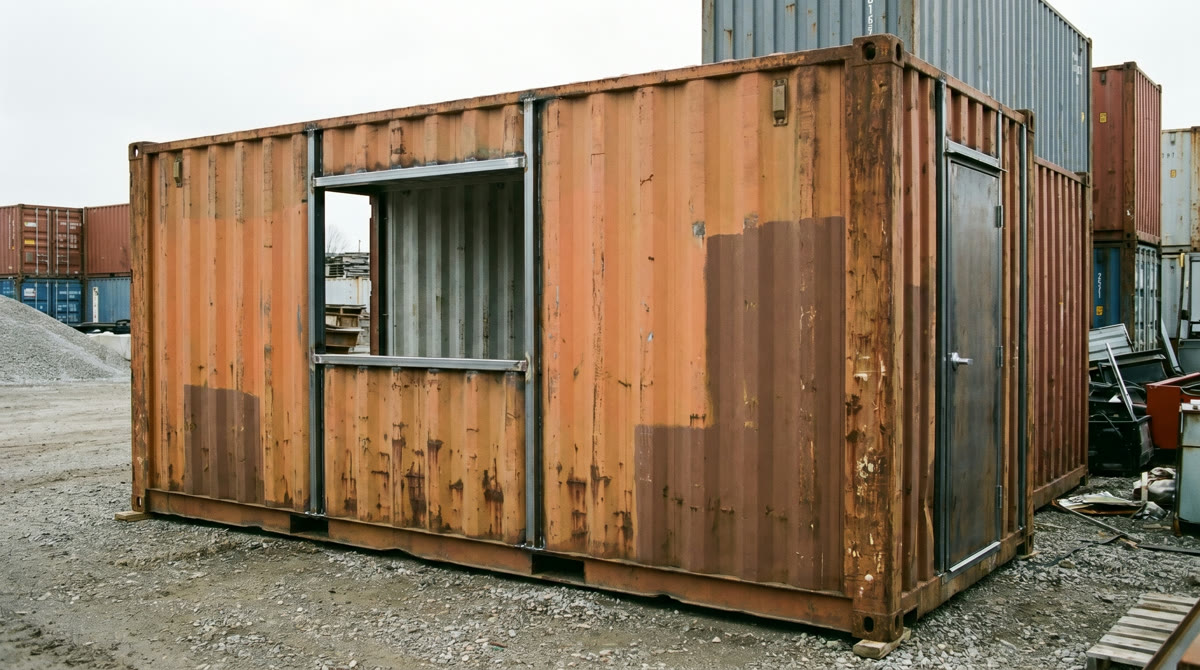
Quick Answer: Donations arrive in waves the church basement cannot absorb. A container behind the hall holds the hamper program between drives, the rummage stock between sales, and the festival gear between festivals, sealed and lockboxed. Dry goods only; the cold chain stays professional. Van Blanc delivers across Ontario in 1-3 days.
In This Guide
- The donation wave and the full basement
- One box, four programs: how organizations use it
- The food storage honesty: what a container can and cannot hold
- Fundraising a container: buying right the first time
- Winter access, security, and the volunteer key problem
- FAQs
- Sources
- Reach Van Blanc in Brantford
Reading time: about 8 minutes.
The Donation Wave and the Full Basement
Community organizations run on generosity that arrives all at once. The coat drive lands in one October weekend; the food drive fills a stage after Thanksgiving service; the rummage-sale donations start in March for a sale in May. Canada’s charitable sector, the world Imagine Canada studies and Food Banks Canada coordinates on the food side, does enormous work out of buildings that were never designed as warehouses, and every volunteer coordinator knows the result: a basement that is a hazard by November, a stage that cannot be used for two months, and the annual conversation about renting storage with money that was donated to feed people, not to pay a locker company. Clubs that raise money selling trees each December can start with running a fundraising Christmas tree lot, from the site to the lockup.
A 20ft container behind the hall is the sector’s quiet workhorse fix: bought once, often fundraised in a single appeal, and absorbing the waves so the building can go back to being a building.
One Box, Four Programs: How Organizations Use It
The same container typically serves the whole calendar. The hamper and food-drive program stages shelf-stable stock between collection and distribution, shelved and rotated like the food bank taught. The rummage and bazaar stream accumulates from March to May behind a lockbox instead of behind the choir. The events inventory, tables, canopies, the pancake-breakfast griddles, the Christmas pageant in its forty labelled totes, lives in the back half year-round. And the seasonal outreach gear, coat racks in summer, fans in winter, rotates through the front. One box, one lock, one laminated map taped inside the door so every new volunteer finds the folding tables without a phone call.
Paul LeBlanc, owner: “A Brantford congregation fundraised one of our Wind and Watertight 20s in a single Sunday appeal, and the treasurer told me the pitch that did it: the locker rental they were cancelling would repay the box in under three years, and every dollar after that went back to the hamper program. The youth group painted it to match the hall trim.”
The Food Storage Honesty: What a Container Can and Cannot Hold
Said plainly, because food programs deserve plain: a dry container is excellent at exactly one food job, and that job is sealed, shelf-stable dry goods. Canned goods, jarred and boxed staples, and sealed packages, palletized or shelved off the floor, sit behind gasketed doors that keep weather and rodents out better than most basements ever did, with passive vents and the standard moisture setup handling the rest. What a dry container cannot do is temperature: anything refrigerated, frozen, or heat-sensitive belongs in the food bank’s real cold chain or in a powered reefer container, which is its own conversation. And your local health unit’s guidance governs any food program’s storage practice; one call to them sits beside the one call to us. Honesty here is not a disclaimer, it is the difference between helping a program and hurting one.
Fundraising a Container: Buying Right the First Time
Registered charities weighing grants, CRA rules, and donated-container tax receipts have a dedicated walkthrough in our charity procurement guide; this section covers the buying moment itself. Organizations often buy by appeal, which means buying ONCE, in public, with donated money, and that raises the stakes on grade honesty. The good news: every grade does this duty. A Wind and Watertight unit does everything on this page, and the congregation can paint it. Where the box sits at the building’s public face, some boards choose Cargo Worthy or new (one-trip) for the look, a legitimate choice as long as it is a chosen one. What we owe a fundraised purchase is what we owe everyone, stated for the committee minutes: you see the exact unit and its container number before a dollar moves, and you pay when it lands. Boards like documentation; our process IS documentation.
The Basement Wants to Retire
Bring the locker invoice to the next board meeting, and bring our quote beside it. One call returns the number, the grade honesty, and a delivery date the volunteers can plan around.
Winter Access, Security, and the Volunteer Key Problem
The realities coordinators ask about: winter access is a shovel-width path and a door that opens at minus twenty exactly as it did in July, because marine gaskets do not care. Security is the lockbox plus the oldest nonprofit technology there is, a key log; most organizations run two keys, office and coordinator, and the laminated inventory map inside the door does the rest. Placement behind the hall is the standard, on blocking, with the property being the organization’s own call and anything municipal a quick planning-office conversation. Delivery is the usual tilt-deck visit, 1-3 days out, and yes, the driver has placed bins between a manse and a memorial garden before, with witnesses.
Nonprofits weigh donated trailers, rented units, and owned boxes. The comparison hub lays out the trade-offs.
Pop-up volunteer programs live this squeeze hardest; the repair cafe home-base container is the worked example.
Volunteer emergency groups can borrow a page from the municipal cache-container playbook too.
Community sports clubs have their own version of this storage squeeze; what rowing and canoe clubs rack in a container shows the same idea on the water. Field clubs run it on land too, and where a soccer or baseball club keeps its goals and bases between seasons sizes one box per field.
Frequently Asked Questions
Can a food bank store food in a shipping container?
Shelf-stable, sealed dry goods, yes: shelved off the floor, vented, and rodent-sealed behind gasketed doors, with your local health unit’s guidance governing the program’s practice. Anything temperature-sensitive belongs in the real cold chain or a powered reefer, and we say so plainly.
Can a congregation fundraise a used container?
It happens constantly, often in one appeal, and the board picks the grade that suits where the box will sit. The committee sees the exact unit and its container number before committing, and payment happens on delivery, which makes for tidy board minutes.
What do community organizations actually store?
The whole calendar: hamper-program dry goods between drives, rummage stock between sales, event tables and canopies year-round, and the Christmas pageant in its labelled totes. One box retires the basement, the stage, and the rented locker at once.
Is winter access practical for volunteers?
A shovelled path and a door that opens identically at minus twenty. Two keys and a log solve the volunteer-turnover problem, and the inventory map taped inside the door means nobody phones the coordinator to find the coffee urns.
Can the container be painted to match the building?
Yes, and congregations do, youth groups especially. Exterior paint on sound steel is a weekend project, and a bin in the hall’s trim colour reads as part of the property instead of parked beside it.
Sources
- Food Banks Canada. The national food bank network. foodbankscanada.ca
- Imagine Canada. Research and standards for Canada’s charitable sector. imaginecanada.ca
- International Organization for Standardization. ISO 668, Series 1 freight containers, classification, dimensions and ratings. iso.org
Reach Van Blanc in Brantford
A family business since 1995 that knows most of the halls on this stretch of the Grand. 4.9 stars across 140+ verified Google reviews.
Van Blanc Ent. Inc., 90 Morton Ave E Unit 1B, Brantford, ON N3R 7J7, +1 888-509-6658
Coordinators and treasurers: call with the program list and we will size the box to the calendar, quote it for the minutes, and schedule around your busiest Sunday, not ours.
Call 519-754-6844 Request a Free Quote