
Quick Answer: A small shop in Ontario gets a paint booth four ways: an inflatable booth, a plastic-sheeted DIY room, an engineered prefab booth, or a converted shipping container. NFPA 33 sets the numbers every route has to meet: filtered exhaust, 100 feet a minute across the opening, and no ignition sources.
In This Guide
- Where We Stand
- What a Paint Booth Actually Does
- The NFPA 33 Numbers in Plain Language
- The Four Routes for a Small Shop
- Inflatable and Portable Booths
- The Plastic-Sheeted Room, and Why It Is the Cheapest and the Riskiest
- Engineered Prefab Booths
- The Container Spray Booth
- Make-Up Air in an Ontario Winter
- Who Signs Off: The Trades Split
- What Moves the Price
- Who Should Buy Which
- Paint Booth FAQs
Reading Time: 15 minutes
Where We Stand
A shipping container yard in Brantford wrote this. We convert containers into spray booths, flammables lockers and workshops at our yard, so the fourth route on this page is something we sell, and you should read the other three knowing that. We have no connection to any booth manufacturer named here and nobody pays us. For a lot of small shops the engineered prefab booth is the right answer and the container is not, and the section on who should buy which says so plainly.
The safety numbers below come from NFPA 33, the standard for spray application of flammable materials that Ontario’s fire authorities, insurers and electrical inspectors work from, and were checked on September 11, 2026. This page explains them; it does not replace the fire department, your insurer or your licensed electrician, all three of whom will have a view on your booth.
What a Paint Booth Actually Does
A paint booth does three jobs, and every route on this page is a different way of doing them. It moves air in one direction past the work and out through filters, so overspray and solvent vapour leave the room instead of settling on the finish or building up to a flammable concentration. It keeps dust and insects off wet paint by controlling where the air comes in. And it keeps every ignition source, lights, switches, motors, static, outside the zone where the vapour is.
That is the whole product. A booth that moves air well but has an ordinary light fixture inside is a bomb with a fan. A booth with sealed lighting but no filtered exhaust is a dust storm with a lock. The four routes differ in how well they do all three, and in what they cost to keep doing them in February.
The NFPA 33 Numbers in Plain Language
What the Standard Actually Asks For
- Mechanical ventilation that moves air across the spray area at an average of about 100 linear feet per minute over the open face, pulling vapour away from the painter and out through filters.
- Exhaust filters that trap overspray before the air leaves. Saturated paint filters are highly combustible and are changed on a schedule, not when they look dirty.
- Interlocks: the spray equipment cannot run unless the exhaust is running. On a prefab booth this is wired in; on a homemade booth it is usually missing.
- No ignition sources in the spray zone. Lighting is sealed or mounted outside the booth behind glass; switches, motors and outlets are rated for the hazardous location, which in Canada means the hazardous-location sections of the Canadian Electrical Code applied by your electrician.
- Make-up air. Whatever the exhaust removes has to come back in, filtered, and in an Ontario winter, heated.
One hundred feet per minute across the face of a booth sounds small until you multiply it out. A 10-foot by 8-foot opening is 80 square feet; at 100 feet per minute that is 8,000 cubic feet of air a minute leaving the building. That number is why a paint booth is really a ventilation project with walls around it, and why the exhaust fan and the make-up air unit, not the walls, are the expensive part of every route below.
The Four Routes for a Small Shop
| Route | What it is | Meets the numbers? | Best for | Winter |
|---|---|---|---|---|
| Inflatable / portable | A fan-inflated tent with intake and exhaust filter panels | Airflow yes with the right blowers; lighting and interlocks are on you | Occasional jobs, mobile work, furniture, motorcycles | Poor: unheated, condensation, fabric stiffens |
| Plastic-sheeted DIY room | Poly on a frame with a box fan | Usually no | Nothing that involves solvent paint | Poor |
| Engineered prefab | Panel booth with plenums, filters, lights and interlocks designed as a system | Yes, by design | Full-time body and refinishing work | Good with a heated air make-up unit |
| Container booth | A 20 or 40-foot container converted with intake wall, exhaust plenum, sealed lighting | Yes, when the trades finish it | Farm, sign, powder and parts shops; a booth outside the main building | Good: insulated steel with heated make-up air |
Inflatable and Portable Booths
The inflatable booth is the reason “portable paint booth” gets typed 590 times a month in Canada. It is a fabric tent held up by a blower, with filter panels on the intake wall and an exhaust fan pulling through filters at the far end. Sizes run from a car-length unit to tents you could park a small truck in, and the appeal is obvious: it packs into a bag, it goes where the work is, and it costs a fraction of a panel booth.
The honest case for it is the occasional job. A furniture refinisher who sprays two pieces a week, a motorcycle painter, a shop that does one respray a month, a farm repainting equipment in the off-season: the inflatable does the airflow job for those buyers if the blowers are sized to the opening. The honest case against it is durability, winter and the electrical side. Fabric walls are fabric; they puncture, they need a ground cover, and they stiffen and sweat in the cold. Nothing in the bag is rated for a hazardous location, so the lights and the fan motors you add are your responsibility, and the interlock that stops the gun when the exhaust dies does not exist unless you build it. A Canadian maker, thePaintLine, sells a portable jobsite booth that sits a tier above the inflatables for exactly these reasons.
The Plastic-Sheeted Room, and Why It Is the Cheapest and the Riskiest
Google asks what the cheapest way to make a paint booth is, and the answer that ranks is a frame, poly sheeting and a box fan in a window. For water-based finishes on furniture, in a garage with the door open, that arrangement keeps the dust down and nothing more. For anything solvent-based it is the arrangement that fire investigators write reports about: a fan motor that is not sealed, sitting in a stream of solvent vapour, inside a plastic room that burns like a bag of chips.
We include it because it is the honest bottom of the market and people do it. If you do, water-based products only, the fan outside the room pulling through a filter, no lights inside, and the garage door open. And understand that the first insurer or fire inspector who sees it will ask you to take it down.
Engineered Prefab Booths
An engineered booth from a manufacturer like the ones that rank for this search is the right answer for a full-time refinishing business, and we say so without hedging. The panels, plenums, filter banks, sealed lighting, interlocked controls and optional heated make-up air unit arrive as a system that was designed to meet the standard, and the manufacturer’s drawings are what the fire department and the insurer want to see. Crossdraft booths move air end to end and are the cheaper format; downdraft booths pull air through a floor grate and give the cleanest finish for automotive work.
The trade-offs are the ones you would expect. The booth is a permanent installation inside your building, so it takes bay space you may not have and it goes on the building’s electrical and gas services. The heated make-up unit that makes it usable in January is often the single most expensive line on the quote. And the booth arrives as panels; the installation, the ductwork through the roof, the gas line and the electrical are separate trades and separate invoices. It is the best booth on this page and the most expensive to own, and for a shop that sprays every day both of those are correct.
The Container Spray Booth
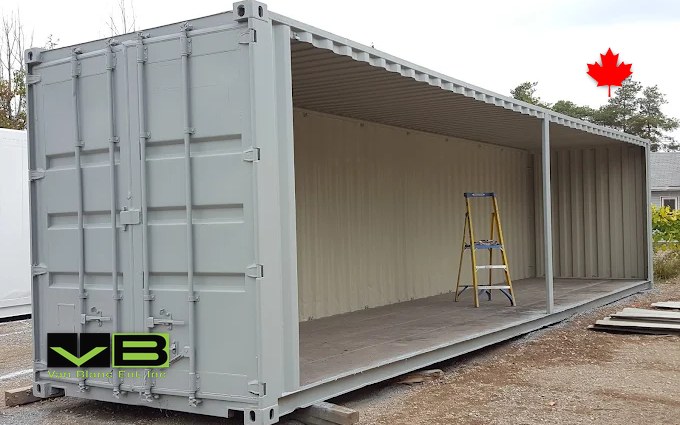
The fourth route puts the booth in a steel box outside the main shop. A 40-foot high-cube container is 12.2 metres long and 2.35 metres wide inside with 2.7 metres of headroom, which is a crossdraft booth for parts, panels, motorcycles, furniture, signs, agricultural equipment and small vehicles. A pair joined side by side with the shared wall opened makes a car bay. A 20-footer is a parts and furniture booth.
The conversion follows the same logic as any booth. The doors end becomes the intake wall: a filter bank in a framed opening, with the cargo doors left to close the booth when it is not in use. The far end gets the exhaust plenum: a filter bank in front of a sealed exhaust fan ducted up and out. The walls are 1.6 millimetre Corten steel, which does not burn and does not care about solvent; the floor is sealed marine plywood or a steel overlay. Lighting is sealed fixtures or exterior fixtures behind glass, and the electrical runs to a panel outside the box. Our venting write-up covers how we size mechanical exhaust on a container for any use, and the booth is that with filters on both ends.
Christian LeBlanc, Van Blanc: “The booth customer is usually someone who does not want overspray in the shop where the rest of the work happens. A box outside solves that. We cut the openings, frame the filter walls, run the vents and insulate it at the yard, and their electrician and mechanical contractor finish it on site. The fire department sees a steel room with the right drawings, which is a much easier conversation than a tent.”
What it is not. It is not the equal of a downdraft automotive booth for a full-time collision shop; the width alone rules out most full-size vehicles unless you join two units. It needs a truck path to the site and a level pad, and the exhaust and heated make-up air are the same trades and the same cost as any other booth. And unclad it looks like a container, which behind a shop nobody minds and beside a showroom somebody does. The makerspace container guide shows a related build where the same box becomes a workshop rather than a booth.
Make-Up Air in an Ontario Winter
Here is the part every US booth page skips and every Ontario shop learns in January. A booth exhausting 8,000 cubic feet a minute is throwing 8,000 cubic feet a minute of heated shop air out the roof, and pulling minus fifteen air in through whatever gap it can find. Paint does not cure properly below its rated temperature, the painter freezes, and the shop’s furnace runs flat out trying to heat the neighbourhood.
The answer is a heated make-up air unit: a gas or electric heater on the intake side that warms the incoming air to spraying temperature. On a prefab booth it is an option on the quote; on a container booth it is a unit mounted at the intake wall; on an inflatable it does not exist, which is why inflatables are a three-season product in this province. Budget for it from the start, because a booth without it is a booth you use from May to October. The container HVAC guide covers conditioning a steel box in general; a booth adds the make-up air unit on top.
Insulate the Box Before You Heat It
A converted container booth gets spray-foam or rigid insulation on the walls and ceiling behind a washable liner before the filters go in. Heating make-up air into an uninsulated steel box in February is heating the outdoors; insulating it first is the difference between a usable booth and an expensive fan.
Who Signs Off: The Trades Split
No matter which route you choose, the same three parties end up involved, and knowing that up front saves the surprise. A licensed electrician does the hazardous-location wiring, the sealed fixtures, the interlock and the ESA inspection. A mechanical contractor does the exhaust ducting, the fan, and the heated make-up air unit, with the gas fitter if it is gas. And the fire department and your insurer review the installation against NFPA 33 and the Ontario Fire Code, and they will want drawings.
That is exactly how we handle a container booth. We do the box: openings, framing for the filter walls, vents, insulation, liner, floor, and the rough-in for the electrical and the ducting, at the yard, before delivery. Your electrician and mechanical contractor complete and certify the systems on site. We never present the booth as certified by us, because it is not our trade to certify it, and the same is true of every prefab booth manufacturer’s panels until the trades have finished them.
What Moves the Price
We do not print dollar figures, because booth pricing changes with steel and with every fan manufacturer’s list, but the drivers are consistent across all four routes. The opening size sets the airflow, and the airflow sets the fan and the make-up air unit, which are the two biggest lines on any booth quote. Heated make-up air roughly doubles the mechanical cost of an unheated booth. Downdraft costs more than crossdraft. Electrical for a hazardous location costs more than ordinary shop wiring. And on a container booth, the grade of the box matters less than on a showroom conversion, because the inside is lined and the outside is behind the shop; the condition-grade guide explains why a clean used unit from the used-container listings is often the right start, and the container cost guide explains what moves the container side of the quote.
Who Should Buy Which
The full-time collision or refinishing shop should buy the engineered prefab booth, downdraft if the work is automotive, with the heated make-up air unit, and should budget the trades as a second project. Nothing else on this page is a substitute for it.
The occasional sprayer, furniture, motorcycles, one respray a month, should buy an inflatable or a portable booth, run it three seasons, add sealed lighting and a proper exhaust fan, and keep the solvent work to warm months.
The farm, the sign shop, the powder coater’s blast room, the cabinet shop that wants overspray out of the main building, the contractor with a fleet to repaint, the auto shop already keeping its tires in a box, and the shop with no bay to give up: this is the container booth’s buyer. It is a steel room outside the shop, delivered on a tilt-deck truck in one to three days to any Ontario shop, that the trades finish once and that does not burn.
The plastic-sheeted room belongs to nobody who sprays solvent paint. The comparison hub compares every other building people put a container up against; this one is unusual because the alternative is a tent.
Price the steel booth against the panel booth
Tell us the work you spray, the largest piece, and your postal code, and we’ll send an all-in number for the converted box with the openings, filter walls, vents, insulation and rough-ins done, delivered and placed, usually the same day. Or walk through the Brantford yard and see a converted unit in the steel.
Two related builds share the same steel. A flammables locker, the sealed, vented container where the paint and solvents live between jobs, is the small cousin of the booth, and painting the container itself, inside and out, is the finishing question for any conversion; the rust prep guide and the marine epoxy guide are where the box’s own finish is covered. Every container we sell is sold outright (the sale-only explainer explains why), and the electrical service sizing guide is the place to start the conversation with your electrician; a new one-trip unit or a clean used one from the yard is the box under all of it.
Paint Booth FAQs
What is the cheapest way to make a paint booth?
A frame with plastic sheeting and a fan is the cheapest, and it is only defensible for water-based finishes with the fan outside the room, no lights inside and the door open. For solvent paint it is an ignition risk. The cheapest route that meets the airflow numbers is an inflatable booth with properly sized blowers and sealed lighting added.
Can a shipping container be used as a paint booth?
Yes. A 40-foot high cube gives a crossdraft booth for parts, furniture, signs, motorcycles and small equipment; two joined side by side make a car bay. The conversion adds an intake filter wall at the doors, an exhaust plenum and fan at the far end, insulation, a sealed floor and hazardous-location lighting, with the electrical and mechanical work finished by licensed trades.
What are the ventilation requirements for a spray booth?
NFPA 33 calls for mechanical exhaust that moves air across the open face at an average of about 100 feet per minute, filtered exhaust, an interlock so spray equipment cannot run without the exhaust, and filtered make-up air replacing what leaves. In Ontario the fire department, your insurer and the ESA-inspected electrical work are the practical enforcement of those numbers.
Do you need explosion-proof lights in a paint booth?
Yes, or lights mounted outside the booth behind sealed glass panels. Solvent vapour and an ordinary fixture, switch or fan motor in the same space is the classic booth fire. The hazardous-location rules of the Canadian Electrical Code govern the fixtures and wiring, and a licensed electrician chooses and installs them.
Can I use an inflatable paint booth in winter?
Not usefully. An inflatable has no heated make-up air, so it exhausts warm air and pulls in cold, paint will not cure at the temperature that results, and the fabric stiffens and sweats. Inflatables are a three-season product in Ontario; a booth used year-round needs a heated make-up air unit, which means a prefab or a converted container.
What is the difference between a crossdraft and a downdraft booth?
A crossdraft booth moves air from one end to the other past the work, which is the cheaper format and what a container booth naturally is. A downdraft booth pulls air from the ceiling down through a floor grate, carrying overspray away from the finish and giving the cleanest result for automotive refinishing, at a higher cost and with a pit or raised floor.
Sources
- Spray Systems, Inc. (2026). NFPA 33 Spray Booth Regulations and Compliance. spraysystems.com
- Washington County, Oregon. (2026). NFPA 33 Paint Booth, Electrostatic and Powder Coating Checklist. washingtoncountyor.gov
- Smithsonian Institution OSHEM. (2009). Chapter 21: Paint and Spray Finish Operations. si.edu
- thePaintLine. (2026). Portable Jobsite Spray Booth. thepaintline.ca
- Simple Inflatables. (2025). Pros and Cons of Inflatable Paint Booths. simpleinflatables.com
- Capital Auto Equipment. (2026). CAEL Spray Paint Booth. capitalautoequipment.com
Reach Van Blanc in Brantford
We have been supplying shipping containers across Ontario since 1995. Our yard is at 90 Morton Avenue East in Brantford, and we deliver right across the province with payment on the day of delivery. No deposit, no upfront wires, no chase-the-paperwork.
Van Blanc Ent. Inc., 90 Morton Ave E Unit 1B, Brantford, ON N3R 7J7, 519-754-6844 (cell) or 1-888-509-6658 (toll-free).
If you spray in the same bay where the rest of the work happens and you are tired of the overspray, describe what you paint and the largest piece over the phone and we’ll tell you on the spot whether a 40-footer or a joined pair is the box. Worth the drive for unbeatable quality, family customer service with 30 years of experience.