
Quick Answer: A chicken coop needs three to four square feet per hen inside, plus about ten more each in the run, and Ontario winters argue for the high end. Predators, not weather, are the real design problem: half-inch hardware cloth and raccoon-proof latches matter far more than any paint colour choice.
In This Guide
- The Space Arithmetic, Done Honestly
- Coop Anatomy: Roosts, Boxes, and the Ventilation Paradox
- Predator Engineering That Actually Works
- Winter Keeping in Ontario
- The Feed Problem Nobody Budgets For
- Chicken Tractors and Runs
- The Four Coop Formats
- Ducks, Goats, and the Rest of the Gateway
- The First Year, Month by Month
- Where Steel Honestly Fits a Flock
- Chicken Coop FAQs
Reading Time: 13 minutes
The Space Arithmetic, Done Honestly
Every chicken coop conversation should start with a number, because the commonest mistake in the hobby is bought before the first bird arrives: the cute coop that is simply too small. The working consensus across poultry keepers is three to four square feet per standard hen inside the coop, plus roughly ten square feet per bird in the outdoor run. Keep birds with no run at all and the indoor figure climbs to eight or ten square feet each. Bantams get by on about two square feet inside; the big soft breeds, Brahmas and Orpingtons, want four or more. Breed choice matters for Ontario in one more way: the cold-hardy heritage birds, Chanteclers especially, being Canada’s own breed, plus Wyandottes and Australorps, carry small combs and heavy feathering that shrug off January, while the Mediterranean layers with tall single combs pay for their egg counts in frostbite risk.
Ontario adds its own correction factor. Those baseline numbers were written for climates where the flock ranges outside almost every day, and a January ice week in Brant County is not that. When birds spend whole days indoors, crowding turns into feather-picking and worse, so cold-climate keepers who enjoy their flocks plan five square feet per bird inside as a floor and closer to ten as a courtesy. Run the honest math on even a modest six-hen backyard flock and you get a building of twenty to sixty square feet plus a sixty-square-foot run, which is to say: a real structure, sited and built like one, on ground that drains. (The ground part is the same conversation as every building we cover; our ground and drainage primer applies to a coop as much as a container.)
Christian LeBlanc, Van Blanc: “The hobby-farm deliveries taught me that chickens are a gateway livestock. The first spring it is six hens in a kit coop. Two years later there are forty birds, a feed program, and a predator story, and that is usually the year our truck shows up. Nobody plans for the flock they will have. The good ones plan for the feed and the raccoons at least.”
Coop Anatomy: Roosts, Boxes, and the Ventilation Paradox
Strip away the gingerbread and every working coop is four systems. Roosts, because chickens sleep on bars, about a foot of bar per bird, set higher than the nest boxes or the boxes become bedrooms. Nest boxes, one per three or four hens, dim and low, because eggs get laid where it feels private. Floor and litter, deep enough to manage manure, which in cold climates usually means the deep-litter method that composts in place and throws a little useful heat. And ventilation, which is where new builders get the physics backwards.
The paradox: a winter coop must be both draft-free and generously ventilated, and those are not opposites. Birds at roost cannot sit in moving air, but the flock’s own breath and droppings load the air with moisture and ammonia, and trapped moisture, not cold, is what actually causes frostbitten combs. The resolution is placement: openings up high, above roost height, so humid air leaves while the birds sleep in still air. It is precisely the condensation logic we walk through in the container ventilation guide, wearing feathers, and getting it wrong ruins more Ontario flocks than any cold snap does.
Predator Engineering That Actually Works
Here is the section that should be first in every coop guide and rarely appears at all. In rural and edge-of-town Ontario, the design problem is not housing chickens; it is that everything else wants them: raccoons, foxes, coyotes, weasels, hawks, and neighbourhood dogs. The keepers who never lose birds share a short engineering doctrine. The same predator, wind and wet rules for the ducks, goats and calves that share the yard are in the livestock shelters guide.
The Predator Doctrine, Condensed
- Chicken wire keeps chickens in; it does not keep predators out. A raccoon opens it like a bread bag. Every opening, vent, window, and run panel gets half-inch hardware cloth, screwed and washered, never stapled.
- Bury an apron. Hardware cloth extending down or skirting outward roughly a foot stops the diggers, foxes and dogs, from tunnelling under the wall at night.
- Latch for a raccoon, not a person. Raccoons defeat simple sliders and hook-and-eyes. A hasp closed with a carabiner is the cheap standard; two-step anything beats one-step everything.
- Harden the floor. Rats and weasels chew through single plywood. Doubled floors with cloth between, or a floor nothing can chew, ends the conversation.
- Close the coop every night, without exceptions. Automatic door openers exist because memory fails, and one open night is how most flock stories end.
The sky gets its own paragraph, because first-year keepers defend four walls and forget the fifth side. Hawks and owls take birds from open runs in daylight, calmly and repeatedly once they learn the address, and the defence is overhead: netting or wire across the run, real cover objects the flock can dive under, and a rooster if the neighbours allow one, since an alarm call that buys three seconds saves birds. Free-ranging trades this protection for forage, which is a real trade with real losses, and every keeper eventually picks a side of it knowingly.
Read that list twice and something becomes obvious: it is a specification for a steel box. Walls nothing chews, a floor nothing tunnels, a door built around real latching hardware, and sills a weasel cannot slip. We will be honest about the caveats below, but the reason container conversions keep appearing on serious poultry operations is that the predator doctrine comes welded on from the factory.
Winter Keeping in Ontario
The good news first: chickens are cold-hardy animals wearing down jackets, and a dry, draft-free, well-bedded flock sails through Ontario winters that would kill a reptile-brained building plan. The keeper’s winter jobs are few and specific. Keep the water thawed, which is an electrical question before it is a poultry one. Keep the litter deep and dry, forking it over so it composts rather than mats. Keep the high vents open even when instinct says seal everything, because the frostbite enemy is humidity. And keep the daylight in mind, since laying tracks light; some keepers add morning light on a timer, others let the flock rest with the season, and both are defensible schools.
What winter actually punishes is the building around the bird: kit coops with quarter-inch panel walls sag under snow exactly the way the thin-panel shed problem predicts, felt roofs peel, and plastic fittings snap at minus twenty. The winter test is the same one every outbuilding on this site faces: buy the structure by its bones, not its brochure.
The water line deserves its own honest sentence, because thawed water is an electrical project in disguise. Heated waterer bases and heat tape both want a proper outdoor circuit run by someone licensed, not a daisy chain of extension cords through a window, and the keepers who wire the coop area properly once, with an exterior receptacle at the building, stop fighting February entirely. It is a small version of the licensed-trades split we describe on every conversion our shop touches: rough plans are free advice, final connections belong to an electrician.
The Feed Problem Nobody Budgets For
Every flock owner discovers the same second project about a month in: the feed. Layer pellets arrive in fifty-pound bags, a real flock runs through them steadily, and feed stored soft is a standing invitation to the two animals that ruin poultry-keeping quietly rather than dramatically: rats and mice. Rodents tunnel into feed rooms, foul more than they eat, chew wiring for dessert, and, worst, their presence draws the weasels and rat snakes up the food chain toward the birds themselves.
The doctrine here is short: feed lives in metal, full stop. Galvanized cans defeat rodents at the scale of a backyard flock. Past a certain flock size, though, the feed program plus the bedding bales plus the medications and the seasonal gear outgrow cans, and this is the point where hobby farms start shopping for a dedicated dry store. A wind and watertight unit is, among its other titles, the most rodent-proof feed room money buys: steel floor, steel walls, door gaskets, and nothing for a rat to start on. The same box swallows the wheelbarrow, the fencing reels, and the brooder kit in the off-season, which is the whole farm storage argument at chicken scale.
Chicken Tractors and Runs
The mobile alternative deserves its honest chapter. A chicken tractor is a floorless, wheeled or skidded coop-and-run that moves across grass every day or two, and for the right keeper it is a genuinely elegant system: the birds get fresh forage, the lawn gets fertilized in stripes, and the manure problem composts itself across the property. Tractors suit small flocks, flat ground, and keepers who are home daily to move them, pair naturally with garden rotation because last month’s chicken stripe is next month’s best bed, offer the only coop format that solves its own manure problem, and their predator story depends entirely on build quality, since a light tractor can be flipped by a determined dog and a floorless design leans hard on its buried-mesh skirt.
The fixed run, by contrast, is infrastructure: posts in ground, hardware cloth to height, ideally netting or wire over top against hawks, and the same apron rules as the coop. Most Ontario flocks end up with the hybrid: a hardened fixed coop and run for nights and winters, and daytime ranging or a tractor for the green months. The pattern to notice is that every version of doing this well is a small construction project, and the fencing, posts, and mesh all need dry, mouse-free storage of their own between seasons, which is a storage rhythm we have written about in its own right.
The Four Coop Formats, Walked Left to Right
Like every outbuilding this series covers, coops arrive in a handful of formats, and sorting them early saves buying twice.
| Format | What it is | Honest Ontario verdict |
|---|---|---|
| Kit coop | Flat-packed panel coop from the farm store or online | Fine for four birds and a first season; thin panels and toy latches mean most get rebuilt or retired within three winters |
| Carpenter-built | Framed and sheathed on site, shed rules applied | The backyard standard; takes hardware cloth, real latches, and insulation properly, and matches the house |
| Converted outbuilding | An existing shed, barn corner, or steel unit refitted | Best cost per bird at scale; the refit list is ventilation, light, roosts, and predator sealing, in that order |
| Chicken tractor | Floorless mobile pen moved across grass | Elegant for small flocks on flat ground with a daily mover; predator resistance depends entirely on build weight |
The pattern across formats repeats the whole series: the cheap tier fails at its fasteners and panels, the durable tiers cost real money or real labour, and the conversion route wins whenever a sound structure already stands. What matters is running the predator doctrine over whichever format you pick, because a fox does not care what the building cost.
Ducks, Goats, and the Rest of the Gateway
Chickens rarely stay alone. The same properties add ducks within a year or two, and ducks change the housing math in two ways: they sleep on the floor rather than roosts, and they turn any water source into a wetland, so their shelter wants more floor area, more bedding turnover, and drainage planned from the start. Goats follow next on many Ontario hobby farms, and a goat shelter is a different animal entirely, a windbreak-first, three-sided or gated structure built to withstand animals that climb, chew, and lean on everything they meet. What the whole gateway menagerie shares is the logistics tail: every species adds its own feed, bedding, and equipment stream, all of it rodent-attractive, all of it happiest behind steel. The barn may hold the animals, but the supply room decides whether the property stays pleasant to run.
The First Year, Month by Month
New keepers consistently report the same calendar, so here it is in advance. Spring is the honeymoon: chicks under a brooder lamp, the build weekend, the first eggs around twenty weeks. Summer is the predator exam, because young birds ranging on long evenings are exactly what the local fox has been waiting for, and the flocks that survive it are the ones whose keepers closed the door every single night. Fall is the infrastructure scramble: feed stocking, water-heater shopping, litter deepening, and the discovery that the kit coop’s ventilation was designed for a climate without February. And winter is the verdict, when the space arithmetic, the moisture physics, and the build quality all get marked at once. Keepers who plan the first year backwards from January, rather than forwards from the cute spring photo, are the ones still keeping birds five years on.
Where Steel Honestly Fits a Flock
Our disclosure, as always in this series: we sell shipping containers, not chicken coops, and the first honest thing to say is that the standard backyard flock does not need us. Six hens beside a garden belong in a well-built wood coop: it breathes naturally, it looks right by the house, and it is sized to the job. If that is your project, build it with the predator doctrine above and enjoy your eggs.
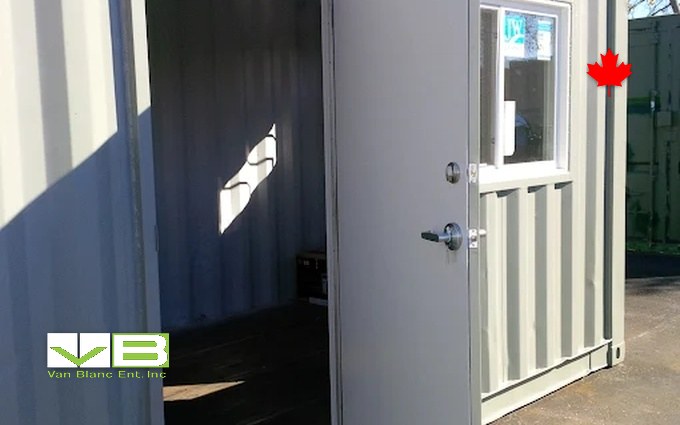
The container conversation starts where the flock stops being a hobby. Rural keepers running dozens of birds under real predator pressure convert units into coops because the shell solves the hardest problems by existing: nothing digs under a steel floor, nothing chews a Corten wall, and the door locks like the cargo asset it was. The honesty requirement is the ventilation paradox from earlier, doubled: a sealed steel room full of chickens without serious cut ventilation is a humidity box, and a proper conversion means high vents, windows for light, and usually a framed and insulated interior, which is exactly the kind of cutting and framing work our shop does under engineered drawings. Done right, the result is the most predator-proof, longest-lived coop format in the province. Done as a bare box with birds thrown in, it is a mistake, and we will say so on the phone.
And between those poles sits the quiet, no-caveat winner already described: the flock’s logistics. Feed, bedding, equipment, and the winter kit in a locked steel dry store beside a conventional coop is the arrangement half our hobby-farm customers actually run, because it takes the rodent war and the weathering-steel lifespan and points them at the part of the operation where steel has no downside at all.
Flock Outgrowing Its Buildings?
Tell us the bird count, the feed program, and what has been getting into things at night, plus where the laneway is. The quote comes back honest and all-in with a real lead time, not a hopeful one. Fast 1-3 day delivery across Ontario from our Brantford yards.
Van Blanc Ent. Inc. · Family-run since 1995 · 4.9 stars across 140+ Google reviews · Every quote comes with a real lead time
Chickens are easy; everything that wants them is hard. Size the coop for the flock you will actually have, build to the predator doctrine rather than the paint chart, and put the feed behind steel, and the morning egg run stays the best two minutes of the day.
Chicken Coop FAQs
How big should a chicken coop be per bird?
Three to four square feet per standard hen inside, plus about ten square feet each in the run, is the working consensus. Ontario winters argue for five to ten square feet indoors because confinement days multiply. Bantams need less, heavy breeds like Orpingtons need more, and crowding shows up as feather-picking.
Is chicken wire enough to keep predators out?
No, and this is the most expensive misunderstanding in the hobby. Chicken wire keeps birds in; raccoons and dogs go through it. Predator-proofing means half-inch hardware cloth on every opening, an apron buried about a foot against diggers, and latches a raccoon cannot work, like a hasp closed with a carabiner.
Do chickens need a heated coop in Ontario?
Generally no. Hens are cold-hardy when they are dry and out of drafts, and moisture, not temperature, causes frostbite. The winter priorities are high ventilation above the roosts, deep dry litter, and thawed water. Heat lamps add fire risk to a building full of bedding and are best avoided.
Can a shipping container be used as a chicken coop?
Yes, with one honest condition: serious ventilation and light must be cut in, because a sealed steel room full of birds becomes a humidity box. Converted properly, with high vents and windows, it is the most predator-proof coop format available: nothing chews the walls, digs under the floor, or opens the door.
What is the best way to store chicken feed?
In metal, always: rodents chew through bags, bins, and wooden feed rooms, and their presence draws worse predators toward the flock. Galvanized cans serve small flocks; larger feed programs plus bedding and equipment justify a dedicated steel dry store with a gasketed door and nothing a rat can start on.
Sources
- The Old Farmer’s Almanac. (2026). Raising Chickens 101: How to Build a Chicken Coop. the Almanac’s coop-building basics
- Garden Betty. (2026). 9 Ways to Predator-Proof a Chicken Coop and Chicken Run. the predator-proofing field guide
- The Featherbrain. (2026). How Big Should Your Chicken Coop Be? the space-per-bird analysis
- Freedom Ranger Hatchery. (2026). How Many Square Feet Per Chicken? the hatchery’s sizing numbers
Reach Van Blanc in Brantford
We have been supplying shipping containers across Ontario since 1995, and the hobby-farm lanes around Brant, Norfolk, and Oxford counties are core delivery country. The yard at 90 Morton Avenue East is where the feed-room and coop-conversion conversations happen over real steel.
Van Blanc Ent. Inc., 90 Morton Ave E Unit 1B, Brantford, ON N3R 7J7, 519-754-6844
Bring your bird count and your predator stories. We have heard most of them, and the sorting between carpenter jobs and steel jobs takes ten minutes.