
Quick Answer: Sojag is a Quebec-born outdoor-structure brand, founded 1993 and now part of ShelterLogic, best known for aluminum-frame, steel-roof hardtop gazebos sold through big-box retailers. The hardtop lines are genuinely winter-capable when anchored and cleared properly. Warranties are short and storm damage is excluded, so read the warranty terms before buying.
In This Review
- Who Sojag Is, and Why the Provenance Matters
- Where We Stand, Disclosed
- What Sojag Does Well
- Reading the Lineup: Gazebo, Sun Shelter, Solarium
- The Messina, Read Closely
- How Sojag Compares on Its Own Shelf
- The Documented Trade-Offs
- Winter Duty: What the Manuals Actually Ask
- Setting One Up to Survive: The Base Decision
- The First-Year Ownership Calendar
- What a Sojag Is Built For
- Where Our Steel Fits Beside One
- Sojag FAQs
Reading Time: 12 minutes
Who Sojag Is, and Why the Provenance Matters
Sojag started in Brossard, Quebec in 1993, grew into one of North America’s recognizable names in backyard shade structures, and now operates from Longueuil under the ShelterLogic corporate umbrella. The provenance is worth a paragraph because it explains the product’s character: this is a company that has spent three decades building for Quebec winters, still sells glass-walled solariums alongside its gazebos, and the flagship hardtop lines, the Messina, Moreno, and Sedona families that fill Costco listings every spring, carry that inheritance visibly. Rust-proof aluminum frames, galvanized steel roof panels, and a design language that assumes snow will land on the product and stay a while.
That is not the default in this category. Most of the gazebo market designs for a climate several hundred kilometres south of here and lets Canadian buyers discover the difference in February. A brand that engineers from inside the winter is doing something we respect, and this review takes Sojag seriously as a piece of Canadian outdoor infrastructure rather than as a patio decoration. It also holds the brand to the same standard we hold everything on this site: verified claims, documented trade-offs, and a clear account of what it is built for.
Where We Stand, Disclosed
The disclosure, before anything else: Van Blanc sells shipping containers. We have no affiliation with Sojag or ShelterLogic, nobody paid for or reviewed this article, and Sojag makes nothing that competes with a sealed steel box, which is precisely why we can review it cleanly. A gazebo is a shade structure; our product is a security structure; the two meet in the same backyards doing different jobs. Where a container honestly belongs in a Sojag owner’s yard, we will say so in its own section near the end, clearly separated from the review itself. Everything before that line is about Sojag on Sojag’s terms.
Paul LeBlanc, Van Blanc: “I have spent my working life around structures that ship from Asia and get judged by what winter does to them, so I look at a gazebo the way I look at a bin: check the frame metal, check the roof, check what the paperwork promises when something bends. On those three checks, Sojag reads like a company that has met February personally. The paperwork is the shortest leg of the three, and a buyer should know that going in.”
What Sojag Does Well
The Strengths, Documented
- Frame material chosen like they mean it. The flagship hardtops run rust-proof aluminum framing, which removes the two classic gazebo deaths in one decision: rot that takes wooden frames and rust that creeps up cheap steel tube from the ground anchors.
- Real roofs. Galvanized steel roof panels on the hardtop lines are marketed for heavy snow and sun exposure, and the panel construction on models like the Messina is the visible difference between this tier and the fabric-canopy market below it.
- A winter-first category of its own. The sun shelter line exists specifically to stand year-round, a category distinction most competitors do not even offer.
- Distribution and parts reality. Selling through Costco and the big-box channel means returns leverage no boutique brand matches, plus replacement curtains and netting sold as ordinary accessories rather than begged from an importer.
- Quebec design lineage. Thirty years of building for this climate, solariums included, shows in details as small as where the meltwater drips.
Taken together, the strengths describe a brand playing the long game in a category full of one-summer products, and buyers comparing a Sojag hardtop against a no-name canopy frame at half the price are comparing different product classes, whatever the listing photos suggest.
Reading the Lineup: Gazebo, Sun Shelter, Solarium
Sojag’s naming deserves a translation, because the categories carry real engineering differences. The hardtop gazebos, the Messina and Moreno families in their 10-by-12 through 12-by-16 footprints, are permanent aluminum-and-steel structures for entertaining space, most wearing mosquito netting and optional curtains. The sun shelters are the heavier-duty siblings built to shrug off winter standing, with more enclosure and stouter panels. The solariums are the heaviest structures in the catalogue, glass-walled seasonal rooms that are closer to light construction than to patio goods. And the pergolas and furniture round out the catalogue at the lighter end. The buying mistake we would flag from the outside: choosing by photo and price across those categories as if they were trim levels of one product. They are different structures with different winters ahead of them.
One buying-channel note earned by watching the category for years: the Costco listing cycle matters. Sojag’s Canadian volume moves seasonally through warehouse and online listings that appear in late winter and thin out by midsummer, and the popular sizes genuinely sell through. Buyers who decide in March choose from the full range; buyers who decide in July choose from what is left, often at the same price. Shopping the structure like landscaping, early in the season, is the cheap advantage almost nobody takes.
The Messina, Read Closely
Since the Messina family carries most of the brand’s Canadian volume, it deserves a closer read as the representative product. The line runs from 10-by-12 through 12-by-16 footprints, framed in that rust-proof aluminum and roofed in galvanized steel panels, typically dressed in the dark grey that photographs well against cedar decks. Mosquito netting ships standard on the common configurations, curtains come as accessories, and the listings’ key specification, the one worth checking against your site, is the post footprint and the anchoring hardware, because a 12-by-16 roof is a serious sail area and the mounting points are where the engineering meets your backyard.
What a spec sheet cannot convey is the scale of the thing in person. A 12-by-16 hardtop is a small building, taller than its photos suggest, and it changes a yard’s geometry the way a garden shed does. Buyers measuring with painter’s tape on the lawn before ordering have a materially better week than buyers measuring by eye, and the delivery box weight alone, several hundred pounds across multiple cartons, is the first honest hint that this purchase is infrastructure rather than furniture.
| Common footprint | Shade coverage | What it hosts comfortably |
|---|---|---|
| 10 x 12 ft | ~120 sq ft | A dining set for six, or a lounge pair with room to move |
| 10 x 14 ft | ~140 sq ft | Dining for six plus a serving cart, the family sweet spot |
| 12 x 16 ft | ~192 sq ft | Dining and lounge zones together, hot tub installations, grill-adjacent living |
How Sojag Compares on Its Own Shelf
The big-box gazebo shelf holds three product classes, and naming them fairly locates Sojag precisely. Below it sit the fabric-canopy frames, seasonal products with polyester roofs that are honest about being summer goods; they cost a fraction and deliver a fraction, and comparing them to a hardtop is a category error in both directions. Beside it sits Yardistry, the cedar-framed hardtop maker sharing the Costco floor: wood warmth against Sojag’s aluminum practicality, a genuine aesthetic choice, with timber asking for the finishing maintenance any outdoor wood asks and aluminum asking for none. Above the retail shelf entirely sit the site-built pavilion trades, where the price multiplies along with the permanence.
Within that map, Sojag’s position is coherent: the metal-framed hardtop for buyers who want winter capability without wood maintenance, at retail rather than contractor pricing. We flag one comparison habit worth breaking: ranking these products by warranty length across brands misleads, because the whole category writes short terms with weather exclusions. Compare the metal, the panel construction, and the anchoring design instead; the paper is nearly identical everywhere on the shelf.
The Documented Trade-Offs
The honest criticisms are all in Sojag’s own paperwork, which is where fair criticism belongs. The warranty on at least one popular hardtop model runs one year on the frame and three years on roof panels against hail, provided the panels went in UV-side up, and it excludes damage from extreme weather outright: windstorms, thunderstorms, and hailstorms are named exclusions. Read that twice, because it means the events most likely to destroy an outdoor structure are the events the coverage does not include. This is standard practice across the category rather than a Sojag invention, and the brand deserves credit for printing it plainly, but a buyer budgeting for a decade of service should know the paper covers a shorter span than the structure’s expected life.
The second documented trade-off is assembly. These are multi-hundred-part kits with manuals that run long, and the maker’s own instructions assume multiple capable adults, proper anchoring into the base, and a full day or more of work for the larger footprints. Skipped anchoring is the category’s classic failure, and no roof panel rating rescues a frame the wind can lift. The third is consumables: netting and curtains are wear items in Canadian sun and wind, and their replacement cost belongs in the ownership math. None of these three sink the product. All three belong in the decision.
Winter Duty: What the Manuals Actually Ask
The winter question is where Sojag earns its reputation and where buyers most often over-read the marketing. The hardtop roof panels are built for snow, and the sun shelter line is built to stand through winter. What the warranty terms and the manuals ask in return is management: curtains and netting come down and get stored before the season, accumulated snow on large spans should not be left to compound through freeze-thaw, and the anchoring must be real from day one. That is a lighter regime than the broom-after-every-storm relationship a fabric car shelter demands, and heavier than doing nothing. Owners who give a Sojag hardtop that modest winter attention report structures that simply keep standing, which in this category is the entire game.
It is the same honesty we ask of the steel carport tier one rung up in permanence: every roofed frame in this province is in a lifelong negotiation with snow load, and the honest products are the ones that tell you the terms up front. Sojag tells you the terms. That alone puts it ahead of most of its shelf.
The Other Half of the Backyard
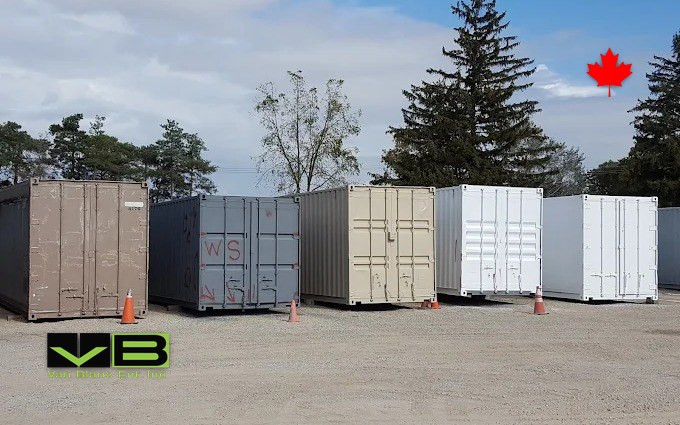
A gazebo shades the season; steel stores it. If the furniture, curtains, netting, and the rest of your outdoor life need a locked home each November, one 20-foot unit beside the fence ends that problem permanently. Tell us what you are storing and we will quote it honestly, with a real lead time, not a hopeful one. Fast 1-3 day delivery across Ontario from our Brantford yards.
Van Blanc Ent. Inc. · Brantford, Ontario · Since 1995 · 4.9 stars across 140+ Google reviews · Cash on delivery
Setting One Up to Survive: The Base Decision
The installations that go the distance share one decision made before any carton opened: a real base. Concrete pads and properly set patio stone give the anchors something worth gripping; decks work when the joists under the mounting points are confirmed rather than assumed; and bare lawn is the category’s quiet killer, letting posts wander out of square with every frost cycle until doors of netting no longer meet. Level matters more than buyers expect, because a hardtop roof assembles like a puzzle that tolerates almost no racking, and an afternoon spent shimming a base saves an evening of forcing panel screws into holes that no longer line up.
Anchoring is the step we would underline three times. The maker supplies hardware and the manual assumes it gets used completely, into material that holds. Every roofed frame that ends up in a neighbour’s yard skipped or shortcut this step, and the wind that finds the gap does not read warranty exclusions until afterward. It is the same physics we preach for fabric shelters and the same physics that makes our own product boring in storms: our boxes skip the argument by weighing four tonnes.
The First-Year Ownership Calendar
A Sojag’s first year runs best on a short calendar. Assembly weekend ends with the UV-side-up check on every roof panel, because the hail coverage depends on it. Through summer, the only duties are enjoying it and occasionally confirming the netting tracks run clean. The November hour matters most: curtains and netting come down, get dried, and winter indoors; the frame gets a once-over at the anchor points; and any early wet snow on the roof gets cleared rather than admired. Spring reverses the hour, adds a wash, and includes the one inspection habit worth keeping for life: check the fasteners the way you would check a dock’s, because outdoor structures loosen by vibration a little every windy week.
Owners who keep that calendar report the outcome this category rarely delivers: a structure that simply continues, year over year, while the fabric canopies around the neighbourhood cycle through replacement and regret. It is modest stewardship for a permanent outdoor room, and it is exactly the deal the product offers when read honestly.
What a Sojag Is Built For
A Sojag hardtop is built to be a permanent outdoor room. It asks for a level base, a helper on assembly weekend and a modest winter routine, and in return it stands year-round. The aluminum-and-galvanized construction is made for a decade of seasons, the netting turns July evenings civilized, and the hardtop outlives the fabric canopies on the same shelf. Households chasing the covered outdoor-kitchen wave should note the overlap: a hardtop gazebo over a grill zone is a common and sensible pairing, with the ventilation caveats that any roof over fire deserves.
Security, storage and a structure that ignores winter entirely are outside its job. A gazebo is none of those things and does not claim to be: its walls are air and mesh by design, and everything valuable under it must winter somewhere else. Where the outdoor life goes each fall is a storage question, and the answer sits in the next section.
Where Our Steel Fits Beside One
Here is our product’s honest place in a Sojag owner’s yard, kept separate from the review as promised. Every shade structure generates a storage problem exactly as large as its accessory list: curtains, netting, cushions, the patio set, the umbrella, the barbecue cover, and the seasonal kit that migrates every fall. The households that solve it once put steel behind the fence line, running the fall-and-spring gear migration into a locked container instead of the basement stairs, with proper lock hardware guarding the whole outdoor life through the dark months. The gazebo and the container are natural roommates: one makes summer pleasant, the other makes winter simple, and neither pretends to do the other’s job.
Buyers weighing this brand against its shelf-mates can read our matching reviews with the same rules applied: our equally independent look at Keter’s resin sheds covers the storage end of the big-box aisle. Same bar every time: strengths first, paperwork quoted, and the container’s place in the yard set out in a section of its own.
Sojag builds shade the way a Quebec company should: expecting winter, saying so in the manual, and backing it with better metal than the category requires. Read it for what it is, an outdoor room with a real roof: given the anchoring and the November routine it asks for, it will likely outlast the patio set under it, and the patio set winters best behind a locked steel door. Just read the warranty terms carefully, the way you would read any contract.
Sojag FAQs
Is Sojag a Canadian company?
Yes by origin and operation: Sojag was founded in Brossard, Quebec in 1993, still sells solariums alongside its gazebos, and operates from Longueuil. It is now owned by ShelterLogic Corp, a large American outdoor-structures group, so the brand is Quebec-born and Quebec-run under a US corporate parent.
Can a Sojag gazebo stay up all winter?
The hardtop and sun shelter lines are built to stand year-round, with galvanized steel roof panels marketed for heavy snow. The maker’s terms still apply: curtains and netting come down for winter, anchoring must be done properly, and heavy accumulations on large spans deserve clearing rather than neglect.
What is the warranty on a Sojag gazebo?
On at least one popular hardtop model, coverage runs one year on the frame and three years on roof panels against hail when panels are installed UV-side up, with damage from windstorms, thunderstorms, and hailstorms excluded. Terms vary by model and retailer, so read the specific document before buying.
How hard is it to assemble a Sojag gazebo?
It is a genuine project: multi-hundred-part kits, long manuals, and the maker’s own assumption of several capable adults and a full day or more for larger footprints. Proper anchoring into the base is the step that decides winter survival, and it is the step rushed builds most often shortchange.
Is a gazebo or a shipping container better for a backyard?
They solve different problems and pair well. A gazebo is an outdoor room: shade, bugs managed, no security. A container is locked weatherproof storage: no shade, total security. Households with a serious outdoor setup often run both, the gazebo hosting the season and the container storing it each winter.
Sources
- ShelterLogic Group. (2025). Premium Canadian Outdoor Structures: Sojag. shelterlogic.ca. The corporate parent’s brand page and current product families
- Costco Wholesale. (2025). Sojag Messina Galvanized Steel Roof Gazebo. costco.com. The flagship hardtop listing with frame and roof specifications
- Sojag / Costco. (2024). Sedona 10×12 Hardtop Gazebo Owner’s Manual. costco.com. The assembly, anchoring, and warranty terms cited in this review
Reach Van Blanc in Brantford
We have sold shipping containers across Ontario since 1995, and we review neighbouring backyard brands under one standing rule: honestly, respectfully, and with our own interest disclosed. If the storage half of your backyard needs solving, our rows at 90 Morton Avenue East are open to walk.
Van Blanc Ent. Inc., 90 Morton Ave E Unit 1B, Brantford, ON N3R 7J7, 519-754-6844
Deciding between backyard structures? Call and describe what actually needs to survive winter at your place.