
Quick Answer: A proper outdoor dog kennel pairs an insulated house with a run at least six by twelve feet for a medium or large dog, fenced past jumping height. Long rectangles beat squares, because a dog trots a line instead of pacing in circles, and the calm layouts always show it.
In This Guide
- Three Things People Mean by Kennel
- Run Geometry: The Shape of a Calm Dog
- The Insulated House, Done Right
- Winter Dogs, Honest Rules
- Escape Artists and Unwanted Visitors
- The Multi-Dog Building
- Washdown, Drainage, and the Professional Divider
- Building the Run: A Weekend Bill of Materials
- The Purchase Map
- Sound: The Neighbour Problem
- The Daily Rhythm a Kennel Has to Serve
- The Boarding Business, Told Straight
- Dog Kennel FAQs
Reading Time: 13 minutes
Three Things People Mean by Kennel
Kennel is one of those words carrying three different purchases, and sorting them first saves everyone from taking the wrong shopping trip entirely. Indoors, a kennel means a crate, which is training equipment and none of this page’s business. In the yard, a kennel means the outdoor setup, a weatherproof house paired with a fenced run, which is this page’s first half. And in the trade, a kennel means a building, the multi-dog structure a breeder, a hunt club, a sled team, or a boarding business runs, which is this page’s second half and the part almost nobody writes honestly.
Our stake, declared the way we declare it on every guide in this series: Van Blanc sells shipping containers from Brantford. Wood and steel each have their kennel, and this page sets out both. What earns us a voice here is the delivery seat: rural Ontario is full of working dogs, hobby breeders, and quietly serious boarding operations, and a growing number of their buildings, feed rooms, and gear stores arrive on our trucks.
Run Geometry: The Shape of a Calm Dog
The most useful sentence in kennel design comes from watching dogs rather than reading catalogues: a long rectangle beats a square of the same area, every time. A dog in a long run trots a straight line, back and forth in an easy working gait, which is natural movement and visibly low stress; a dog in a square paces tight circles instead, which is precisely the behaviour every welfare inspector on a site visit reads as a warning sign. The working consensus for a single medium-to-large dog is a run around six feet by twelve as the honest starting point, more length always being better spent than more width.
Height is the second law. Never fence below the dog’s standing height plus a foot of clearance, and treat four or five feet as a small-breed, confirmed-non-jumper allowance only; six feet is the sensible default because the day a dog learns it can get out, the run is furniture. The floor is the third: bare earth becomes a digging project and a mud season, so the run wants pea gravel over a drained base, patio stone, or a roughened concrete strip, each with the same ground rules as every pad we have ever specced: water must leave, and the surface must stay walkable in March. Shade over part of the run is not decor, it is thermal engineering, and the covered end doubles as the dry approach to the house.
Christian LeBlanc, Van Blanc: “You learn a property’s dogs before you learn its people. The calm ones live in long runs with dry feet and a house out of the wind. The frantic ones live in square pens on mud. It is the same lesson as every building we deliver: geometry and drainage do more than the brochure features ever will.”
The Insulated House, Done Right
The house half of the kennel has one design rule that surprises first-time owners: size it to the dog, not to your guilt. A dog house heats itself with the dog, so the right interior is snug, big enough to enter, turn, and lie flat, and no bigger, because every extra cubic foot is body heat spent on empty air. From there the winter spec writes itself, and the quality builders all converge on it: insulated floor, walls, and roof; a doorway turned or baffled so wind cannot blow straight onto the bed; the door flap that seals the deal; and the house lifted off the ground so the floor never wicks. Bedding is straw or shavings piled a good six inches deep and swapped weekly, because compressed damp bedding insulates nothing, and the weekly swap is also the health check the calendar remembers for you.
Material honesty, since this series owes it: the classic insulated wood dog house is genuinely the right product for the single-dog yard. It breathes, it is warm per dollar, and the good Ontario shed builders make excellent ones. The same thin-panel warning we issued for garden sheds applies at dog scale, though: a quarter-inch plastic igloo is a three-season toy, and the difference shows up the first minus-twenty night.
Winter Dogs, Honest Rules
Ontario winters and outdoor dogs can coexist honestly, but only inside real limits, and this page states them rather than romanticizing them. Breed is the first gate: a Great Pyrenees, a husky, or a farm collie carries winter equipment a boxer or a pointer simply does not, and no house compensates for the wrong coat. Water is the second: a frozen bowl is dehydration wearing a disguise, so a heated bowl on a properly run outdoor circuit, the same licensed-electrician conversation as every winterized building we cover, is non-negotiable equipment. Calories climb in cold weather, bedding gets deeper and drier, and the daily human visit is welfare, not sentiment, because dogs hide trouble and only hands find it. And the honest ceiling: extreme snaps, freezing rain, and the minus-thirty wind nights are indoor nights, full stop, whatever the breed. The kennel is a residence, not an exile. Written down and followed, these rules keep the arrangement what it should be: a working dog with a good outdoor address and an owner who can defend every part of the setup to anyone who asks, including the dog.
Escape Artists and Unwanted Visitors
A kennel fence works two directions, and rural Ontario tests both. Outbound, dogs dig, climb, and learn latches with raccoon-grade patience: the counters are a buried wire apron or perimeter skirt exactly like the coop doctrine next door on this site, a return lip or roof panel on the climbing breeds, and gate hardware that takes two motions, because a smart dog with a season of practice defeats one. Inbound is the half nobody budgets: coyotes read a kennelled dog as either rival or prey, and a run that keeps a husky in does not automatically keep a coyote out. The inbound spec is the outbound one plus height, plus the covered top on smaller-dog runs, plus lock-grade hardware on anything a human visitor might try, since dogs, tragically, are also stolen. Fencing to this standard once costs less than fencing to hope twice.
The Multi-Dog Building
Somewhere past the second dog, the yard setup stops scaling and the operation needs a building: sled teams, hunt packs, breeders with a litter program, rescues, and every boarding business. The commercial kennel-builder market gives honest reference points for what that building is: at two dogs plus feed and gear, the builders’ own sizing puts you in an eight-by-sixteen with interior boxes and human access; by six dogs you are in twelve-by-twenty-four territory, and the quality tier ships with the professional interior, insulated shell, washable truss-core panelling, epoxy floor, insulated doors and windows. Read that spec list twice, the way we read the coop doctrine, and notice what it describes: a sealed, insulated, washable steel-skinned box with controlled openings. The commercial kennel industry converged on a container-shaped answer from the wood side.
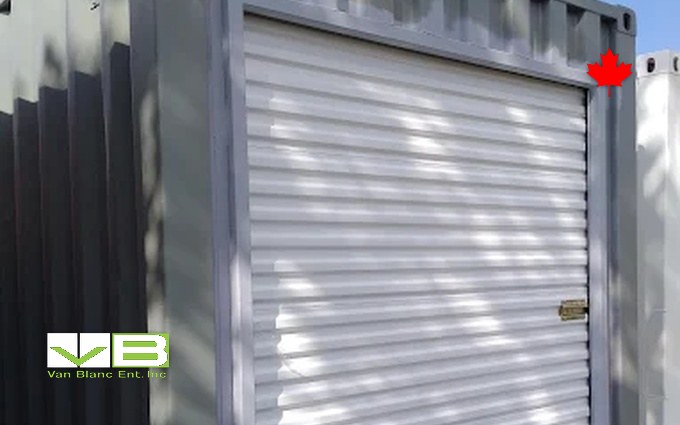
Which is the honest cue for where our product enters. A converted unit makes a legitimate multi-dog building when, and only when, it is converted like one: windows and high vents cut for real airflow, because the humidity-and-ammonia physics of any occupied sealed box doubles with wet dogs; closed-cell insulation and panelled interior walls; heat sized by the trades; and washdown drainage roughed into the floor. That is shop work done under engineered drawings before delivery, with the wet and electrical finals belonging to your licensed trades on site, the split we state on every conversion. A bare box with dogs inside is not a kennel, and we say so on the phone; a converted one is the longest-lived, most secure kennel building money buys, on steel that ignores the weather the dogs are being protected from.
Washdown, Drainage, and the Professional Divider
The line between a backyard kennel and a professional one is not the dog count; it is the cleaning regime. A professional building assumes daily washdown, which drives every surface decision: floors that slope to a drain, wall surfaces that take a hose and a disinfectant without swelling, junctions coved rather than cracked, and ventilation that dries the building fast afterward, because a damp kennel is a kennel-cough incubator. This is why the commercial tier’s epoxy floors and vinyl panelling exist, and it is the single hardest thing to retrofit into a wood building, where every seam drinks. Plan the washdown before the walls, whatever shell you choose, and the building stays a healthy one for a decade of wet Tuesdays.
Building the Run: A Weekend Bill of Materials
The run itself is honest weekend construction, and knowing the bill of materials in advance turns the project from vague to bookable. The fencing decision comes first: welded galvanized kennel panels, the modular six-by-eight sections that clamp together, buy speed and relocatability, while a posts-and-wire build in heavy-gauge chain link buys permanence and custom footprint for less material money and more labour. Either way the spec points are identical: heavy gauge over light, galvanized over bare, and a gate hung on real hinges with two-motion hardware, because the gate takes ten thousand cycles for every one the fence takes. Under it all goes the base, dug shallow, drained, and filled with compacted screening topped by pea gravel deep enough to swallow rain, with the buried apron going in while the trench is open rather than as next year’s regret. Add the covered end, the house on its risers, and the water station on the shaded side, and the whole build is two honest weekends: one underground, one above it. The order matters; runs built top-down get rebuilt bottom-up, usually in the same October they first flooded.
The Purchase Map: Panels, Prefabs, and Weld Shops
Where the money actually goes depends on which of three markets you shop, and they overlap less than their websites suggest. The farm-store market sells the modular panel system: galvanized welded sections, gates, and clamps, off the shelf at every rural co-op and big-box in the province, which is why it dominates the single-dog yard; the parts are commodity, so shop the gauge and the coating rather than the brand. The prefab-building market sells the finished multi-dog structure, delivered on a trailer like the Amish-country sheds, with the professional interior already installed; it wins on speed and turnkey polish and demands the same delivery-access audit as every trailered building. And the custom market, local weld shops for runs and conversion shops for buildings, builds exactly the kennel the operation needs, at custom prices, and is where every unusual site, odd footprint, and serious boarding operation eventually lands. The honest sequencing for a growing operation runs through all three in order: panels for the first dog, prefab or conversion when the building becomes real, custom when the business does. Skipping stages costs less than most people fear; repeating one because the first version was undersized costs more than any of them.
Sound: The Neighbour Problem Nobody Designs For
Barking is the kennel design constraint that never appears in catalogues and ends up governing everything on smaller properties. The physics is simple and unforgiving: dogs bark at what they can see and hear, sound carries furthest across open ground, and a bored dog in a run with a sight line to the road is a broadcasting station. The design levers are real, though. Solid visual screening on the stimulus side, fence slats, a board fence, or a hedge, removes the triggers rather than arguing with them. Siting the run behind the house or a building uses the structure as a baffle. Length in the run and daily exercise lower the boredom baseline that fuels alarm barking. And in multi-dog buildings, the interior finish does double duty, since the same insulated, panelled surfaces the washdown regime demands also cut the reverberation that turns three dogs into a chorus. Operators planning a boarding building on anything but deep-rural land should treat acoustics as a first-class specification, because the neighbour conversation happens exactly once as a courtesy, and forever after as a complaint, sometimes with the township copied.
The Daily Rhythm a Kennel Has to Serve
A last planning lens, borrowed from the operators who do it professionally: design the building around the day, not the dog count. A kennel day runs feeding, exercise rotation, cleaning, and check-over, and every one of those tasks has a geometry. Feeding wants the food prepared away from the runs, in the rodent-proof supply room, and delivered without opening the main containment, which is what feed hatches and double-gated vestibules are for. Exercise rotation wants the run gates visible from one standing spot, so one handler can cycle dogs without losing track. Cleaning wants the hose bib, the drain, and the tool hooks inside the workflow, not across the yard. And the check-over wants light, which is the quiet argument for real windows in any converted building. Walk the imaginary Tuesday through the floor plan before anything is built, at every scale from one collie to twenty boarders, and the plan quietly corrects itself for free, which is the cheapest design review any kennel will ever get.
The Boarding Business, Told Straight
The commercial half of this keyword is a real Ontario industry: rural properties running boarding, daycare overflow, and training kennels, and the operators who do it well run the same three-building pattern we described for storage-yard operators. The kennel building itself, converted and finished to the sanitation standard above. The supply room, because a boarding operation’s food, bedding, and cleaning stock is exactly the rodent-attractive inventory that belongs behind wind and watertight steel, on the same logic as every farm store we deliver. And the growth row: boarding demand is seasonal and word-of-mouth, and operators who start with one converted building routinely add a second as the waitlist proves itself.
For those operators, the financing sentence, stated precisely as always: Van Blanc does not rent containers, to anyone, ever, and does not offer rent-to-own. Commercial accounts finance the purchase through their own bank or equipment financer, with payments against a building they own from day one, which lets a kennel business stand its building against the season’s bookings rather than ahead of them. Multi-unit orders ship from the same four Brantford yards, and the freight is quoted per unit, in writing.
Building for Dogs, at Any Scale?
Tell us the dog count, the cleaning regime you intend, and where the laneway is. The quote comes back honest and all-in with a real lead time, not a hopeful one. Fast 1-3 day delivery across Ontario from our Brantford yards, and the rows are open to walk in Brantford first.
Van Blanc Ent. Inc. · Family-run since 1995 · 4.9 stars across 140+ Google reviews · Every quote comes with a real lead time
Long runs, dry feet, a snug house out of the wind, and surfaces a hose can finish: the whole discipline of kennels fits in one sentence, and every scale of the trade, from one collie on a farm lane to a twenty-run boarding row with a waitlist, is just that same sentence patiently repeated with more doors and better drains.
Sold outright. Delivered in 1 to 3 days.
Van Blanc sells new and used shipping containers outright from our 4 Brantford yards, with delivery in 1 to 3 days and payment on delivery. We do not rent, lease or offer rent-to-own. Request a sale quote or call the yard at 519-754-6844.
Dog Kennel FAQs
How big should an outdoor dog run be?
For a medium or large dog, start at six by twelve feet and spend any extra on length, not width, since a long rectangle lets a dog trot naturally instead of pacing circles. Fence height never goes below standing height plus twelve inches, with six feet the safe default for jumpers.
Can dogs live outside in an Ontario winter?
Winter-coated breeds can, inside real limits: an insulated, wind-baffled house sized snugly to the dog, six inches of dry bedding swapped weekly, a heated water bowl on a proper circuit, extra calories, and a daily hands-on check. Extreme cold snaps are indoor nights for every breed, without exception.
What makes a kennel building professional grade?
The cleaning regime, not the dog count. Professional buildings assume daily washdown: floors sloped to drains, washable wall surfaces, sealed junctions, and ventilation that dries the room fast. Insulation, controlled openings, and secure hardware follow. It is the hardest standard to retrofit and the easiest to plan.
Can a shipping container be turned into a dog kennel?
Yes, and converted properly it is the most durable and secure kennel building available, but the conversion is the point: cut windows and high vents for serious airflow, insulation and panelled interiors, heat sized by the trades, and washdown drainage in the floor. A bare box with dogs inside is not a kennel.
Does Van Blanc rent kennel containers to boarding businesses?
No. Van Blanc sells containers and never rents them. Commercial operations can finance the purchase through their own bank or equipment financer, which suits boarding operators standing up a building against the season’s bookings.
Sources
- Horizon Structures. (2026). 12×16 Insulated Multi-Dog Outdoor Kennel Shelter. the commercial builder’s spec sheet
- Horizon Structures. (2026). Fall and Winter Dog Kennel Set-Ups. the winter setup guidance
- AdeoPets. (2026). How to Size a Dog Kennel Run: Complete Guide. the run-sizing walkthrough
- The Dog Kennel Collection. (2026). Insulated Dog Kennels and Runs. the insulated-building overview
Reach Van Blanc in Brantford
We have been supplying shipping containers across Ontario since 1995, and the working-dog properties of Brant, Norfolk, and the snow-belt townships are steady delivery country. The kennel-building conversation happens at 90 Morton Avenue East, beside steel you can walk into.
Van Blanc Ent. Inc., 90 Morton Ave E Unit 1B, Brantford, ON N3R 7J7, 519-754-6844
Bring the dog count and the washdown plan. Sorting wood-house yards from converted-building operations takes ten minutes, and both answers leave the yard happy, and one of them usually leaves with a tape measure appointment.