
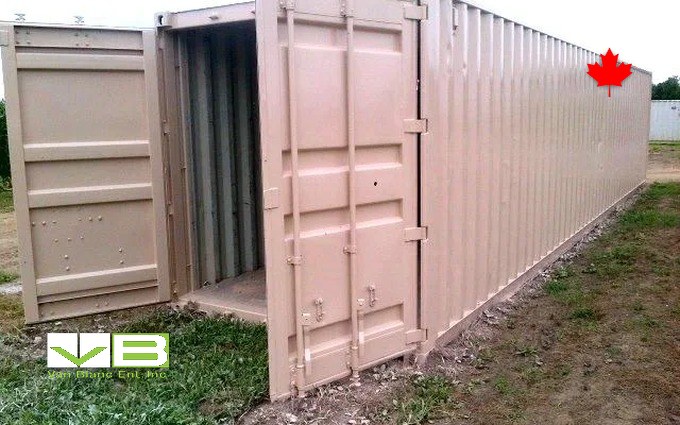
Quick Answer: A greenhouse kit in Canada is usually twin-wall polycarbonate on an aluminum frame: better insulation than glass, hail-resistant, weekend-assembled. Snow rating and anchoring decide whether it sees spring, so buy the rated frame. Steel containers serve growers as the dark half of the operation: storage, wash-pack, and controlled-environment growing rooms.
In This Guide
- The Glass-Box Dream, Adjusted for Canada
- Polycarbonate Against Glass, Settled Honestly
- The Kit Families and the Lean-To Trick
- The Snow Rating Is the Whole Purchase
- Foundations That Beat Frost Heave
- Sizes, Layout, and the Bench Math
- Siting: Sun, Wind, and the Water Tap
- What Season Extension Actually Buys
- Running One: Heat, Air, and Water
- The Dark Half: Where Steel Serves the Grower
- Market-Garden Scale
- Greenhouse Kit FAQs
Reading Time: 13 minutes
The Glass-Box Dream, Adjusted for Canada
The greenhouse kit is Ontario gardening’s favourite promotion: from a hobby that ends at Thanksgiving to one that laughs at the frost dates. The modern kits made the promotion affordable, pre-cut aluminum frames and glazing panels that a household assembles over a weekend, and the Canadian market has matured around them, with domestic sellers engineering for a climate the imported catalogues politely ignore. What the dream needs adjusting for is the same thing every structure on this site answers to: February. A greenhouse is the lightest-built, most glazed, most weather-exposed building a property will ever host, and the difference between the kit that delights for fifteen years and the one that folds in its first real snow is legible on the spec sheet before a dollar moves.
Our own stake here is the most modest on the whole lane, disclosed plainly: a shipping container has no sunlight and will never be a greenhouse, so nothing in this guide funnels you toward pretending otherwise. What our steel does around a serious growing operation, the storage, the wash station, the dark-side growing tricks, gets its honest sections at the end, where the grower’s yard genuinely uses it. The glass house gets served first, and properly.
Paul LeBlanc, Van Blanc: “Market gardeners taught me how this really works. The greenhouse is the sacred building, and nothing profane is allowed in it, no bags of amendment, no tools, no clutter stealing bench space from plants. Everything profane lives in the bin by the gate. The best growing operations I deliver to are the ones that made that rule early.”
Polycarbonate Against Glass, Settled Honestly
The glazing debate has a Canadian answer and it is not close for most buyers. Twin-wall polycarbonate insulates meaningfully better than single-pane glass, which in this climate means an earlier spring start and a later fall finish for the same heat input. It diffuses light, softening the direct scorch that stresses summer plants under clear glass. It shrugs off hail and errant soccer balls that write off glass panels, assembles more forgivingly, and costs less doing all of it. Glass keeps two honest wins: the crystalline look that makes a greenhouse a garden ornament, and a lifespan measured in generations where polycarbonate’s UV coatings retire it in fifteen or so years. Buyers furnishing a Victorian kitchen garden may choose glass with clear eyes; buyers growing food choose twin-wall and never look back.
| Glazing | Wins on | Concedes |
|---|---|---|
| Twin-wall polycarbonate | Insulation, diffusion, impact, assembly, price | Panel lifespan, showpiece clarity |
| Single-pane glass | Looks, longevity, scratch resistance | Heat loss, hail, scorch, weight |
| Film and hoop structures | Cost per covered foot at scale | Everything else; the market-garden workhorse, replaced on schedule |
The Kit Families and the Lean-To Trick
Beyond glazing, the kits sort into body types with real consequences. The freestanding gable house is the default and rightly so, even light on all sides and expandable in bench plans. The lean-to models, built against a south-facing house or garage wall, are the underrated Canadian pick: the host wall stores and radiates heat, shelters the structure from north wind, and shortens every water and power run to a few steps, buying weeks of season for nothing. Dome and geodesic kits trade bench efficiency for wind performance and conversation value, and the barn-profile houses buy headroom for the trellis crops. Buying channels matter as much as shapes: the Canadian specialty sellers engineer and support for this climate, while imported marketplace kits are where the unrated frames live, and the difference surfaces the first time a replacement panel or a February question needs answering.
The Snow Rating Is the Whole Purchase
Here is the number that separates the Canadian-serious kits from the catalogue decor: the published snow load rating. Wet snow stacks weight fast, heavy-zone accumulations reach serious pounds per square foot, and the kit market spans an almost comic range in response, from unrated bargain frames that fold under their first honest load to premium engineered kits rated for nearly a hundred pounds per square foot. The buying rule mirrors the metal-shed lesson exactly: find the rating in the fine print, treat its absence as the answer, and match it to your region’s winters with margin. Frame material tells the same story from another angle, extruded aluminum with real wall thickness versus the whippy tube that oil-cans in wind, and steeper roof pitches shed what flatter ones hoard.
Management still matters at every rating: the broom-after-the-big-one habit, snow cleared before thaw-refreeze cements it, and the winter choice every owner makes, heat it, clear it, or in the lightest kits, panel-down and store the glazing until March. The rated frame makes those choices comfortable. The unrated frame makes them urgent.
Assembly day borrows every kit-aisle lesson on this site: two people, a calm day, every part laid out and counted first, and glazing panels handled like the windows they are. The one greenhouse-specific rule is sequence discipline, square the base, plumb the frame, and only then glaze, because panels installed to hold a crooked frame square are panels pre-loaded to crack. The forums’ saddest builds all glazed too early.
Foundations That Beat Frost Heave
Greenhouse foundations run simpler than any building this size deserves, and the simplicity works when it respects frost. The standard base is a treated-wood perimeter anchored into the ground with rebar, level, square, and cheap; the step up is a shallow slab or paver floor for the growers who want clean knees; and where frost heave has opinions, sonotube footings below frost depth carry the corners the way they carry decks. What no glazed structure tolerates is the racking a heaving base inflicts, because panels pop and doors bind at tolerances lawn buildings ignore. Anchoring completes the physics: a greenhouse is a light box of sail area, the kits ship with anchor hardware for the same reason every fabric and thin-metal structure does, and the spring wind finds the skipped step every single year. Permits are managed by your municipality, so check with your local building or planning department before you order.
Building the Grower’s Backbone?
The greenhouse grows; the steel beside it runs the operation. Rodent-proof seed and amendment storage, tool and equipment bays, wash-pack rooms converted at our Brantford yards. Every quote carries a real lead time, not a hopeful one. Fast 1-3 day delivery across Ontario from our Brantford yards.
Van Blanc Ent. Inc. · Brantford, Ontario · Since 1995 · 4.9 stars across 140+ Google reviews · Cash on delivery
Budgeting closes cleanest with the driver list rather than a number: glazing grade, frame rating, footprint, base type, and freight set the purchase, while heat ambitions set the operating tail. The kit is the smallest line in a decade of growing; the seeds, soil, and Saturday mornings are the real subscription, happily paid.
Sizes, Layout, and the Bench Math
Greenhouse regret runs one direction only, and every owner forum says it in the same words: buy bigger than you think. The bench math explains why. An eight-by-ten sounds generous until benches line both walls and the aisle eats the middle, leaving growing surface that fills by the second seed order; the same reasoning that made fourteen feet the honest garage width makes ten-by-twelve the honest hobby start, with the deep kits earning their length the moment tomatoes meet trellises. Layout wisdom is bench height matched to your back, an aisle wide enough for the wheelbarrow that will absolutely enter someday, and the potting station positioned by the door where soil bags arrive, or better, exiled entirely to the storage building where the mess belongs.
Accessories separate the house that works from the pretty shell, and the short list pays for itself: automatic vent openers first and always, shelving and bench kits engineered for the frame rather than improvised against it, a min-max thermometer so decisions run on data, gutter kits feeding a rain barrel because the plants prefer that water anyway, and a door latch upgrade on windy sites. The catalogue’s decorative end, misting kits and gadget timers, can wait for the second season’s wisdom about what the first season actually needed.
Siting: Sun, Wind, and the Water Tap
Where the house sits decides half its performance before a seed lands. The classic rules hold: long axis catching maximum sun, unshaded south exposure through the shoulder seasons when the sun runs low, and morning light prioritized because early warmth dries foliage and wakes the day’s growth. Wind wants managing rather than eliminating, a windbreak at distance calms the heat-stealing gusts while fences pressed too close create the turbulence and snowdrifts they were meant to stop. Trees earn double caution, shade creeping further than expected as they grow and sap plus dropped limbs making a mess of glazing. And the mundane geography rules the daily experience: every metre from the water tap is a metre of hose hauled all summer, every metre from power constrains heat and openers, and the path to the kitchen decides whether the harvest habit survives November. Walk the yard with a compass and a hose before falling for a floor plan, and walk it again at four in the afternoon, when the shadows tell the truth the morning hid.
Pest logic follows the grower indoors, and the greenhouse changes its terms: the sealed-ish envelope keeps rabbits and cabbage moths out beautifully while making any aphid outbreak a party with no predators invited. Screened vents, quarantine habits for new plants, and a hard rule about soil bags, another argument for storing them in steel, keep the balance, and the owners who treat the house as a clean room stay ahead of the ones who treat it as a shed with windows.
What Season Extension Actually Buys
Season extension is the kit’s honest product, and in most of Ontario it means turning a hundred and forty frost-free days into two hundred and more. Unheated, a polycarbonate house starts greens and brassicas six weeks early, shelters tomatoes past the September scares, and overwinters the hardy greens the way market growers have always known. Add modest heat and the calendar bends further, seedlings in February, harvests into December, at operating costs that scale with ambition and insulation. The realistic ceiling deserves stating too: a hobby kit at minus twenty is a battle chosen, not a default, and the gardeners happiest with their houses are the ones who let January belong to the seed catalogues.
The first year runs its own curriculum, and knowing the syllabus calms it. Fall assembly beats spring, the structure settles, the base proves itself through one freeze cycle, and March finds you planting instead of building. The first summer teaches ventilation with a heat wave, which is why the automatic openers belong in the original order rather than the emergency one, and shade cloth earns its place by July on south-facing sites. The first winter teaches the broom habit and reveals every gap the sealant missed, cheap lessons if the frame was rated and expensive ones if it was not. Owners emerge from year one running the house on rhythm instead of alarm, which is when the hobby becomes the pleasure the catalogue promised.
Running One: Heat, Air, and Water
The occupied greenhouse runs on three systems, all simpler than newcomers fear. Ventilation is the surprising priority, because a glazed box overheats on a sunny March day faster than it freezes on a cold night: roof vents with automatic openers are the single best money in the accessory catalogue, and the wax-cylinder openers need no power at all. Heat, where wanted, ranges from the thermostat-driven electric heaters of hobby scale to the propane of serious rooms, with the cylinder rules this site repeats everywhere: fuel stored outside, upright, valves closed. Water wants a plan before summer, a rain barrel and can at small scale, a line and timers beyond it, and the winterizing habit every outdoor line in this province obeys. None of it is complicated. All of it rewards being decided before the first heat wave rather than during.
The film-and-hoop world deserves its fair sentence in any honest greenhouse guide: for covered square footage per dollar at acreage scale, nothing touches a poly tunnel, and the market gardens of this province run on them. The covers are consumables replaced on schedule, the interiors are farming rather than pottering, and the hobby buyer who only needs a season head start on tomatoes will find the tunnel more shed than sanctuary. Different tool, right jobs, and the serious operations usually own both.
The Dark Half: Where Steel Serves the Grower
Now the steel, in its honest supporting roles. Every growing operation accumulates a warehouse: seed inventories that rodents adore, amendments and fertilizers by the bag, tools, irrigation kit, trays and pots in their thousands, and the propane the greenhouse must not store. That warehouse is container work of the plainest kind, sealed against the mice that treat wooden sheds as grain elevators, and it is the single most common way our units enter garden operations. The second role is wetter: growers selling what they grow need somewhere to rinse, sort, and chill, and the wash-pack room built from a container has become the small farm’s standard answer. The third is seasonal patience, overwintering dormant nursery stock in steel, where darkness and stable cold are features rather than flaws.
And then there is the inversion that surprises people at the counter: steel’s growing trick is doing without the sun entirely. Controlled-environment agriculture runs on insulated containers fitted with lights, racks, and climate gear, the container growing room, explained properly, with the high-density version mapped in farming stacked under lights. It is a different craft with different economics, and it pairs with a glass house better than it replaces one: sun for the crops that want sky, steel for the crops that want control, and the grower owning both ends of the light spectrum.
Market-Garden Scale
At business scale the whole page compresses into a yard plan we deliver into constantly: hoop houses and poly tunnels doing the cheap covered acreage, a rated rigid greenhouse for propagation, and the steel spine running behind them, storage, wash-pack, cold chain, all locked against the off-season. The operations that grow smoothly add steel in the same rhythm they add covered feet, one need per unit, sited on the packing route rather than wherever the truck first stopped. Farm businesses building that spine without the single cheque finance it through a farm loan or credit line at their own lender, and the steel is theirs from delivery day. We do not rent, which suits a trade whose every other cost already recurs.
Many people call us saying they can get a bin for $1,000 less on Facebook. Two weeks later some of them call back to say they got scammed. Greenhouse kits run the same spring con through phantom clearance listings, and both markets share the defence: buy from somewhere with a yard, a floor, and a person who answers in February.
The greenhouse kit is the most optimistic purchase in Canadian gardening, and the optimism pays when the frame is rated, the base beats the frost, and the vents open themselves on the first hot morning. Buy the size after the one you planned, keep the sacred house sacred, and give the profane half of growing, the bags, the tools, the mess, its own steel room by the gate. The plants get the light. The operation gets the lock. Everybody winters well.
Sold outright. Delivered in 1 to 3 days.
Van Blanc sells new and used shipping containers outright from our 4 Brantford yards, with delivery in 1 to 3 days and payment on delivery. We do not rent, lease or offer rent-to-own. Request a sale quote or call the yard at 519-754-6844.
Greenhouse Kit FAQs
Is polycarbonate or glass better for a greenhouse in Canada?
Twin-wall polycarbonate for most buyers: better insulation than single-pane glass, softer diffused light, hail and impact resistance, easier assembly, lower cost. Glass wins on looks and panel lifespan, which suits ornamental kitchen gardens. Growers chasing food and season extension choose polycarbonate and rarely revisit the question.
How much snow can a greenhouse kit handle?
Whatever its published rating says, and the range is enormous: unrated bargain frames fold under their first wet load while premium engineered kits carry very heavy ratings. Buy the number, not the photo, match it to your region with margin, and keep the broom habit for wet storms regardless.
What base does a greenhouse kit need?
Level, square, and frost-respecting: a treated-wood perimeter anchored with rebar serves most hobby kits, a shallow slab upgrades the floor, and sonotube footings below frost depth carry corners where heave threatens. Racking is the enemy, since glazed panels and doors tolerate almost none, and full anchoring is mandatory against wind.
What size greenhouse should I buy?
One size past your plan. Benches line the walls, the aisle eats the middle, and the remaining surface fills by the second seed order, which makes ten-by-twelve the honest hobby start. Add length for trellised crops, height for comfort and airflow, and an aisle the future wheelbarrow already claims.
Can you grow food in a shipping container?
Yes, by the opposite trick: no sun at all. Insulated containers fitted with lights, racks, and climate control run controlled-environment growing, microgreens and greens at commercial density. It is a different craft from greenhouse growing and pairs well with it; what a container never does is substitute for a glazed house.
Sources
- Grizzly Shelter. (2026). Greenhouse Growers Buyers Guide. grizzlyshelter.ca. The Canadian seller’s frame, glazing, and snow-load guidance
- Planta Greenhouses. (2025). Glass vs Polycarbonate Greenhouses. plantagreenhouses.com. The glazing comparison behind the settled verdict above
- Backyard Discovery. (2025). Home Greenhouse Buying Guide: Kits, Cost, and What to Look For. backyarddiscovery.com. Foundation options and the kit-buying checklist summarized
- Greenhouse Sale Canada. (2025). Why Canadian Gardeners Are Turning to Greenhouse Kits. greenhousesale.ca. The season-extension case and weekend-assembly model described
Reach Van Blanc in Brantford
We have supplied Ontario’s growers with the dark half of their operations since 1995: seed rooms the mice never crack, wash-pack conversions, and the locked bays behind the prettiest greenhouses in the county. The rows at 90 Morton Avenue East are open whenever the seed catalogues get ambitious.
Van Blanc Ent. Inc., 90 Morton Ave E Unit 1B, Brantford, ON N3R 7J7, 519-754-6844
Planning a growing operation? Call with the covered footage and the crop plan, and we will size the steel spine around it: seed and amendment storage, the wash-pack room, and the locked bays behind the glass.