
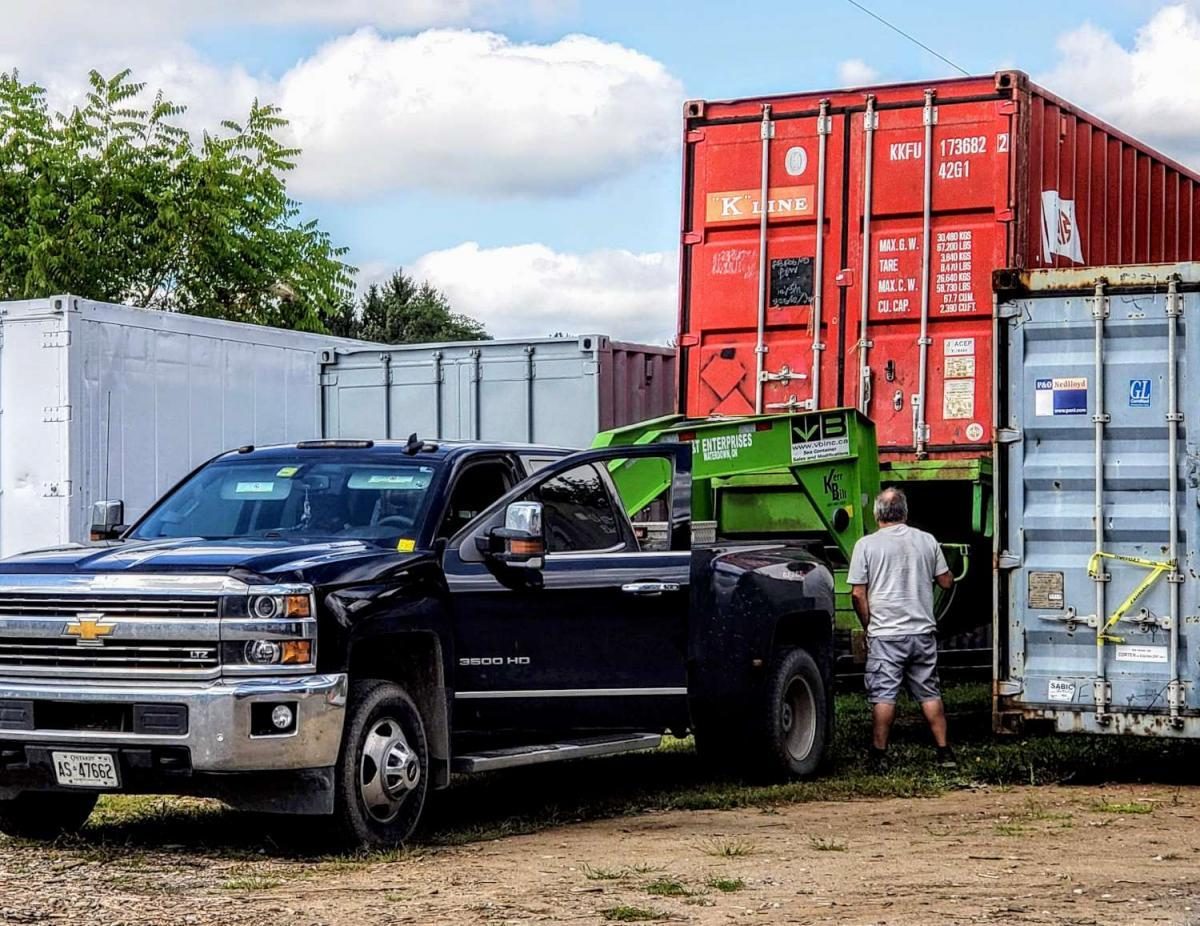
Quick Answer: After a flood or fire, restoration crews pack your contents out somewhere while the house dries and rebuilds. An on-site container pack-out keeps everything in your own driveway: inventoried, lockboxed, and visible every day of the claim, instead of racked in a warehouse across the city. Van Blanc delivers across Ontario in 1-3 days.
In This Guide
- The week the basement let go
- What is a pack-out, and where do your things usually go?
- The on-site version: why the driveway beats the warehouse
- For restoration contractors: the per-job box
- What still belongs at the specialist facility
- The practical setup during a claim
- FAQs
- Sources
- Reach Van Blanc in Brantford
Reading time: about 8 minutes.
The Week the Basement Let Go
Nobody researches contents storage on a good day. This page exists for the week after the sump quit, the pipe split, or the kitchen fire, when a restoration crew is in your house saying words like “pack-out” and your furniture is about to leave in a truck. Recovery organizations that walk families through these weeks, the Canadian Red Cross among them, all give the same early advice: slow down where you can, document everything, and know where your belongings are going. That last part is what this page is about, because there are two answers, and most homeowners only ever hear one.
What Is a Pack-Out, and Where Do Your Things Usually Go?
A pack-out is the restoration industry’s term for boxing, inventorying, and removing a home’s contents so drying, demolition, and rebuild can happen in empty rooms. The industry’s standards body, the IICRC, trains crews on exactly this discipline: what gets cleaned, what gets stored, what gets documented. The default destination is the restoration company’s warehouse, where your household lives on racking, behind their processes, for the weeks or months the claim runs. That model works, and for some contents it is genuinely necessary, but it carries the quiet costs families feel later: everything is a forty-minute drive away, retrieving one box of winter coats is a work order, and the claim’s storage line grows with every month the rebuild slips.
The On-Site Version: Why the Driveway Beats the Warehouse
The alternative the industry increasingly runs: a 20ft container lands in the driveway before demolition starts, and the pack-out travels thirty steps instead of thirty kilometres. The contents never leave the property, which insurers and adjusters tend to appreciate for the plainest reason imaginable: custody is simple when nothing went anywhere. The family keeps eyes on their belongings for the whole claim, the winter-coats problem becomes a walk with a key, and when the rebuild finishes, move-back is an afternoon instead of a scheduled delivery. The box itself is the same sealed, lockboxed steel that protects everything else this site writes about, with the standard moisture setup, vents and desiccant per the condensation guide, keeping stored contents dry while the house across the driveway is deliberately soaked, stripped, and rebuilt. Renovation families already know the pattern’s cousin: the container-plus-dumpster driveway, covered in our two-bins guide, runs the same way on an insurance timeline.
Paul LeBlanc, owner: “A family near Cainsville had a February pipe burst and their restoration crew asked us for a bin the same week. It sat in the driveway through four months of rebuild, and the mother told me afterward the container was the only part of the claim that never made her anxious: she could see it from the kitchen window of the rental next door.”
For Restoration Contractors: The Per-Job Box
The trade side of the same math: warehouse racking is finite, drives between site and storage are unbilled hours, and every contents move is a custody event your documentation has to survive. A rented container per job, or a small owned fleet rotating between claims, puts the pack-out at the loss address: crews box and rack once, the inventory sheet lives with the box, and the client can be shown their own belongings without a warehouse visit. Firms running the model tell us it sells itself at the kitchen-table meeting, because “your things stay here” is the sentence every homeowner was hoping to hear. Between claims, the boxes earn as equipment storage, the universal second job of every contractor’s container.
What Still Belongs at the Specialist Facility
The honest fork, stated clearly: contents that need PROCESSING go to the professionals. Smoke-damaged textiles headed for ozone treatment, electronics needing specialist cleaning, documents going to freeze-drying, and anything the IICRC-trained crew flags for restoration work belongs in their facility, because that is what the facility is FOR. The on-site container holds the other, much larger pile: the undamaged rooms, the boxed everyday household, the furniture that just needs to be somewhere dry while the floors happen. Most claims split exactly that way, a small processing stream and a large waiting stream, and the container owns the waiting.
Ask the Crew One Question Tomorrow
“Can the pack-out stay on site?” If the answer is yes, one call puts the bin in the driveway before demolition day, with a real delivery date your project manager can plan around.
The Practical Setup During a Claim
The details that make it smooth: the container lands on wood blocking placed to leave the driveway’s working half clear for trades’ trucks; boxes go in room-by-room with the inventory sheet taped inside the door; furniture wraps in movers’ blankets exactly as it would for a warehouse trip, minus the trip; and the one key lives with whoever the family and contractor agree it should. The container is bought for the claim rather than rented, which restoration firms running several files a year come to prefer: the same owned bin rolls to the next pack-out on a float operator’s deck, there is no meter running while the rebuild does what rebuilds do, and a used wind-and-watertight unit holds its value if the firm ever sells it on. Firms building a pack-out fleet can finance the purchase through their own bank or equipment financer. If the property cannot host a box at all, no driveway and no access, you will hear that on the call before anything is booked.
Pack-out storage has alternatives worth knowing before the next loss call. Compare them in the roundup of every container alternative.
Sold outright. Delivered in 1 to 3 days.
Van Blanc sells new and used shipping containers outright from our 4 Brantford yards, with delivery in 1 to 3 days and payment on delivery. We do not rent, lease or offer rent-to-own. Request a sale quote or call the yard at 519-754-6844.
Frequently Asked Questions
What is a pack-out in a restoration claim?
The boxing, inventorying, and removal of a home’s contents so drying and rebuild can happen in empty rooms. The default destination is the restoration company’s warehouse; the on-site alternative parks a locked container in the driveway so contents never leave the property.
Why would an insurer prefer an on-site container?
Simplicity: custody is easy to document when nothing went anywhere, and storage costs are visible and flat. We make no promises about any insurer’s decisions; ask your adjuster, and most families find the conversation short.
How fast can a container arrive after a flood?
1-3 days across most of Ontario from our Brantford yards, with the real date quoted up front so the crew can schedule demolition behind it. For same-day emergency drying, your restoration contractor’s own resources lead; the bin follows for the contents phase.
Who packs and inventories the contents?
The restoration crew, exactly as they would for a warehouse pack-out; we supply the box, not the packing. Families doing a self-managed claim run the same system with their own labour and the inventory sheet taped inside the door.
What contents should NOT stay on site?
Anything flagged for processing: smoke-damaged textiles, electronics needing specialist cleaning, documents headed to freeze-drying. That stream belongs at the restoration facility built for it. The container holds the larger waiting stream: the dry, undamaged household biding its time.
Sources
- IICRC. Standards body for the inspection, cleaning, and restoration industries. iicrc.org
- Canadian Red Cross. Recovering after floods and home fires. redcross.ca
- International Organization for Standardization. ISO 668, Series 1 freight containers, classification, dimensions and ratings. iso.org
Reach Van Blanc in Brantford
Steady steel for unsteady weeks, from a family yard since 1995. 4.9 stars across 140+ verified Google reviews, and a real person on the phone when the week has been long enough already.
Van Blanc Ent. Inc., 90 Morton Ave E Unit 1B, Brantford, ON N3R 7J7, +1 888-509-6658
Whether you are the homeowner or the crew, describe the claim’s timeline and we will fit the bin to it, extensions included, because rebuilds run long and we know it.
Call 519-754-6844 Request a Free Quote