
Quick Answer: A bunker is an engineered underground shelter, and a standard shipping container is not one: corrugated walls carry cargo loads through corner posts, not lateral earth pressure, so burial collapses them. Legitimate shelters start with a structural engineer, while containers serve preparedness honestly above ground as secure, dry supply storage.
In This Guide
- What People Actually Mean by Bunker
- The Internet’s Favourite Bad Idea
- Why the Box Refuses Burial
- What the Engineered Version Involves
- Ontario Already Built the Real Thing
- Shelters Worth Taking Seriously
- Reading a Manufactured Shelter’s Ratings
- The Root Cellar, the Sensible Ancestor
- The Kit, Itemized
- Steel’s Honest Role in Preparedness
- The Seller Test
- Bunker and Shelter FAQs
Reading Time: 12 minutes
What People Actually Mean by Bunker
The word arrives at our counter carrying half a dozen different intentions, and sorting them out is most of the service. Some callers mean a storm refuge, somewhere to wait out the tornado warnings that Southwestern Ontario’s summers hand out. Some mean a root cellar, the cool-earth food storage their grandparents kept. Some mean a safe room, a hardened space inside an existing building. Some mean secure storage for the household’s emergency supplies, the sober preparedness that Public Safety Canada asks of every household regardless of worldview. And some, fed by a decade of videos, mean the buried shipping container, which is the one version on the list we are professionally obliged to talk people out of. This guide takes each intention seriously on its own terms, because the impulse underneath all of them, being ready for a bad week, is reasonable; the execution just has to respect physics that do not negotiate.
Paul LeBlanc, Van Blanc: “I have sold containers for thirty years and I will not sell one to be buried. Not because the sale is bad for me, it is a sale like any other, but because I know exactly what those walls are engineered for, and soil is not on the list. When a customer hears a container dealer refuse container money, they usually understand the physics are real.”
The Internet’s Favourite Bad Idea
The buried-container bunker is one of the most durable myths in the steel world, and its logic sounds airtight for exactly one sentence: containers cross oceans stacked nine high, so surely a few feet of soil is nothing. The myth thrives because the box looks the part, a ready-made steel room at a fraction of poured-concrete money, and because the videos showing the excavator, the box, and the triumphant backfill end before the physics begin. What the videos do not film is the second year, when the sidewalls have bowed inward, the roof holds a shallow pond of settled earth, and the door frame has racked out of square. The failure is not a quality problem with the box. It is a category error about what the box is, and the correction is worth a section of its own.
Why the Box Refuses Burial
A shipping container is a masterpiece of directional strength. Every tonne of that famous nine-high stacking travels down through four corner posts, engineered columns joined by castings built for cranes and twist-locks; the walls between them are thin corrugated sheet whose job is keeping cargo and weather in their places, and the roof is thinner still, spanning eight feet with no interior support because nothing in the box’s working life ever asked it to carry more than snow and a rigger’s boots. Soil asks precisely the questions the design never answers. Earth pushes on the long walls sideways, a distributed lateral pressure that grows with depth and grows sharply when rain saturates the backfill, and it rests on the roof as a permanent dead load the corrugations were never sized for. Hydrostatic water pressure probes every weld seam. The cut openings a shelter needs, entries, vents, an emergency exit, remove material from a monocoque structure whose strength was already a team effort. The corner posts, magnificent as ever, stand ready to carry loads that burial never routes to them. The box is not weak; it is strong in the wrong directions for this job, and the industry’s own sellers say so in print, which is a rare and telling consensus.
| What the container was engineered for | What burial asks instead |
|---|---|
| Vertical loads down four corner posts | Lateral earth pressure on the long walls |
| A roof spanning eight feet under weather | A permanent distributed soil dead load |
| Shedding rain from above | Resisting groundwater from every side |
| A sealed monocoque shell | A shell with cut entries, vents, and egress |
What the Engineered Version Involves
Underground shelters exist, and legitimate ones share a single origin: a licensed structural engineer designed this shelter for this site. The professional version begins with soil and groundwater evaluation, because a shelter in Brantford sand and a shelter in Haldimand clay are different structures; it continues through reinforcement designed to carry the real lateral and dead loads, drainage engineered so the structure is not a basement-shaped boat, ventilation sized for the occupancy, and a second means of egress, since a refuge with one exit is a trap with good marketing. Some engineered designs do incorporate containers as interior liners within a reinforced structure that carries the earth loads around them, and that is the one configuration where the box and the ground coexist honestly, with the engineering doing the sheltering and the steel doing what it has always done, keeping a room dry and square. Permits are managed by your municipality, so check with your local building or planning department before you order, and for anything underground and occupiable, expect that conversation to lead directly to the engineer’s door, which is exactly where it should lead.
Preparedness Storage, Priced Honestly
We will not sell you a box to bury, and we will happily sell you the above-ground half of a sensible plan: sealed, lockable, dry steel for supplies, equipment, and the gear a rural property leans on when the power is out. Real lead time, not a hopeful one. Fast 1-3 day delivery across Ontario from our Brantford yards.
Van Blanc Ent. Inc. · Brantford, Ontario · Since 1995 · 4.9 stars across 140+ Google reviews · Cash on delivery
Ontario Already Built the Real Thing
This province knows exactly what a real bunker costs to build, because it built one of the continent’s most famous examples and then turned it into a museum. The Diefenbunker at Carp, west of Ottawa, went into the ground at the height of the Cold War as the federal government’s emergency headquarters: four storeys of engineered structure buried in a hillside, designed by teams of engineers, built by an army of contractors, and maintained by full-time staff for decades. Walk through it today, it is open to the public as Canada’s Cold War Museum, and the education is structural before it is historical. The walls are massive poured concrete, the mechanical floors are the size of gymnasiums, the blast tunnel is an engineering exhibit in itself, and every cubic foot testifies that keeping people safe under earth loads is a serious civil-engineering discipline, one this country practised at national scale within living memory.
The visit makes an honest calibration exercise for anyone circling the buried-container idea, because the comparison is not close: the gulf between that structure and a corrugated box under backfill is the gulf between a hospital and a first-aid kit. Nobody needs the Diefenbunker’s scale, but the direction of its engineering, structure designed for the ground it sits in, is not optional at any scale, and Ontario’s own landmark makes the point better than any supplier’s warning ever could.
Shelters Worth Taking Seriously
Strip the drama away and the shelter category is mostly ordinary buildings doing ordinary jobs well. The storm refuge is the serious one in our region: a below-grade corner of a basement, or a purpose-built safe room following published engineering guidance, gives a family somewhere to sit out a tornado warning, and the manufactured versions are tested products with ratings rather than vibes. The safe room proper, a hardened interior room, is a renovation-scale project with its own specialist trades. And the household preparedness that Public Safety Canada actually recommends is humbler than any of it: enough water, food, light, and heat for the family to be self-sufficient for a few days, stored somewhere dry, reachable, and known to everyone in the house. The pattern across the legitimate list is the same one this whole site keeps finding: the real versions are specific, engineered or tested, and boring, and the fantasy versions are cinematic and structurally illiterate. Boring wins.
Reading a Manufactured Shelter’s Ratings
The storm-shelter market sells manufactured refuges, above-ground steel safe rooms and below-ground units alike, and the honest ones separate themselves from the theatrical ones with paperwork rather than adjectives. A serious product cites the published engineering standards for storm shelters, names the debris-impact testing its door and panels passed, and documents its anchoring requirements, because a tested room bolted to nothing is a tested room that leaves with the storm. The theatrical ones lead with thickness numbers and menace, quarter-inch this, military-grade that, and go quiet when asked for the test reports. The buyer’s method is the same one that works on containers, on sheds, and on every product this site reviews: ignore the adjectives, ask for the documents, and treat the speed of the answer as data. A manufacturer who emails the engineering package within the hour is selling a shelter; one who changes the subject is selling a mood.
Placement earns a paragraph of its own, because a refuge is only as good as the trip to it. The tested unit in a detached building across a dark yard loses to the humbler basement corner the family can reach in forty seconds in a nightgown, and the professionals size and site refuges around that arithmetic: seconds to reach, everyone mobile or carried, door operable by the smallest adult in the house. Sober preparedness keeps asking that same practical question, who actually uses this, in the dark, under stress, and it is remarkable how quickly the cinematic options fall away once it is asked.
The Root Cellar, the Sensible Ancestor
The most honest underground storage this province has ever built predates the word bunker entirely. The root cellar solved a real problem with real physics: the earth below frost depth holds a steady cool temperature all year, and vegetables stored in that stable cool, with humidity and ventilation managed, keep for months without a watt of refrigeration. The old ones were dug into hillsides or under farmhouses and walled in stone or poured concrete, materials happy under earth loads, which is why so many century-old cellars still work while the internet’s buried boxes bow in a season. The tradition is quietly returning with the gardening revival, and it deserves its inheritance intact: a modern root cellar is a small engineered concrete structure or a manufactured cellar unit designed for burial, not a repurposed anything. The lesson it teaches generalizes to the whole category: underground works beautifully when the structure was born for it.
The Kit, Itemized
Since the humblest tier of the category is the one Public Safety Canada actually asks of every household, it deserves its plain-language inventory. The federal guidance is built around self-sufficiency for at least seventy-two hours: water at a rate that covers drinking and basic hygiene for every person, food that needs no refrigeration and little cooking with a manual can opener beside it, a flashlight and a battery or crank radio with spare batteries, a first-aid kit, the family’s prescription medications and copies of important documents, cash in small bills for the hours when the machines are down, warm layers and blankets, and the specific extras a given household cannot improvise, formula, pet food, spare glasses, the list each family knows best. The guidance’s quiet genius is its indifference to why the bad week happened; an ice storm, a flood, and a long blackout all draw down the same kit, which is why the seventy-two-hour habit serves everyone from the anxious to the merely tidy.
The kit’s real enemy is not scarcity but entropy: batteries corrode, water containers age, the medications expire, and the whole assembly migrates apart as the household borrows from it. The fix is storage with a home and a calendar, one dry, known, reachable place and a twice-yearly check when the clocks change, and that unglamorous discipline, more than any purchase, is what separates the prepared household from the household that owns preparedness-shaped objects.
Steel’s Honest Role in Preparedness
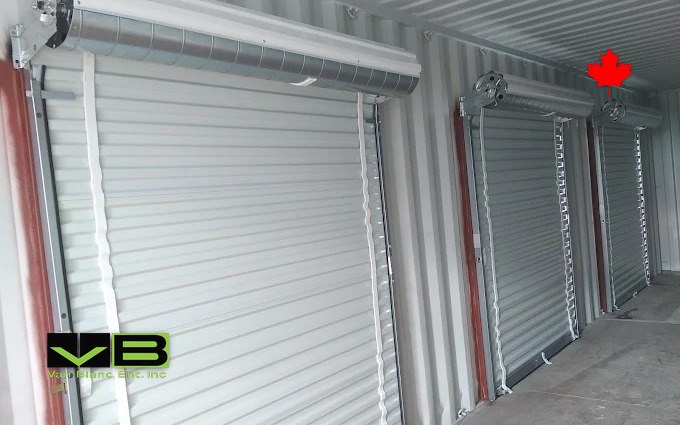
Ruling out burial does not rule the container out of readiness; it just moves the box to the job it is engineered for, and that job turns out to matter more in a real bad week than any buried room. The supplies Public Safety Canada recommends, and the deeper stocks a rural household keeps anyway, need dry, secure, rodent-proof volume: the generator and its cords, the chainsaw and fuel stabilized for the season, the water containers, the wood-stove spares, the tools that clear a laneway after an ice storm. An above-ground container holds all of it a hundred steps from the back door, sealed against weather and locked against the opportunism that follows any regional emergency, and it does so without asking a single question of a structural engineer. The details that make it work are the same ones our whole catalogue runs on: a grade the doors agree with, the ventilation discipline in the condensation guide’s playbook so stored gear stays dry through freeze-thaw, and shelving that keeps the load an aisle rather than a pile. For households consolidating that kind of capability while right-sizing the rest of their storage, one locked steel room outperforms a scattered garage every time.
Many people call us saying they can get a bin for $1,000 less on Facebook. Two weeks later some of them call back to say they got scammed. The preparedness corner of the market runs hotter than most, because urgency sells, which makes the discipline simpler: buy calm, inspect in person, and treat anyone marketing a standard box as burial-ready as a walking red flag.
The Seller Test
The bunker conversation doubles as one of the best supplier honesty tests in the industry, and it costs one question: ask whether you can bury the container they are selling. A seller who says yes without an engineer in the sentence has just told you everything about how the rest of their claims are calibrated, grades, floors, delivery dates, all of it. The sellers worth buying from, us included, will lose the burial sale on the spot and explain why, the way the reputable US dealers do in their own published guides, because a collapsed shelter with a customer’s family in mind is not a sale anyone sane wants. The same test generalizes across the catalogue: every honest supplier has a list of things they will not sell you for a purpose, and asking where that list starts is the fastest way to find out who you are dealing with. Our list starts here.
The test has a second half worth running, and it points at the other side of the market. The dedicated shelter manufacturers get asked the mirror-image question weekly, whether a cheap container could do what their engineered products do, and the reputable ones publish the same physics we do, from the opposite bank of the river. When the people selling containers and the people selling bunkers agree in print that one is not the other, a buyer is looking at that rarest of market conditions, a consensus with no one profiting from it, and consensus like that is worth more than any single review, including this one.
The impulse to be ready is sound, and this province’s weather hands out reasons yearly. Spend the readiness budget where the physics cooperate: a tested storm refuge for the warnings, a real engineer for anything underground, a cellar born for burial if the harvest calls for one, and honest above-ground steel for the supplies that turn a bad week into an inconvenience. The box that crosses oceans will serve that plan faithfully its whole long life, right up at grade where its strength points the right way.
Bunker and Shelter FAQs
Can you bury a shipping container to make a bunker?
Not safely, and not as-is. Containers carry load through their corner posts; the corrugated walls and thin roof were never designed for lateral earth pressure or a soil dead load, and burial bows the walls and settles the roof, faster in wet ground. Even container sellers publish this warning, ourselves included.
How are legitimate underground shelters built?
By a licensed structural engineer, from the soil up: site and groundwater evaluation, reinforcement designed for the real loads, drainage, sized ventilation, and a second egress. Some engineered designs use containers as interior liners inside a structure that carries the earth loads around them, which is the one honest pairing of box and ground.
What shelter makes sense for Ontario storms?
A below-grade basement corner or a purpose-built, tested safe room following published engineering guidance covers the tornado warnings our region actually gets. Pair it with the household basics Public Safety Canada recommends, several days of water, food, light, and heat, stored dry and where everyone can find them.
Is a root cellar the same thing as a bunker?
It is the sensible ancestor: an underground structure built from materials that welcome earth loads, stone, poured concrete, or manufactured units designed for burial, using stable ground temperature to store food. Century-old cellars still work because they were engineered for the ground, which is exactly the lesson the buried-container myth ignores.
What is a shipping container’s honest role in emergency preparedness?
Above-ground supply storage, where its strengths point the right way: sealed, lockable, rodent-proof steel holding the generator, fuel, water, tools, and stocks a household leans on through outages and ice storms. With sound grading, ventilation, and shelving, one locked box outperforms a scattered garage in the week it matters.
Sources
- Conexwest. (2026). How Deep Can You Bury a Shipping Container? conexwest.com. A container seller’s own engineering caveats on burial
- USA Containers. (2025). Can You Use a Shipping Container as an Underground Bunker? usacontainers.co. The corner-post physics against lateral earth pressure
- Tradecorp USA. (2025). Can You Bury a Shipping Container? tradecorp-usa.com. Reinforcement and engineering requirements for any burial scenario
- Public Safety Canada. (2026). Get Prepared: Emergency Preparedness. canada.ca. The sober household preparedness baseline for Canadian families
Reach Van Blanc in Brantford
We have sold steel honestly since 1995, which sometimes means refusing the sale a customer walked in wanting and finding them the one that will still be standing in a decade. If your readiness plan needs its above-ground half, the rows at 90 Morton Avenue East hold it, strength pointed the right way.
Van Blanc Ent. Inc., 90 Morton Ave E Unit 1B, Brantford, ON N3R 7J7, 519-754-6844
Weighing a shelter plan? Call and describe what you are actually preparing for.