
Quick Answer: A resin shed is a moulded plastic kit building, polypropylene or high-density polyethylene, that assembles in an afternoon and never rots or needs paint. The material grade and the foundation decide how it survives Ontario winters. Steel-reinforced HDPE carries snow best, and every resin shed needs a level, solid base.
In This Guide
- What Resin Actually Means on the Box
- Why Plastic Won the Garden-Shed Aisle
- The Three Brands That Own the Category
- Sizing a Resin Shed Honestly
- The Foundation Rule Nobody Skips Twice
- How Resin Behaves in an Ontario Winter
- Assembly Day, Honestly Described
- The Service Life, Managed
- The Business Side of the Aisle
- Where the Plastic Tier Honestly Ends
- The Tier Above: When the Job Outgrows Resin
- Resin Shed FAQs
Reading Time: 13 minutes
What Resin Actually Means on the Box
Resin is the shed aisle’s word for engineered plastic, and the word is doing more work than buyers realize, because it covers two genuinely different materials. Polypropylene, the material behind Keter’s woodgrain-textured panels, moulds crisply, takes convincing finishes, and stays lighter per panel. High-density polyethylene, HDPE, the material Lifetime builds on, runs denser and tougher, and the serious HDPE sheds add steel reinforcement inside walls, roof trusses, and door frames, which is where the category’s real snow capacity lives. Below both sits the material the box never names: thin, low-grade plastic in the bargain kits, which is the stuff that goes brittle after two summers of ultraviolet and hands its roof to the first real snow load.
We sell shipping containers, which puts us two tiers up the storage ladder from the resin aisle and gives us no horse in the brand race below. That distance is useful: we can tell you plainly that a good resin shed handles a wide band of garden duty, that a bad one is landfill on a payment plan, and that the difference is legible on the spec sheet before any money moves. This page is the category guide; our matching brand-level reviews take the individual makers one at a time.
Paul LeBlanc, Van Blanc: “The resin shed is the one competitor I recommend weekly with a straight face. Somebody calls wanting steel for a lawnmower and four bags of soil, and I tell them to go buy a good plastic shed and enjoy the change. The call I cannot save is the one that comes after the cheap kit failed: the roof folded in February, the tools rusted under the tarp, and now the budget is buying its second shed. Buy the good grade once, or skip the tier entirely.”
Why Plastic Won the Garden-Shed Aisle
The resin shed conquered its shelf on four honest merits. It never rots, which in a province of wet springs makes it the only shed material with no maintenance calendar at all: no paint, no stain, no shingles, a hose being the entire upkeep program. It assembles from a flat-pack in an afternoon with household tools, no trades and no build crew. It resists the small-scale weather that ages wooden kits, since panels shed rain whole and shrug off the freeze-thaw that lifts paint and opens seams in timber. And it lands at the friendliest price point of any real structure a homeowner can buy, which is why the category moved from novelty to default inside two decades.
Those merits define the honest mission: light garden duty. Mowers, trimmers, soil and pots, patio cushions, bikes, the snow shovel brigade. Within that mission the product is genuinely good, and the buyers disappointed by resin are nearly always buyers who assigned it a mission from the next tier up, then blamed the plastic for the posting error.
Retail seasonality shapes the buying too. The aisle stocks deep from April through July and thins by September, with the honest clearance window in late summer when floor models and overstock move. Ontario buyers who purchase in August and assemble on a warm September weekend get the best of both calendars: real selection, softer pricing, and a shed standing before the leaves need somewhere to hide from.
The Three Brands That Own the Category
| Brand | Material approach | Where it leads the shelf |
|---|---|---|
| Keter | Polypropylene, woodgrain-textured panels | Looks: the most convincing finishes in the aisle |
| Lifetime | Steel-reinforced HDPE | Toughness: the category’s strongest walls and longest warranty, ten years |
| Suncast | Heavy-duty resin panels | Assembly: the fastest, friendliest build day |
The three-way race is real and stable: Keter looks best, Lifetime is built strongest, and Suncast goes together easiest, and a buyer ranking those three virtues in order has effectively chosen a brand. The details behind the first name, including what its warranty paper does and does not promise, are in our full independent Keter examination, written under the same rules as this page: verified claims, documented trade-offs, no scraped reviews. For Ontario buyers the winter lens tightens the race: steel reinforcement and roof geometry matter more here than they do in the markets these products are mostly designed for, which pushes the cold-climate rankings toward the reinforced HDPE end of the shelf.
Sizing a Resin Shed Honestly
The category sells in three body types, and matching type to mission prevents the commonest regret. The vertical and horizontal deck boxes at the small end are cushion-and-cannister furniture, honest at exactly that. The lean-to and narrow vertical sheds serve the side-yard mission: trimmers, hoses, propane-adjacent hardware that is allowed indoors, all within arm’s reach of the door. And the full walk-in sheds, from roughly six-by-four up to the double-door eight-by-twelves, are the category’s real buildings, the ones the brand race above is actually about.
The sizing rule veterans repeat: buy one size past today’s list, because storage grows and shrinking never happens. The corollary is honest too: if the list already includes a ride-on mower, a motorcycle, or anything with real wheels and real value, the list has outgrown the aisle, and forcing it into the biggest resin flagship buys the tier’s limits at the tier’s top price. Capacity is the cheap dimension in this category; it is walls that cost.
The Foundation Rule Nobody Skips Twice
Every maker’s manual says it and every failed resin shed proves it: the kit is only as good as the base under it. Plastic panels have no tolerance for racking, so an unlevel base means doors that bind, roof seams that gape, and walls that creep out of square with every frost heave. Direct ground contact is worse: a resin floor on dirt wicks, puddles, and heaves, and the field consensus is blunt, sheds set on bare ground fail within two or three years. The working answer is the same modest infrastructure we preach for every structure on this site: a compacted gravel pad or set pavers, levelled honestly, slightly proud of grade so water leaves, sized a little larger than the footprint. Anchoring finishes the job, because an empty resin shed is a light box with a sail area, and the kits include anchor points for exactly the wind that finds unanchored ones.
It is worth noticing what that pad costs relative to the shed: a meaningful fraction, sometimes approaching what the cheap kits charge. That ratio is not an argument against the pad. It is the category quietly telling you the true cost of any real outdoor structure, and buyers who accept it up front join the group whose sheds are still square a decade later.
Shopping One Tier Up?
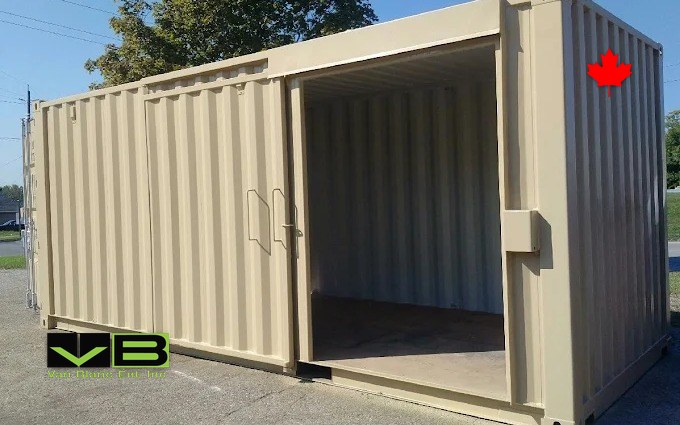
When the mission outgrows plastic, security, snow indifference, decades of service, the next honest rung is steel. A compact 10-foot unit fills a shed-sized footprint with a locked vault, and every quote carries a real lead time, not a hopeful one. Fast 1-3 day delivery across Ontario from our Brantford yards. The fastest answer is a call.
Van Blanc Ent. Inc. · Brantford, Ontario · Since 1995 · 4.9 stars across 140+ Google reviews · Cash on delivery
Wind deserves its own respect in this category, because the physics are unflattering: a resin shed weighs a fraction of any structure its size, presents the same sail area, and relies entirely on its anchors when the gusts arrive. The kits include anchoring points and the manuals mean them: into the pad, with real hardware, at every point provided. The category’s most repeated insurance story is the unanchored shed relocating into a fence during the first fall windstorm, contents redistributed across two properties, and the shed itself finished by the landing. Ten minutes with a drill on assembly day retires the whole plot.
How Resin Behaves in an Ontario Winter
Plastic has a winter personality, and knowing it prevents most February surprises. Cold makes all polymers stiffer and more brittle, so the impact a panel shrugs off in July can crack it in January, which argues for gentle door handling and against leaning the toboggans on the outside wall. Snow load is the season’s real exam: the engineered brands publish roof ratings and pass honest winters, while the bargain tier’s flatter, thinner roofs deflect, pond, and fold, and the category’s failure photos are nearly all that story. The management rule is the same one every roofed structure on this site gets: clear the deep, wet accumulations rather than admiring them, especially on wider spans, and treat the manufacturer’s snow rating as a management target rather than a dare.
Ultraviolet is the slower winter, working year-round. The reputable brands stabilize their resins and warranty against fade and brittleness on defined terms; the bargain kits visibly chalk and stiffen within a few seasons. Buyers can read the difference in the warranty length before they can see it in the panels, which makes the warranty page the most honest specification in the category: Lifetime’s decade-long coverage is a materials claim wearing legal clothes, and the no-name kit’s single season of coverage is too.
Condensation is winter’s quieter trick. A sealed plastic box full of damp lawn equipment sweats exactly the way a sealed steel one does, and the better kits vent for that reason. Owners who store the mower wet and find the interior frosted in January are meeting the same physics every enclosure on this site obeys: dry what goes in, crack the vents, and let the air move. Plastic forgives the lapse longer than steel shows it, and rust on the tools inside keeps the score either way.
Assembly Day, Honestly Described
The afternoon-assembly promise is mostly kept, with footnotes. Two people genuinely help, since panels are awkward rather than heavy and someone must hold walls square while roofs seat. The manuals are pictographic and long, the part counts run to hundreds, and the builds reward laying everything out first like the world’s least exciting jigsaw. Cold-day assembly is the classic mistake: panels stiffen and tolerances tighten below about ten degrees, so the kit bought in a November sale is best built in the garage’s warmth or left boxed until a mild weekend. And the floor goes down first onto that level base, which is the moment the pad decision pays or punishes: on a true surface the panels click home; on a proud paver they fight every fastener from there to the ridge.
The Service Life, Managed
A good resin shed’s decade-plus service life is real and mildly manageable. The wear points are the moving parts: hinges moulded into panels, door latches, and the floor’s traffic lane, and the brand tier earns its keep here again, because the majors sell replacement panels, doors, and hardware years after purchase while the bargain kits are orphaned the day the pallet sells through. Owners extend the good years with small habits: doors closed against UV rather than left swinging, shelving loads carried by freestanding racks rather than the walls, and the roof’s snow rating managed rather than tested. What no habit changes is resale: a used resin shed is worth roughly the labour of hauling it away, which is a quiet but real difference from the tier above, where a used steel box sells on for most of its price years later. Lifetime cost is purchase price minus exit value, and the aisle’s arithmetic looks different once both numbers are on the page.
The Business Side of the Aisle
There is a commercial customer for resin, and honesty maps their line too. Property managers scatter deck boxes across condo terraces; school boards and daycares use resin cabinets for playground gear; and garden centres sell the category by the truckload every spring. What the business buyers learn at scale is the same lesson households learn singly: resin serves distributed, low-value, weather-only storage brilliantly, and concentrates poorly. A landscaping crew’s trailer-stock, tools, and fuel cannot live in plastic anywhere theft exists, which is why the working pattern pairs the tiers, resin bins at the point of use, one locked steel unit at the yard holding everything that matters overnight. For operations taking the steel step, the buying and financing paths in the previous section apply, and multi-unit orders ride the same delivery week as a single box.
Where the Plastic Tier Honestly Ends
The resin tier ends at three walls every buyer eventually meets. Security is the first and hardest: a plastic wall opens to a determined screwdriver, latches are gestures, and nothing valuable should sleep in resin, which the makers themselves acknowledge by selling cable-lock kits rather than pretending. Span is the second: the category tops out around garden-shed footprints, and the double-wide flagship models are the tier straining against its own material. And lifespan under working duty is the third: a resin shed used gently lasts a couple of decades, but daily-use hinges, loaded shelving, and equipment traffic age the plastic joints in ways the same duty never registers on steel. None of this is scandal; it is a light structure honestly priced for light work.
The direct matchups with the tier above are argued fairly on their own pages: the container-versus-shed decision walked end to end, and the Canadian-vernacular version in sea can against storage shed. The short version both pages earn: the shed tiers win on looks, price, and garden fit; steel wins the moment the contents are worth stealing or the snow is worth ignoring.
The Tier Above: When the Job Outgrows Resin
The buyers who outgrow resin arrive at our yard with recognizable stories: the contractor whose tools outvalued the shed holding them, the household whose shed roof met the wrong February, the rural property that needed storage the wind and the neighbourhood could not open. The closest steel answer to shed scale is the compact 10-foot dry container, a shed-sized footprint built of the same corten alloy as the ocean fleet, and the full argument for that class of structure lives in the container-as-shed field guide. Wood buyers weighing the middle path between plastic and steel should read the timber shed category, given its full due, and buyers whose real problem is the seasonal churn of gear should start with the twice-yearly migration playbook before buying any box at all.
For garden centres, landscapers, and the businesses that sell or service this whole category, the commercial path into steel is a purchase, financed where needed through a loan from the business’s own bank. We do not rent, and we say so before the quote instead of after. And one warning that spans every tier of this market, plastic included: many people call us saying they can get a bin for $1,000 less on Facebook. Two weeks later some of them call back to say they got scammed. The shed aisle’s version runs on phantom clearance listings, and the defence is identical, buy from somewhere with a floor you can stand on.
The resin shed is the honest bottom rung of the storage ladder: cheap, cheerful, rot-proof, and right for exactly the light duty it was moulded for. Buy the reinforced grade, build the pad it deserves, clear the wet snow, and it will hold the garden’s summer faithfully for years. And when the mission grows teeth, when the contents start being worth stealing, you will already know where the next rung is, because every rung of this ladder is reviewed on this site, including the ones we do not sell.
Sold outright. Delivered in 1 to 3 days.
Van Blanc sells new and used shipping containers outright from our 4 Brantford yards, with delivery in 1 to 3 days and payment on delivery. We do not rent, lease or offer rent-to-own. Request a sale quote or call the yard at 519-754-6844.
Resin Shed FAQs
What is the difference between polypropylene and HDPE sheds?
Polypropylene, Keter’s material, moulds crisp woodgrain textures and keeps panels lighter. High-density polyethylene, Lifetime’s material, runs denser and tougher, and the serious HDPE sheds add internal steel reinforcement, which is where the category’s best snow capacity lives. Both beat the unnamed thin plastic of bargain kits by years of service.
Do resin sheds survive Canadian winters?
The engineered brands do, managed honestly: published snow ratings, steel-reinforced roofs on the tougher lines, and owners who clear deep wet accumulations. Cold makes plastic more brittle, so gentle handling matters in January. The bargain tier is the winter casualty: thin flat roofs deflect, pond, and fold under real load.
What base does a resin shed need?
A level, solid, slightly raised one: compacted gravel or set pavers, honestly levelled, a touch larger than the footprint. Plastic panels tolerate no racking, so doors and roofs depend on the base staying true. Sheds set on bare dirt wick, heave, and fail within two or three years, and every manual says so.
Are resin sheds secure?
No, and honest makers do not pretend otherwise. Plastic walls yield to simple tools, latches are light, and the accessory locks deter weather more than thieves. Store garden equipment and patio goods with confidence; store anything genuinely valuable one tier up, in a structure whose walls argue back.
Which resin shed brand is best?
Rank your virtues and the shelf answers: Keter leads on looks with the most convincing woodgrain finishes, Lifetime leads on strength with steel-reinforced HDPE and the category’s longest warranty at ten years, and Suncast leads on assembly speed. For Ontario winters specifically, the reinforced HDPE end of the shelf earns its premium.
Sources
- Keter. (2025). Outdoor Storage Shed Kits: Resin Plastic Sheds. keter.com. The polypropylene maker’s own line and material positioning
- Zomg The Handyman. (2026). Keter vs Lifetime vs Suncast: Best Resin Shed. zomgthehandyman.com. The three-brand comparison behind the virtues table above
- Backyard Oasis. (2025). Best Resin Storage Sheds: Top HDPE and Vinyl Picks. backyardoas.com. Material grades, UV brittleness, and the failure pattern of thin resin
- Patiowell. (2025). Keter vs Lifetime Shed: Which One Should You Choose? patiowell.com. The steel-reinforced HDPE and warranty comparison cited
Reach Van Blanc in Brantford
We have sold steel storage across Ontario since 1995, and matching the structure to the mission is the whole trade. When the mission hardens, our rows at 90 Morton Avenue East show what the tier above looks like in person.
Van Blanc Ent. Inc., 90 Morton Ave E Unit 1B, Brantford, ON N3R 7J7, 519-754-6844
Not sure which tier your storage problem lives in? Call and list what is going inside.