
Quick Answer: A sugar shack is the small building where maple sap gets boiled into syrup, and a sugar bush is the stand of tapped maples feeding it. The arithmetic is forty litres of sap for one litre of syrup, which is exactly why the season is short, steamy, and completely equipment-dependent.
In This Guide
- What a Sugar Shack Actually Is
- The Sugar Bush: Where the Season Really Happens
- The Forty-to-One Arithmetic
- Inside the Boil: Evaporators and Reverse Osmosis
- Visiting Ontario’s Shacks, Done Right
- Starting Your Own Bush, From Buckets Up
- The Honest Buildings Map of a Maple Operation
- The Off-Season Is the Security Season
- Sugar Shack FAQs
Reading Time: 14 minutes
What a Sugar Shack Actually Is
Stand downwind of one on a March afternoon and no definition is needed: a sugar shack is the small building in the maples with sweet steam rolling out of its roof. Formally, it is the boil house of a maple syrup operation, the place where collected sap is evaporated down to syrup, and its architecture is dictated entirely by that one job. The signature roof cupola is not decoration. A hard boil throws off enormous volumes of steam, and the raised vent ridge is how the building exhales instead of raining condensation back onto the crew.
The name arrived with the humility of the early buildings, and Quebec’s cabane a sucre tradition made it a cultural institution, but Ontario’s version is every bit as real. The Ontario Maple Syrup Producers’ Association has been organizing the province’s sugar makers since 1966 and today represents more than six hundred of them across eleven regional chapters, from single-family bushes to operations running tens of thousands of taps. In a documented production year the province’s makers turned out roughly four million litres of syrup worth north of fifty million dollars, which is a serious agricultural sector wearing a folksy name.
We should say early what we are and are not in this story. Van Blanc sells shipping containers from Brantford; we do not sell evaporators, taps, or pancakes. But our delivery trucks have been backing into Ontario farm lanes since 1995, a growing number of those lanes end at maples, and the question of what buildings a maple operation actually needs turns out to have an honest, specific answer that almost nobody writes down. That answer is the back half of this page.
The Sugar Bush: Where the Season Really Happens
The bush is the asset. A sugar bush is a managed stand of sugar maples (with red maples pitching in at many operations), and everything about the syrup, volume, timing, and flavour, is decided out there among the trunks before the shack ever lights its fire.
Tapping runs on respect and patience. A maple typically earns its first tap around forty years of age, and a healthy tree gives sap for generations after that, which is why sugar bushes are inherited more often than they are built. The season itself is a freeze-thaw performance: sap runs when nights drop below freezing and days climb above it, a rhythm that gives Ontario a window of only a few weeks, usually landing between late February and mid-April depending on the year and the latitude.
Scale in Ontario runs the entire spectrum. A hobbyist with a dozen buckets on a fence line is a sugar maker. So is Garland Sugar Shack in Vars, running five thousand taps across four separate bushes into one wood-fired rig. So are the marquee names like Long’s Maple Sugarbush at around eleven thousand taps and Fulton’s north of thirteen thousand, and beyond them sit commercial operations running forty to sixty thousand taps on vacuum pipeline. The remarkable thing is that all of them, buckets to vacuum lines, are playing exactly the same game with the same arithmetic.
The Forty-to-One Arithmetic
Here is the number that explains everything else about maple syrup, including the price: it takes roughly forty litres of sap to make one litre of syrup. Sap comes out of the tree as barely-sweet water, around two percent sugar, and the entire craft is the removal of the other thirty-nine litres.
Run the number against real operations and the season snaps into focus. A hobbyist’s twenty taps might gather a few hundred litres of sap in a good run for a handful of syrup litres, a weekend of boiling for a shelf of jars. Garland’s five thousand taps mean sap arriving by the tank load. At Fulton’s scale the operation is measured in tanker volumes, and the reason commercial producers bolt a reverse osmosis machine to the front of the process becomes obvious: RO strips out a large share of the water before the fire ever sees the sap, cutting boil time and firewood consumption dramatically. The steam show in the shack is the finale, but the physics happened at the membrane.
Paul LeBlanc, Van Blanc: “Forty to one is a freight man’s kind of number. It tells you the whole operation is really a water-moving business with a sweet ending, and every sugar maker I have delivered to plans like exactly that: tanks, pumps, lines, and somewhere dry to keep them the other eleven months. The syrup is the smallest thing on the property. It is just the only thing the visitors see.”
Inside the Boil: Evaporators and Reverse Osmosis
The evaporator is the heart of the shack and the single most valuable machine most small operations own. The classic format is a flat stainless pan riding over a firebox, sized in feet of pan, and the working range is wide: hobby rigs start around two feet by four, while a serious family operation like Garland’s runs a four-by-sixteen wood-fired unit. Sap flows through channels in the pan, densifying as it travels, and the sugar maker draws off finished syrup at the far end by temperature and density rather than by guesswork.
Wood-fired remains the romantic default and a genuinely practical one in a province full of hardwood, but wood-fired means firewood at a scale that surprises newcomers: a season of hard boiling eats bush cords, and the wood must be dry, which means it was cut, split, and sheltered the year before, a discipline our firewood-shed thinking treats as its own small science. Oil and propane rigs trade the romance for control. Reverse osmosis, once an industrial luxury, has worked its way down to mid-size operations because the arithmetic is irresistible: every litre of water the membrane removes is a litre the fire never has to. Storing that much wood dry is its own project, and the firewood storage write-up sizes the shed to the cords. A farmhouse heated by an outdoor wood boiler has the same appetite for dry bush cords all winter, and the clearances and daily loading of a yard furnace shape where that wood is kept.
One regulatory note belongs here because it shapes equipment choices honestly. Ontario’s maple regulation requires that syrup sold to consumers or retail be graded and colour-classified, and that production premises be kept clean and sanitary with food-grade, non-toxic contact surfaces. In practice that means the sap-and-syrup path lives in stainless steel and food-grade plastics, full stop, and any building thinking you do for a maple operation starts from that fact. It matters later on this page.
Visiting Ontario’s Shacks, Done Right
A large share of the people searching for a sugar shack are not building one; they are looking for pancakes and steam on a March weekend, and Ontario delivers that experience magnificently. The operations named above run public seasons with sugarbush tours, evaporator demonstrations, and the full pancake ritual, and OMSPA’s eleven chapters mean there is a working shack within a reasonable drive of nearly every Ontarian.
Getting the Most From a Sugar Shack Visit
Go during a real run: a stretch of freezing nights and mild days means the pipeline is singing and the evaporator is actually boiling, which is the show. Ask to see the sap before it is syrup; tasting two-percent sap rewires how you value the bottle. And buy at the shack, because the grade-and-colour label on an Ontario producer’s jug is regulated, the vintage is this month’s, and the margin lands with the family who made it rather than a distributor.
Starting Your Own Bush, From Buckets Up
Every large operation in the province started as somebody’s first dozen taps, and the entry ladder is refreshingly gradual. Rung one is buckets and a turkey-fryer or flat-pan boil in the yard: cheap, instructive, and honest about whether the hobby suits you. Rung two is a proper small evaporator and a hundred-odd taps, the point where most people build or convert their first real boil shelter, because boiling that much indoors ruins ceilings and boiling outdoors ruins schedules. Rung three is pipeline, vacuum, and tanks, where the operation quietly stops being a hobby and starts being agriculture, and where the equipment list starts reading like a plant room: pumps, filters, an RO unit, and stainless everywhere the sap touches.
The tree math sets the pace and cannot be rushed. Taps per tree are earned by trunk diameter, sap runs are set by weather, and the bush itself was planted by somebody two generations back or by nobody at all. What a new sugar maker actually controls is the equipment side: how well the sap is gathered, how efficiently the water comes out, and, the part everyone underestimates, how safely the whole kit survives the forty-eight weeks a year when nothing is running.
The Honest Buildings Map of a Maple Operation
Now the part we know from the delivery seat, offered with our usual disclosure: we sell steel boxes, and the first thing to say about them in a maple context is where they do not belong.
The boil does not belong in a container. A working evaporator needs the cupola’s huge vertical venting, generous side clearances, and a room designed to shed steam; a sealed steel box is close to the opposite of that brief, and the food-premises rules point the same direction. The sugar shack itself should be a sugar shack: a purpose-built or carpenter-built structure with venting at the ridge, and the tradition got that design right a century before anyone stacked a container ship.
Around the boil house, though, the buildings map changes, because everything else a maple operation owns is exactly what sealed steel is for:
Where Steel Honestly Serves the Sugar Maker
The equipment vault. Taps, drop lines, mainline, vacuum pumps, filters, and the RO unit represent serious money that works four weeks a year and sits idle forty-eight. A wind and watertight container beside the shack keeps the whole kit dry, rodent-proof, and behind a proper lockbox, and the pipeline reels stack beautifully in 8-foot-wide steel.
The firewood bay. A wood-fired season’s cordage must be split and dried the season before, and an open-doored or roll-up-fitted unit makes a superb dry woodshed at evaporator scale, with the airflow managed rather than accidental.
Tank and pump housing. Collection tanks and transfer pumps want a clean, enclosed, non-freezing home during the run, the same brief our harvest-season reefer work answers on produce farms; an insulated unit does that job, with the sap itself always in stainless, never against the container’s own surfaces.
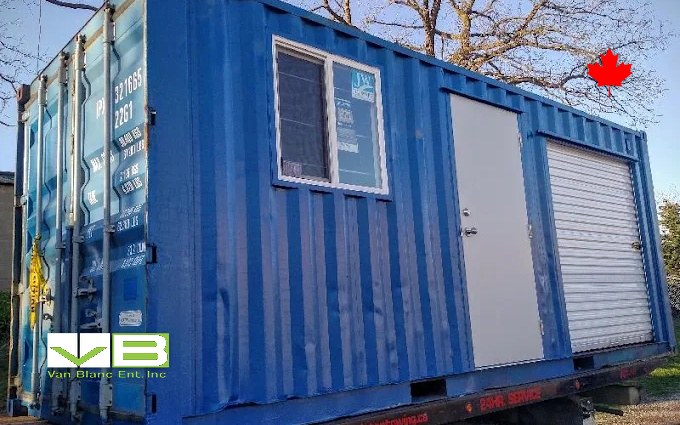
The seasonal shopfront. Shacks that host the public for one month a year need retail space for exactly that month, and a converted unit with a serving window opens for March and locks shut for the other eleven, inventory inside.
That is the honest split: cupola for the boil, steel for everything that surrounds it, and no pretending otherwise in either direction.
Outfitting a Bush?
Tell us what the operation owns, from pipeline reels to a season’s cordage, and where the laneway is. The quote comes back honest and all-in, with a real lead time, not a hopeful one, and if what you describe is a job for a carpenter and a cupola instead, we will say exactly that. Fast 1-3 day delivery across Ontario from our Brantford yards.
Van Blanc Ent. Inc. · Family-run since 1995 · 4.9 stars across 140+ Google reviews · Every quote comes with a real lead time
The Off-Season Is the Security Season
The uncomfortable modern fact about maple equipment is that it has resale value, and rural buildings that sit unvisited from April to February are exactly where theft happens. Vacuum pumps, RO membranes, stainless tanks, and even rolled pipeline all move easily and disappear quietly, and the operations that sleep well are the ones that treat the off-season as a security project: everything portable consolidated into one hardened, locked space, sightlines kept, and the temptation of a dark, obviously idle outbuilding removed. It is the same advice we give every seasonal operator, from campgrounds to curling clubs, and the maple calendar, with its eleven quiet months, is the extreme case of the pattern.
Forty litres in, one litre out, four weeks a year: maple syrup is patience wearing a plaid jacket. Give the boil its cupola, give the equipment its vault, and the sweetest month in the Ontario calendar will keep paying for the other eleven.
Sugar Shack FAQs
What is the difference between a sugar shack and a sugar bush?
The sugar bush is the stand of tapped maple trees; the sugar shack is the building where the collected sap gets boiled into syrup. The bush sets the volume and the season, the shack does the evaporating, and a working operation is the pair plus the equipment connecting them.
How much sap does it take to make maple syrup?
Roughly forty litres of sap for one litre of syrup. Sap leaves the tree at about two percent sugar, so the craft is essentially removing thirty-nine litres of water, which is why serious operations run reverse osmosis ahead of the evaporator to spare the fire most of that work.
When is sugar shack season in Ontario?
When nights freeze and days thaw, which typically lands between late February and mid-April depending on the year and the region. The best visits happen during an active run, when the pipeline is flowing and the evaporator is genuinely boiling rather than idling for demonstration.
Can you make maple syrup in a shipping container?
The boil itself, honestly, no: an evaporator needs the huge ridge venting a proper shack provides, and Ontario’s maple rules keep the sap path on food-grade surfaces. Where steel earns its place is around the boil: locked off-season equipment storage, dry firewood at scale, tank housing, and seasonal retail.
How many taps do you need to make syrup worth selling?
Ontario’s regulation cares about grading and clean premises rather than a minimum count, and makers sell honestly at every scale. As reference points, hobby setups run dozens of taps, Garland Sugar Shack runs about five thousand, and the province’s largest operations run into the tens of thousands on vacuum pipeline.
Sources
- Ontario Maple Syrup Producers’ Association. (2026). About OMSPA. the association’s history and membership
- Ontario Maple Syrup Producers’ Association. (2026). Maple Syrup Regulations. the grading and premises rules
- Garland Sugar Shack. (2026). About Us. the Vars operation’s own numbers
- Destination Toronto. (2026). Sugar Shacks Near Toronto: Maple Syrup Farms and Experiences. the visitor-side roundup
Reach Van Blanc in Brantford
We have been supplying shipping containers across Ontario since 1995, and the maple lanes of Brant, Oxford, Grey, and Lanark counties are part of the delivery map every spring. The yard at 90 Morton Avenue East is where the equipment-vault conversation starts.
Van Blanc Ent. Inc., 90 Morton Ave E Unit 1B, Brantford, ON N3R 7J7, 519-754-6844
Bring your tap count and your equipment list. Sorting the cupola jobs from the steel jobs takes ten minutes, and we enjoy the maple ones especially.