
Quick Answer: A cold plunge is deliberate cold-water immersion, commonly practised between 10 and 15 degrees Celsius. Ice-only tubs drift warm within minutes, while a chilled tub holds its set temperature session after session. In Canada the real planning questions are winter freeze protection, safe power, and where the tub actually lives.
On This Page
- What a Cold Plunge Actually Is
- The Temperature Question, Answered Plainly
- Ice Bucket or Chiller: The Real Difference
- The Tub Options, From Barrel to Built-In
- Water Care Nobody Should Skip
- The Canadian Winter Question
- Where the Plunge Actually Lives
- The Container Plunge Room, Honestly Told
- Cold Plunge FAQs
Reading Time: 11 minutes
What a Cold Plunge Actually Is
Strip away the athlete endorsements and a cold plunge is a simple appliance: a tub of deliberately cold water you climb into on purpose, for a few minutes, most days. The practice is old, Scandinavians have been alternating saunas and frozen lakes for centuries, and the modern version simply replaces the lake with a controlled tub in the backyard. People come to it for recovery routines, for the jolt, and for the habit; whatever the reason, the equipment questions are the same, and they are the part we can answer usefully.
One honest note before the hardware: we sell steel boxes, not health outcomes. Cold-water immersion is commonly practised and widely discussed, and anyone with a health condition should talk to a professional before making a habit of it. Everything below is about doing the equipment side properly in a Canadian climate, which is where most plunge setups actually fail.
The Temperature Question, Answered Plainly
The band most guides and makers converge on runs from about 10 to 15 degrees Celsius, with many routines settling near 11 or 12. Newcomers are consistently advised to start at the warm end, around 15 degrees, with short sessions, and work downward as the body acclimatizes. The experienced minority who plunge near the freezing mark are exactly that, a minority with practice behind them, and the consistent message across the sources we checked is that consistency beats intensity: a manageable temperature you use four times a week does more than a heroic number you dread.
Paul LeBlanc, Owner: “The plunge conversations that reach a container yard are all the same conversation: the tub was the easy purchase, and now it is January, the deck is ice, and the chiller cord runs through a window. The tub is maybe a third of the project. The room around it is the rest, and that is the part nobody budgets.”
Ice Bucket or Chiller: The Real Difference
The starter path is bags of ice in a stock tank or barrel, and it teaches everyone the same physics lesson: a body is a heater. An ice-cooled tub starts cold and drifts warm within minutes as you sit in it, and it needs restocking before every session, which is exactly how most ice-bag routines quietly die by the second month. A chiller-equipped tub holds its set temperature to within about a degree, session after session, which is what makes a consistent routine, and consistent temperature progress, actually possible. The trade is up-front cost and a powered appliance that needs a proper outdoor circuit; the return is a habit that survives the winter. (The circuit conversation, and who is allowed to run it, is itemized in the power and water section of the setup guide.) The Canadian brand most people graduate to, and what its warranty and filter terms actually say, is read in the Coldture review.
The Tub Options, From Barrel to Built-In
The market runs a clear ladder. Inflatable and portable tubs are the honest entry point: cheap to try, fine for a season, limited in insulation and lifespan. Barrel and stock-tank setups are the sturdy middle, especially paired with an external chiller. Purpose-built plunge tubs with integrated chillers, filtration, and insulated lids are the set-and-forget tier, and the recurring lesson from owner communities is that insulation and a good lid matter as much as the chiller spec, because every degree the tub holds on its own is work the chiller does not do. (Reefer-grade insulation, the kind cold-chain containers run on, is the same physics wearing work clothes.) At the top sits the built-in plunge room, which is where this guide eventually turns to steel.
Thinking Past the Tub?
A plunge that lives in a real room, insulated, powered, drained, and warm to towel off in, gets used in February, and the shop builds exactly that from a container: spray-foamed, lined, wired for the chiller, with the sauna next to it if you want the full circuit. The layout thinking behind that pairing now has its own setup guide, and the hot-room half gets the same honesty in our look at the barrel format. The insulation spec behind the shop builds is the closed-cell package we detail separately. Tell us the vision and the yard quotes it honestly.
Family-run from Brantford since 1995 · 4.9 stars across 140+ Google reviews · Independent guide: we build rooms, not tubs
Water Care Nobody Should Skip
Cold water slows biology; it does not cancel it. The maker’s filtration and sanitation protocol is the rule to follow, and where a setup runs without a sanitizer, the working practice across the guides is a full drain and refill roughly weekly, or every three to five sessions, whichever comes first. A cover between sessions keeps debris out and cold in, a rinse before entering keeps the water honest longer, and anyone tempted to stretch the schedule should remember they are marinating in yesterday’s decision. It is five unglamorous minutes a week, and it is the difference between a wellness habit and a science experiment.
The Canadian Winter Question
Here is the part the American buying guides skip and Canadian buyers cannot. Winter helps and threatens a plunge at the same time. It helps because cold air does much of the chiller’s work; plenty of owners barely run the compressor from December to March. It threatens because an unpowered, unattended tub is just water waiting to become a very expensive ice sculpture: lines, pumps, and fittings all need freeze protection, which in practice means the system either runs continuously, drains fully for cold snaps, or lives somewhere the temperature never falls far below zero. Power is the other winter question: a chiller outdoors wants a dedicated, properly protected exterior circuit, and the planning notes in the ground-fault power walkthrough apply to a plunge room exactly as they do to any powered box.
None of this argues against winter plunging, which is frankly when the practice earns its stripes. It argues for deciding, before the first freeze, which of the three strategies your setup runs on, and for giving the equipment a home that makes the choice easy.
Where the Plunge Actually Lives
Walk the failure stories and they are rarely about the tub; they are about the location. A plunge on an open deck works beautifully from May to October and then demands a barefoot walk across ice to a frozen lid. A garage plunge solves the weather and donates the parking spot, plus a humidity load the garage was never meant to carry. A bathroom tub setup survives exactly as long as household diplomacy does. The setups that last give the plunge a dedicated, insulated, ventilated space with power, drainage, and somewhere warm to stand: which is a room, and rooms are buildable.

The Container Plunge Room, Honestly Told
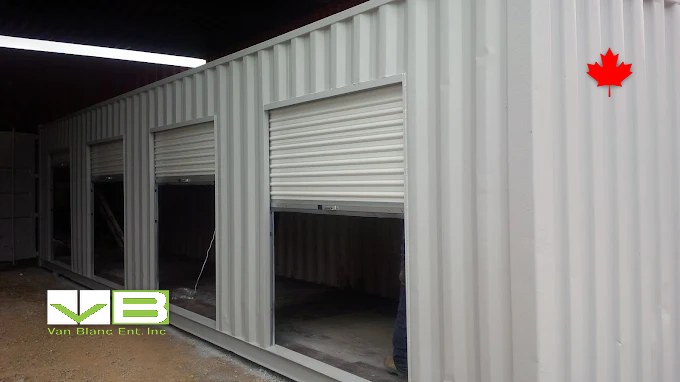
Our stake, declared plainly: we convert containers, and a plunge room is squarely inside the trade we already do. A 20ft box, spray-foamed against condensation, lined, floored with a drain, and wired for the chiller, gives the tub a four-season home with room left for a bench and hooks, and the same build logic that carries the hot-tub conversion walkthrough and the sauna build rundown carries the plunge: manage moisture ruthlessly, plan the power once, and let steel do the weatherproofing it was born for. Pair the sauna at one end with the plunge at the other and the box becomes the full contrast circuit, the backyard spa, one delivery, no framing crew.
And the honest boundary, as always: a container room is the right answer when you want a dedicated, movable, winterized space. If your plunge will live happily on a covered porch with a good lid, buy the better tub and skip the room; we would rather you plunge all winter than own more steel than the habit needs. When the vision is bigger than the tub, the wet-room and wellness builds the shop finishes are where it starts.
The plunge itself is thirty seconds of courage repeated until it becomes ordinary. The equipment’s only job is to remove every excuse between you and that repetition: a held temperature, clean water, safe power, and a warm floor to land on. Build that once, honestly, and February stops being the off-season.
Cold Plunge FAQs
What temperature should a cold plunge be?
Most guides and makers converge on 10 to 15 degrees Celsius, with routines commonly settling near 11 or 12. Beginners are consistently advised to start around 15 with short sessions and work downward; consistency matters more than chasing extreme numbers.
Do I need a chiller or can I just use ice?
Ice works for trying the habit, but a tub with a body in it warms within minutes and needs restocking every session. A chiller holds the set temperature to within about a degree, which is what makes a durable routine practical.
How often should cold plunge water be changed?
Follow your tub’s filtration and sanitation protocol. Running without a sanitizer, the working practice is a full drain and refill roughly weekly or every three to five sessions, with a cover between uses and a rinse before entering.
Can a cold plunge stay outside through a Canadian winter?
Yes, with a plan. Winter air helps hold temperature, but pumps, lines, and fittings need freeze protection: run the system continuously, drain fully for cold snaps, or house it where temperatures stay near zero, and give the chiller a proper protected outdoor circuit.
Can a shipping container become a cold plunge room?
Yes, and it is a natural fit: spray-foamed, lined, drained, and wired, a 20ft box gives the tub a four-season home, and pairing a sauna at the other end makes the full contrast circuit in one build. We say honestly when a covered porch is all you need.
Sources
- Coldture Wellness. (2026). Cold plunge temperature and time: complete guide. Coldture’s temperature and time guide
- Sun Home Saunas. (2026). Cold plunge tubs with built-in chillers: buyer’s guide. the chiller tub buyer’s guide
- The Examiner News. (2026). The complete cold plunge maintenance guide. the full maintenance guide
- International Organization for Standardization. (2020). ISO 668:2020, Series 1 freight containers, Classification, dimensions and ratings. the container dimensions standard
Reach Van Blanc in Brantford
We have been supplying shipping containers across Ontario since 1995. Our warehouse is at 90 Morton Avenue E in Brantford, and we deliver right across the province with honest quotes and real lead times.
Van Blanc Ent. Inc., 90 Morton Ave E Unit 1B, Brantford, ON N3R 7J7, 519-754-6844
Planning a plunge room, a sauna, or the whole backyard circuit: the quote comes back with the build spec and the freight told straight. Call the yard and we will design it together.