
Quick Answer: A ghost kitchen is a delivery-only food business: a licensed commercial kitchen cooking for the apps, with no dining room and often several virtual brands under one hood. The real decision is always facility control, running from rented commissary hours up to a fully owned, inspected kitchen of your own.
In This Guide
- What a Ghost Kitchen Actually Is
- Why the Model Works, and Where It Bites
- The Facility Ladder: Commissary to Owned
- The Equipment Spine Every Kitchen Shares
- The Inspection Reality
- Running Several Brands From One Hood
- The Numbers That Run a Delivery Kitchen
- Siting the Owned Kitchen
- A Launch Calendar, Realistically
- The Ownable Third Path in Steel
- Who Wins on Which Rung
- Ghost Kitchen FAQs
Reading Time: 13 minutes
What a Ghost Kitchen Actually Is
A ghost kitchen is a restaurant with the dining room amputated on purpose. It is a licensed, inspected commercial kitchen that cooks exclusively for delivery and pickup: the customers live on the ordering apps, the storefront is a menu photo, and the entire physical business is the kitchen itself plus a shelf where the drivers grab bags. The format goes by half a dozen names, cloud kitchen, dark kitchen, virtual kitchen, and the differences between those labels matter less than the one structural fact they share: every dollar of rent and equipment goes into the part of a restaurant that actually makes the food.
That amputation is the whole economics. A traditional restaurant spends most of its capital and much of its rent on the front of house, the room, the furniture, the street frontage, and then staffs it, lights it, and cleans it forever. The ghost format deletes all of it, which is why a delivery-only operation can launch for a fraction of a sit-down restaurant’s budget and why the model exploded alongside the delivery apps. Our stake in this story, disclosed as always: Van Blanc sells shipping containers and food-service conversions from Brantford, one rung of the facility ladder below is built from our product, and the rest of this guide serves the searcher first, the way every page in this series does.
Why the Model Works, and Where It Bites
The model’s strengths are real. Launch is fast, because a concept can be cooking within weeks of the idea. Menus are effectively software now, so a struggling brand gets completely rebuilt over a weekend instead of over a renovation. One kitchen can run multiple concepts simultaneously, which multiplies the revenue per hood. And failure is cheap relative to the restaurant graveyard, which may be the kindest sentence anyone has ever written about the food business, an industry whose traditional failure rate has scared off generations of good cooks with great recipes.
The bites are just as real, and honest operators name them early. The apps take their commission off the top of every order, forever, which means the format trades landlord rent for platform rent. Discovery is brutal, since a ghost brand has no walk-by traffic and lives or dies on app ranking and photography. Delivery quality caps the menu, because fries that travel badly are fries you cannot sell. And the operational tempo is relentless: a small kitchen running three brands at dinner rush is a submarine galley at battle stations, and the layout, storage, and workflow decisions covered below stop being theoretical somewhere around the first genuinely busy Friday night. None of this argues against the model; it argues for entering it with the facility question answered properly, which is the next section and the reason this page exists.
Christian LeBlanc, Van Blanc: “The food entrepreneurs who call our yard all tell the same story in different accents: the concept proved itself in rented kitchen hours, and now the rent is eating the concept. That is not a food problem, it is a facility problem, and facility problems are the one course we have been teaching since 1995.”
The Facility Ladder: Commissary to Owned
| Rung | What it is | Honest verdict |
|---|---|---|
| Shared commissary hours | Rented time blocks in a licensed, fully equipped shared kitchen | The lowest-cost entry, with inspection handled and equipment included; scaling hits booking conflicts and the haul-everything-every-shift tax |
| Dedicated ghost-kitchen suite | A private kitchen rented inside a purpose-built facility | Real control and your own equipment at several times the entry cost, still on a landlord’s lease and escalation schedule |
| Owned facility | Your own licensed kitchen in your own structure | Full control, no lease escalations, equity instead of rent; the capital rung, and the one the successful concepts eventually climb to |
The industry’s own guidance says the quiet part plainly: the commissary is a testing tier. It is built for proving a concept, and it punishes success, because the moment orders climb, the operator collides with booked-out prime hours, shared cold storage, and the nightly load-out of every knife and pan they own. The dedicated suite solves the workflow and keeps the landlord. The owned rung solves the landlord, and the honest barrier to it has always been the building: commercial kitchens live in commercial real estate, and commercial real estate is the expensive part of every food story. Which is exactly why the third path below exists.
The Equipment Spine Every Kitchen Shares
Whatever the rung, a delivery kitchen’s equipment spine is remarkably consistent, and reading it as a system prevents buying it as a pile. The cook line matches the menu, fryers, flat-top, range, or oven, and sits under the non-negotiable centrepiece: a commercial exhaust hood with fire suppression, sized to the line beneath it. Cold storage runs the operation, reach-ins at the line and real walk-in or dedicated cold room capacity behind it, because delivery menus live and die on prep done ahead. The three-compartment sink, hand sinks, and grease handling form the sanitation spine the inspector walks first. And the packout station, racks, heat lamps, bag staging, driver shelf, is the ghost format’s one genuinely novel organ, the entire dining room compressed into a metre of counter. Operators who plan packout as an afterthought discover it is the bottleneck at the first real rush; the experienced ones design the whole kitchen backwards from it, the way airports are designed backwards from the gates.
A word on buying that spine, because the food industry’s misfortune is the new operator’s supplier. Restaurant closures feed a deep used-equipment market, auctions, liquidators, and dealer refurb floors, and the sorting rule the veterans use is simple: buy the dumb stainless used, buy the complicated survivors carefully, and buy the safety-critical new. Prep tables, shelving, sinks, and racks are nearly immortal and priced accordingly at auction. Refrigeration is the careful category, where a compressor’s history is invisible and a dealer’s warranty earns its premium. And the hood-and-suppression system is the buy-it-right category, because it is the piece the inspector, the insurer, and the fire code all converge on, and the one place a used-market gamble can cost an opening date. The same triage, incidentally, is how our own buyers read used steel: structure is forgiving, mechanicals deserve scrutiny, and the safety-rated parts earn their price new.
The Inspection Reality
One paragraph of regulatory honesty, scoped the way we scope it on every page. Food premises in Ontario are licensed and inspected by local public health units under the province’s food-premises rules: surfaces, sinks, temperatures, pest control, and safe food handling, the same inspection regime whether the kitchen serves a dining room or a fleet of couriers. Every rung of the ladder above operates inside that system, a commissary carries its own compliance, and an owned facility earns its own. Plan the kitchen with the inspection checklist sitting beside the equipment list from day one and the first visit becomes a formality rather than a renovation; and for the paperwork beyond food safety, the sentence that covers it everywhere on this site: permits are managed by your municipality, so check with your local building or planning department before you order.
Running Several Brands From One Hood
The format’s signature trick deserves its own honest chapter, because multi-branding is where ghost kitchens either compound or collapse. The pattern that works runs shared ingredients through different menus: one protein program, one prep list, three storefronts on the apps, so the pantry stays simple while the discovery surface triples. The pattern that fails runs three unrelated menus through one small line, tripling prep, cold storage, and mistakes while the brands cannibalize each other’s cook time at rush. The discipline is a shared-spine rule: every new virtual brand must be cookable from the existing pantry plus at most a handful of new items, or it is not a new brand, it is a second restaurant wearing your hood and splitting its focus. Operators who hold that line scale beautifully, adding storefronts the way software adds features; the app graveyards are full of the ones who did not, three half-brands starving on shared prep time where one focused menu would have fed the family.
The Numbers That Actually Run a Delivery Kitchen
Stated without a single dollar figure, because the relationships matter more than this month’s rates. Three numbers govern every ghost operation. The first is the platform commission, a percentage the apps take from every order, which functions as rent paid on revenue rather than on space; menu prices get built deliberately above it from day one, or the kitchen quietly works for the platform instead of the owner. The second is the prep-to-order ratio: delivery menus win when expensive labour happens ahead of the rush, in calm batches hours ahead, and the rush itself becomes fast assembly, which is why the cold-storage capacity we listed in the equipment spine is really a profitability instrument. The third is the radius: delivery quality decays with distance, the apps know it, and a kitchen’s realistic market is the ring its food survives, which makes location a food-quality decision before it is a real-estate one. Operators who can recite their commission load, their prep ratio, and their survivable radius are running a business; operators who cannot are running a hobby with a hood, and those three numbers are the first thing to bring to a kitchen-shell quote.
Siting the Owned Kitchen
The owned rung raises a question the rented rungs never ask: where does the kitchen physically stand? The steel format’s answer is host sites, and the good ones share a profile. A brewery or winery back lot pairs naturally, their licence traffic and your food, and the arrangement is common enough that our restaurant-build customers often arrive with the host already signed. Commercial yards, event grounds, and underused commercial frontage all work on the same logic: the kitchen needs services, not visibility, because the storefront is the app. The services list is the honest site test: adequate electrical supply for the line, potable water in and grey water handled, grease containment the inspector will bless, and the unglamorous winner, a clean loop where delivery drivers park, grab, and go without blocking anything, because a kitchen that fights its own couriers loses its app ratings to idling time, and ratings are the only storefront window this format owns. Ground rules are the same pad-and-drainage physics as every unit we place, and the relocation option is the quiet advantage: a ghost kitchen that guessed wrong about its radius picks a better host site and moves, which is a trick no leased suite anywhere has ever managed to perform.
A Launch Calendar, Realistically
The timeline question deserves an honest shape, because the format’s speed is real but not magic. The commissary rung launches in weeks: paperwork, insurance, a booking calendar, and the first service. The owned steel rung is a season: the shop build runs under engineered drawings while the host site’s services get roughed, the trades finish and certify on delivery, the public-health inspection follows, and the apps onboard the storefronts last, since photography and menu setup are the fast part. The sequencing mistake we watch for is inverted priorities, operators perfecting logo files while the grease-containment question sits unanswered; the kitchen that opens on schedule is the one whose owner booked the trades and the inspector’s requirements into the calendar first and treated the branding as the reward for finishing. Run the seasons in order, test on rented hours while the steel is in the shop, and the revenue barely notices the transition.
The Ownable Third Path in Steel
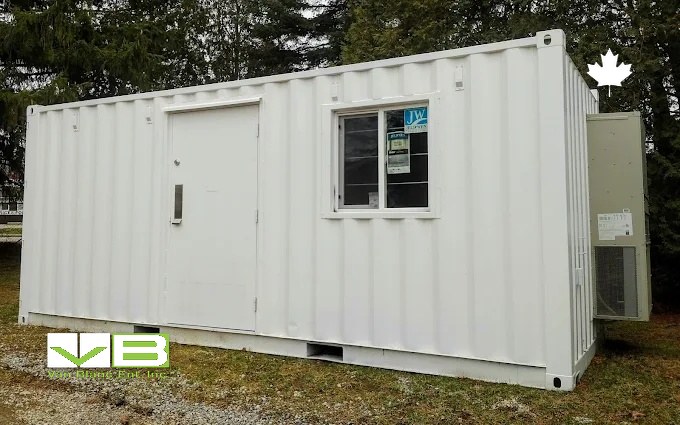
Now the rung we build, positioned with the same honesty as everything above it. A converted container kitchen is the owned-facility rung without the commercial-real-estate entry fee: a sealed steel shell, cut, framed, and fitted at the Brantford yards under engineered drawings, delivered to leased land, a yard, or a host site as a finished kitchen shell. The split of work is the one we state on every food build, because inspectors and insurers care: our shop does the structure, the openings, the insulated and washable interior, and the rough-ins; the exhaust hood, grease handling, plumbing, gas, and final electrical are completed and certified by your licensed trades on site. That is not fine print, it is the difference between a kitchen that passes its first inspection and a rumour that does not.
What the steel rung actually buys, stated without romance: ownership instead of lease escalations, an asset that holds resale value and can be craned to a better location when the first one disappoints, cargo-grade security for a building full of equipment that walks, and a build documented across our own food-service pages, from the container restaurant guide through the grease-trap specifics to the cafe build, all living under the hospitality program. What it does not buy is a shortcut around the inspection reality or the trades split above, and anyone selling a food container without saying so is selling the rumour. For operators climbing off the commissary rung with proven order volume, the financing sentence, stated precisely: Van Blanc does not rent containers, to anyone, ever, and does not offer rent-to-own; commercial accounts finance the purchase through their own bank or equipment financer, with payments against a kitchen they own from day one, which lets the kitchen stand against app revenue rather than ahead of it.
Climbing Off the Commissary Rung?
Tell us the menu, the equipment list, and where the kitchen will stand, and the shell-and-shop-work quote comes back honest and all-in with a real lead time, not a hopeful one, trades split spelled out. Fast 1-3 day delivery across Ontario from our Brantford yards.
Van Blanc Ent. Inc. · Family-run since 1995 · 4.9 stars across 140+ Google reviews · Every quote comes with a real lead time
Who Wins on Which Rung
The sorting, told as the operators we meet. The first-concept cook, sauce recipes and a dream, usually starts on commissary hours, and the first month of booked-out prime time and nightly load-outs is when an owned shell, with no booking calendar and nothing to haul home, enters the conversation. The proven single brand doing steady app volume from rented hours is the classic climber: the numbers already cover a facility payment, and the only question is suite lease versus owned steel, which is the same subscription-versus-asset arithmetic we walked through for storage subscriptions, wearing an apron. The multi-brand operator with a disciplined shared-spine pantry and order history to prove it is the strongest steel candidate we see, because ownership converts their biggest cost line into equity while the packout-first layout gets designed around their actual Friday night. And the established restaurant adding delivery capacity often wins with the hybrid: the dining room stays put, and a container kitchen in the back lot takes the app volume off the main line, with reefer-grade cold storage beside it if the prep program demands it. Every one of those four operator profiles gets a different build from us on the phone, sized to the menu, the line and the order history.
The ghost kitchen deleted the dining room; the facility ladder decides who keeps the savings. Put the proven concept in owned steel and let the delivery apps steadily pay for a kitchen that belongs to you instead of a lease that never, ever will.
Sold outright. Delivered in 1 to 3 days.
Van Blanc sells new and used shipping containers outright from our 4 Brantford yards, with delivery in 1 to 3 days and payment on delivery. We do not rent, lease or offer rent-to-own. Request a sale quote or call the yard at 519-754-6844.
Ghost Kitchen FAQs
What is a ghost kitchen?
A licensed commercial kitchen that cooks exclusively for delivery and pickup, with no dining room. The customers order through the apps, one kitchen often runs several virtual brands, and all the capital that a traditional restaurant spends on front of house goes into food production instead.
Is a commissary kitchen or my own facility better?
Once app volume is steady, your own: an owned facility converts the biggest cost line into equity instead of rent, and a container kitchen shell gets there without the commercial-real-estate entry fee. Commissary hours keep entry costs low, and their booking conflicts and haul-everything tax are what push a growing concept into a kitchen of its own.
What equipment does a ghost kitchen need?
A cook line matched to the menu under a commercial exhaust hood with fire suppression, serious cold storage for the prep program, the sanitation spine of three-compartment and hand sinks plus grease handling, and a properly designed packout station, which is the ghost format’s real dining room and its usual bottleneck.
Can a shipping container be a ghost kitchen in Ontario?
Yes, as a shop-converted shell finished by licensed trades: our yard builds the structure, washable interior, and rough-ins under engineered drawings, and the hood, grease, plumbing, gas, and final electrical are completed and certified on site. It then operates under the same public-health inspection as any food premises.
Does Van Blanc rent container kitchens?
No. Van Blanc sells containers and never rents them. Commercial food operators can finance the purchase through their own bank or equipment financer, which suits proven concepts climbing off rented commissary hours.
Sources
- 7shifts. (2026). How Much Does It Cost to Open a Ghost Kitchen? the restaurant-industry cost survey
- CloudKitchens. (2026). Shared Commissary vs Ghost Kitchens: Which Is Right for You. the facility-model comparison
- CloudKitchens. (2026). Starting a Commissary Kitchen. the commissary operations guide
- GoFoodservice. (2026). How to Open a Ghost Kitchen: Complete Startup Guide. the equipment-and-launch walkthrough
Reach Van Blanc in Brantford
We have been supplying shipping containers across Ontario since 1995, and the food-service conversions, kitchens, cafes, and bar builds alike, are some of the most photographed work the shop does. The kitchen-shell conversation happens at 90 Morton Avenue East, beside builds you can walk through.
Van Blanc Ent. Inc., 90 Morton Ave E Unit 1B, Brantford, ON N3R 7J7, 519-754-6844
Bring the menu, the order numbers, and the host-site idea if one exists. Sorting the shell, the shop work and the trades split takes ten minutes, and you leave with the next steps in order.