
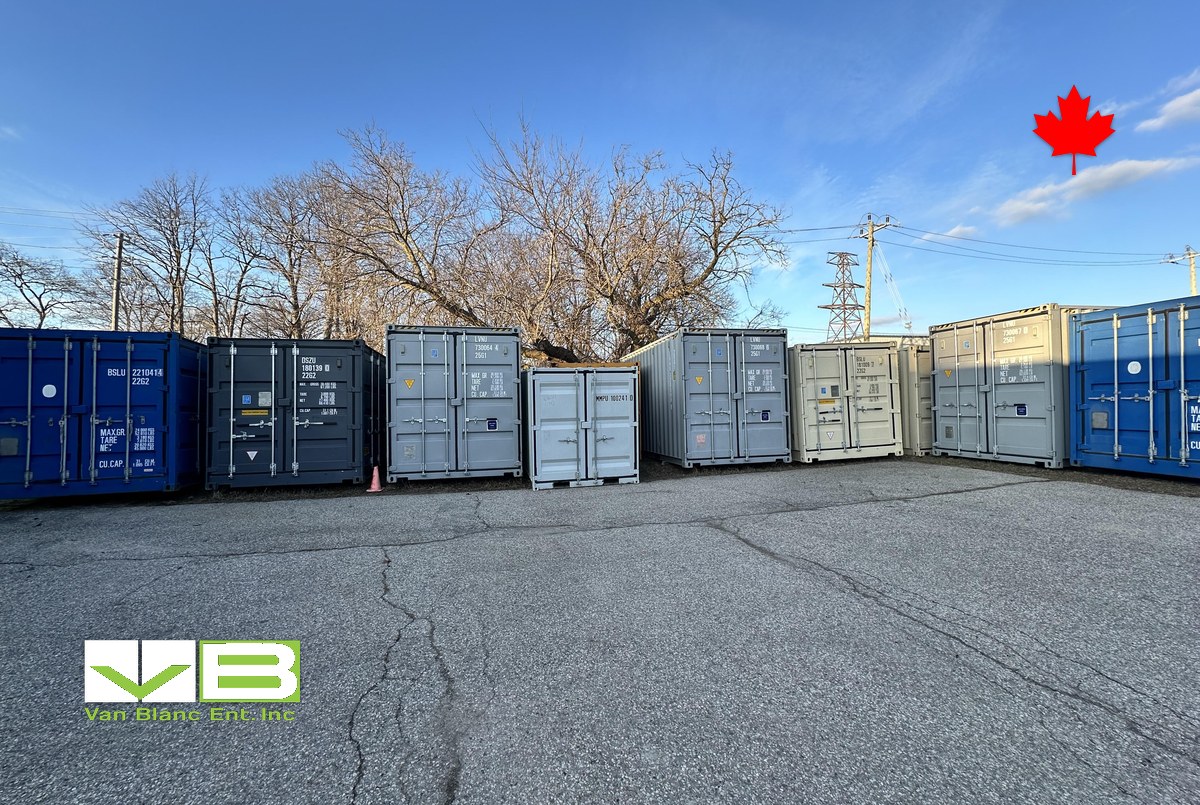
Quick Answer: A cargo container is the same 8-foot-wide steel intermodal box Canadians also call a sea can, shipping container, or c-can. Buying one means choosing a size, a grade, and a supplier you can visit. Grades run one-trip, cargo worthy, wind and watertight, and finally as-is, priced in exactly that order.
On This Page
Reading Time: 8 minutes
One Box, Three Aisles of Names
A cargo container is a corten steel intermodal shipping container, the standardized box that moves world trade, sold on land for storage and conversion work. The name changes with the buyer and not the product. Retailers and exporters say cargo container. Farmers say sea can. Contractors say c-can. Logistics managers say intermodal or ISO container. Veterans say conex. Every one of those words points at the same 8-foot-wide box, and every name Canadians use for the same box is mapped in our naming guide if the vocabulary is half of what brought you here.
The word does one useful thing: it signals what the buyer is thinking about. Someone typing cargo container is usually thinking about the box as freight equipment, something rated, certified, and built to carry goods, rather than as a shed. That instinct is correct, and it is exactly why the buying decision comes down to grades and ratings rather than paint.
Christian LeBlanc: “You can tell what a caller does for a living by what they call the box. Cargo container usually means a business with freight on its mind. The bin does not care what you call it, and neither do we; the grade and the size are the whole conversation.”
What Buyers Usually Mean by “Cargo Container”
Two intents hide inside the phrase, and they lead to different purchases. The first is the exporter or shipper who needs a container that will carry cargo again, on a truck, a train, or a vessel. That buyer needs certification: a valid CSC plate and a unit graded cargo worthy or better, because carriers will not load anything less. The grade name is a genuine collision with the category name, so read what cargo worthy actually certifies before assuming every cargo container is cargo worthy. Most are not; the grade must be stated and the plate must back it.
The second intent, far more common in Ontario, is the business or property owner who wants the box as stationary storage: inventory overflow, equipment shelter, jobsite security. That buyer is free to shop the whole grade ladder, because a box that never ships again does not need shipping papers. Both intents are served from the same rows at the yard; they just point at different price tiers, which is why the first question we ask is not what size, but what will it do.

Sizes, and What Each One Swallows
| Size | External dimensions | Capacity | Typical duty |
|---|---|---|---|
| 20ft standard | 6.06m x 2.44m x 2.59m | ~33 m³ | The workhorse: tools, inventory, a three-bedroom house packed carefully |
| 40ft standard | 12.19m x 2.44m x 2.59m | ~67 m³ | Commercial stock, equipment, palletized goods |
| 40ft high cube | 12.19m x 2.44m x 2.90m | ~76 m³ | Racking, forklift work, conversions needing headroom |
| 45ft high cube | 13.71m x 2.44m x 2.90m | ~86 m³ | Maximum single-box volume on a standard chassis |
| 20ft reefer | 6.06m x 2.44m x 2.59m | ~28 m³ | Cold chain, food and beverage, harvest season |
Dimensions are fixed by international standard, which is the quiet superpower of the whole category: a 20ft cargo container bought in Brantford matches one built in Shanghai to the centimetre, because ISO wrote the spec decades ago and the world’s ports enforce it daily. Buy the size for the duty. A load that fits a 20ft sits snug in one, and a load that is going to grow has room to do it in a 40ft.
Use Case: The Exporter and the Retailer, Same Week
Two purchases from the same row in the same week show the intent split in action. A machinery firm shipping rebuilt equipment overseas took a 40ft cargo worthy unit: plate verified against the casting, survey booked before payment, because that box goes back onto a vessel and the paperwork is the product. Three days later a Brant County retailer took the 20ft two doors down in wind and watertight grade for holiday stock overflow behind the store: a fraction of the outlay, no certification needed, because that box will never see water again. Same steel standard, same lot, two different right answers, and the duty made the decision both times.
The Four Grades on a Cargo Container Lot
Condition runs a four-step ladder, and an honest lot shows you all four. One-trip units crossed the ocean once with cargo and are essentially new: factory paint, tight doors, the choice for anything customer-facing or destined for conversion. Cargo worthy (CW) units keep valid certification for carriage: structurally inspected, honest surface wear, the exporter’s floor. Wind and watertight (WWT) units seal against weather and rodents but have aged out of shipping papers: the value grade for stationary storage, built for a box that stays put. As-is units close the ladder: structural questions, sold cheap, bought for parts, donor steel, or low-stakes storage by people who know exactly what they are getting.
The buying rule that follows: match the grade to the duty, then confirm the grade with your own eyes. The used rows, graded and explained cover CW through as-is in depth; new one-trip stock sits on the new container side of the yard. Between those two pages sits every honest cargo container sold in Ontario.
Price a Cargo Container
Tell us the duty, the size, and your postal code, and an honest all-in number comes back, usually the same day. Faster still: call the yard, describe the job, and get the grade recommendation and the delivery day in one conversation.
Family-run from Brantford since 1995 · 4.9 stars across 140+ Google reviews · Walk the rows before you pay
Where Cargo Containers Actually Come From
Every cargo container on a Canadian lot lived a first life in trade. New units are built in Asia, loaded with export cargo to pay their own freight, and arrive here as one-trip stock. Used units retire out of shipping-line fleets after years of circulation, get graded at depots, and move into the domestic market. There is no container factory in Ontario; there is a supply chain, and suppliers who understand it buy better steel. Paul LeBlanc spent four decades in Asian trade before pivoting Van Blanc to containers, and that is the buying edge the yard runs on: knowing which units to take and which to leave at the depot.
This supply story is also why prices move. Ocean freight rates, the steel market, and the import flow through Canadian ports all push the market month to month, which is why our cargo container price list carries the date it was approved.

Buying Without Getting Burned
The cargo container market has a fraud problem, and it concentrates in one place: private listings priced far below every real yard. The pattern never varies. No address you can visit, no plate photo, a deposit demanded to hold the unit, and then silence. Callers tell us about a bin a thousand dollars cheaper on Facebook; the ones who chased it usually call back two weeks later to tell us how it ended.
The defence costs nothing. Buy from a supplier with a yard you can stand in. Walk the unit, swing the doors, and check verifying the CSC plate before you pay against the seller’s grade claim. Get the grade in writing on the quote, and expect delivery quoted as its own line with a real date on it. Any seller uncomfortable with that list has told you everything you need to know.
Our lot sells every name in the vocabulary: cargo containers, sea cans, storage bins, conex boxes. Same steel, same four grades, same honest walk down the rows. Come see it before you pay anybody for anything.
Sold outright. Delivered in 1 to 3 days.
Van Blanc sells new and used shipping containers outright from our 4 Brantford yards, with delivery in 1 to 3 days and payment on delivery. We do not rent, lease or offer rent-to-own. Request a sale quote or call the yard at 519-754-6844.
Cargo Container FAQs
Is a cargo container the same thing as a shipping container?
Yes. Cargo container, shipping container, sea can, c-can, and conex all name the same standardized steel intermodal box. The term changes with the industry of the person speaking; the product, its sizes, and its grades are identical under every name.
Are all cargo containers cargo worthy?
No, and the name collision trips up buyers. Cargo worthy is a specific certified grade, one step below one-trip. A cargo container as a category can be any grade, including wind and watertight or as-is units that will never ship again. Always ask for the grade and the plate, never assume it from the word cargo.
What sizes do cargo containers come in?
The standard market runs 20ft, 40ft, 40ft high cube, and 45ft high cube, all 8 feet wide, plus refrigerated versions of the 20ft and 40ft. Dimensions are fixed by ISO standard worldwide, so a stated size is exact rather than approximate.
Can I buy a cargo container for export shipping?
Yes, but it must carry a valid CSC plate and grade at cargo worthy or better, because carriers refuse uncertified boxes. Say the word export on your first call and the quote will be built from certified stock only, with the plate available for your surveyor.
Why do cargo container prices change so often?
Because the supply chain behind them moves: ocean freight rates, steel prices, and the flow of imports through Canadian ports all shift the market month to month. That is why a serious supplier dates its price list and confirms the delivered price on each order.
Sources
- International Organization for Standardization. (2020). ISO 668:2020, Series 1 freight containers, Classification, dimensions and ratings. the full ISO 668 standard listing
- United Nations Conference on Trade and Development. (2025). Review of Maritime Transport 2025. UNCTAD’s 2025 maritime transport review
- Institute of International Container Lessors. (2025). Container inspection and grading criteria. IICL grading criteria
- International Maritime Organization. (1972, as amended). International Convention for Safe Containers (CSC). the CSC convention text
Reach Van Blanc in Brantford
We have been supplying shipping containers across Ontario since 1995. Our warehouse is at 90 Morton Avenue E in Brantford, and we deliver right across the province with honest quotes and real lead times.
Van Blanc Ent. Inc., 90 Morton Ave E Unit 1B, Brantford, ON N3R 7J7, +1 888-509-6658
Whatever you call the box, the rows are open. Come read the plates, kick the steel, and leave with a number you can trust.